
Investing for Freelancers in 2026: Strategies for Building a Stable Financial Future with a 10% Annual Return Goal
The freelance economy is booming, offering unparalleled freedom and flexibility. However, with this freedom comes the responsibility of managing your own finances entirely – from income stability to retirement planning. Unlike traditional employees, freelancers don’t have employer-sponsored 401(k)s, health insurance, or paid time off. This makes proactive financial planning and smart freelancer investment strategies not just beneficial, but absolutely critical for long-term security and wealth accumulation. As we look towards 2026, the financial landscape continues to evolve, presenting both challenges and exciting opportunities for independent professionals aiming for a robust 10% annual return on their investments.
This comprehensive guide is designed specifically for freelancers, offering actionable insights and strategies to navigate the complexities of personal finance and investment. Our goal is to equip you with the knowledge to build a stable financial future, achieve impressive returns, and ultimately, gain true financial independence. We’ll delve into understanding your unique financial position, setting realistic goals, exploring various investment avenues, and implementing risk management techniques tailored for the freelance lifestyle.
Anúncios
Understanding the Freelancer’s Financial Landscape
Before diving into specific investment strategies, it’s crucial for freelancers to acknowledge their unique financial ecosystem. Irregular income, self-employment taxes, and the absence of traditional benefits are significant factors that shape your financial planning. Recognizing these elements is the first step towards crafting effective freelancer investment strategies.
The Volatility of Freelance Income
One of the most prominent characteristics of freelance work is income variability. Some months might be flush with projects and high earnings, while others could be lean. This fluctuation necessitates a different approach to budgeting and saving compared to a salaried individual. A robust emergency fund, covering at least 6-12 months of living expenses, is not just a recommendation but a necessity for freelancers. This fund acts as a buffer against income droughts, preventing you from having to dip into your investments during market downturns or slow periods.
Anúncios
Self-Employment Taxes and Business Expenses
Freelancers are responsible for both the employer and employee portions of Social Security and Medicare taxes, often referred to as self-employment tax. This can significantly impact your take-home pay and requires diligent tax planning. Furthermore, tracking and deducting legitimate business expenses can reduce your taxable income, freeing up more capital for investment. Understanding these tax implications is vital for accurately projecting your investable income.
Lack of Traditional Benefits
Health insurance, retirement plans, and paid time off are often perks of traditional employment that freelancers must provide for themselves. This means allocating funds for health insurance premiums, setting up your own retirement accounts (like a SEP IRA or Solo 401(k)), and consciously saving for vacations or sick days. These considerations must be integrated into your overall financial plan before you even begin to think about aggressive investment strategies.
Setting Ambitious Yet Realistic Investment Goals for 2026
A 10% annual return is an ambitious but achievable goal, especially when considering a diversified portfolio and a long-term investment horizon. To reach this, you need clarity on what you’re investing for. Are you saving for retirement, a down payment on a house, your child’s education, or simply building general wealth? Defining your goals will dictate your investment timeline, risk tolerance, and ultimately, your asset allocation.
Defining Your Investment Horizon and Risk Tolerance
- Short-Term Goals (1-3 years): For these, prioritize capital preservation. High-yield savings accounts, Certificates of Deposit (CDs), or short-term bond funds are generally more appropriate. Aiming for a 10% annual return here would involve significantly higher risk, which might not be suitable for short-term needs.
- Mid-Term Goals (3-10 years): A balanced approach combining stocks and bonds might be suitable. You can take on a moderate amount of risk for potentially higher returns.
- Long-Term Goals (10+ years): This is where a 10% annual return becomes more feasible with a well-diversified portfolio heavily weighted towards growth assets like stocks. The longer time horizon allows you to ride out market fluctuations.
Your risk tolerance is deeply personal. As a freelancer, your income volatility might make you more risk-averse, or conversely, more willing to take calculated risks to accelerate wealth building. Be honest with yourself about how much volatility you can stomach without losing sleep or making rash decisions.
Core Freelancer Investment Strategies for a 10% Annual Return
Achieving a 10% annual return consistently requires a strategic and disciplined approach. Here are key strategies tailored for freelancers:
1. Maximize Tax-Advantaged Retirement Accounts
This is often the most overlooked yet powerful strategy for freelancers. Tax-advantaged accounts allow your investments to grow tax-deferred or even tax-free, significantly boosting your overall returns over time. For freelancers, the primary options include:
- SEP IRA (Simplified Employee Pension IRA): Easy to set up and allows you to contribute a significant portion of your net self-employment income (up to 25% of your net earnings from self-employment, capped at $69,000 for 2024).
- Solo 401(k): This offers even higher contribution limits than a SEP IRA, allowing you to contribute both as an employee and as an employer. For 2024, you can contribute up to $23,000 as an employee (plus an additional catch-up contribution if over 50), and up to 25% of your net self-employment earnings as an employer, with a combined maximum of $69,000.
- Traditional or Roth IRA: While contribution limits are lower ($7,000 for 2024, plus $1,000 catch-up for age 50+), these are excellent complements to larger accounts or for those just starting out.
- Health Savings Account (HSA): If you have a high-deductible health plan, an HSA offers a triple tax advantage: tax-deductible contributions, tax-free growth, and tax-free withdrawals for qualified medical expenses. It can also function as an additional retirement account after age 65.
Leveraging these accounts can provide an immediate ‘return’ through tax savings, effectively contributing to your 10% annual goal.
2. Diversification Across Asset Classes
To achieve a 10% annual return while mitigating risk, diversification is paramount. Don’t put all your eggs in one basket. A well-diversified portfolio typically includes:
- Stocks (Equities): These are the primary drivers of long-term growth. Focus on a mix of large-cap, mid-cap, and small-cap companies, both domestic and international. Index funds and ETFs (Exchange-Traded Funds) are excellent, low-cost ways to achieve broad market exposure.
- Bonds (Fixed Income): Provide stability and income, especially during market downturns. Consider government bonds, corporate bonds, corporate bonds, and municipal bonds depending on your tax situation.
- Real Estate: Can offer both appreciation and income. This could be direct property ownership, REITs (Real Estate Investment Trusts), or crowdfunding platforms.
- Alternative Investments: For more sophisticated investors, this might include commodities, peer-to-peer lending, or even private equity (though typically with higher entry barriers).
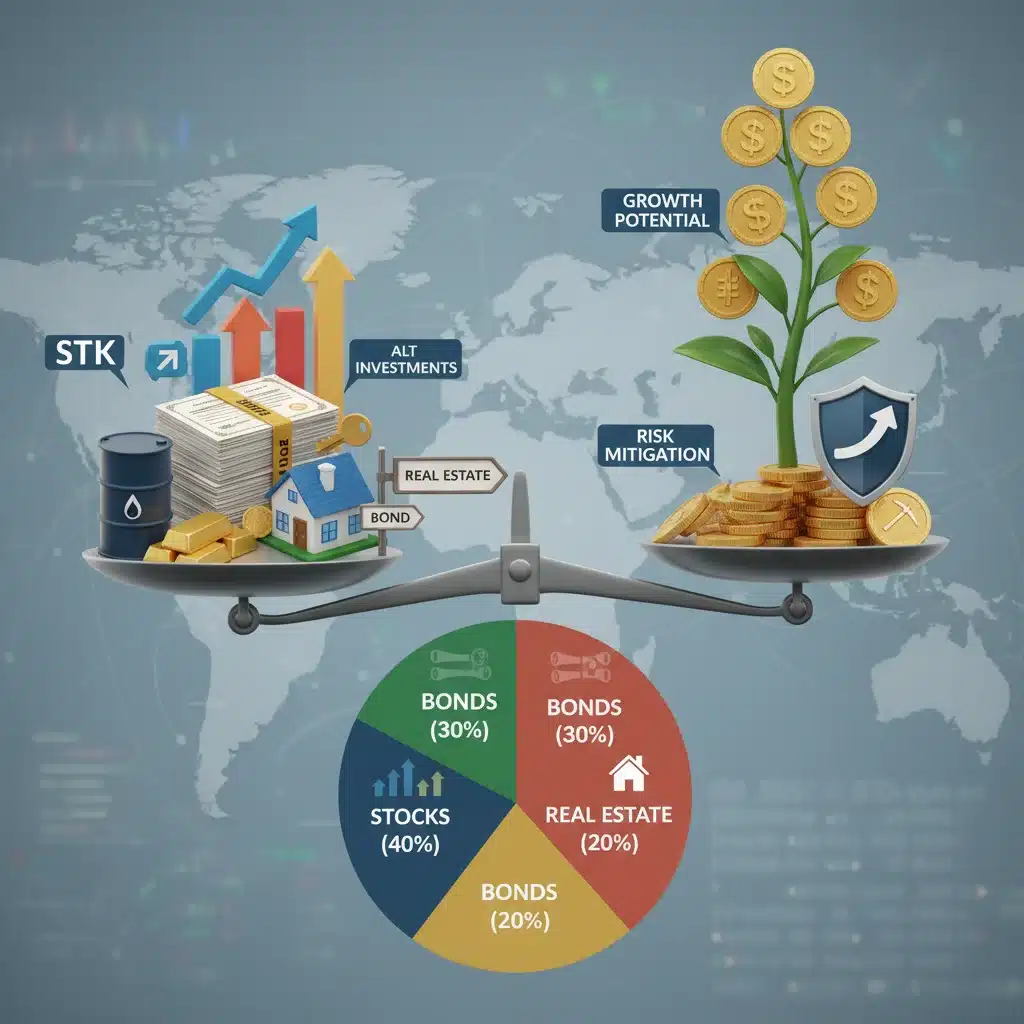
The specific allocation will depend on your risk tolerance and time horizon. A common strategy for younger freelancers is to have a higher allocation to stocks (e.g., 70-80%) and a smaller allocation to bonds and other assets. As you approach retirement, you might shift towards a more conservative allocation.
3. Embrace Low-Cost Index Funds and ETFs
For most investors, especially those without the time or expertise for active stock picking, low-cost index funds and ETFs are superior. These funds track a specific market index (like the S&P 500) and inherently provide broad diversification. Their low expense ratios mean more of your money stays invested and grows, directly contributing to higher net returns over time. Vanguard, Fidelity, and iShares are popular providers of such funds.
4. Consider Growth Stocks and Sectors
To push towards a 10% annual return, consider allocating a portion of your stock portfolio to growth-oriented companies and sectors. These are often companies in innovative industries (e.g., technology, renewable energy, biotechnology) that are expected to grow at a faster rate than the overall market. While higher growth potential comes with higher risk, strategic allocation can significantly boost returns. Always research thoroughly and avoid speculative ‘hot’ stocks.
5. Explore Real Estate Investment Trusts (REITs) and Crowdfunding
Direct real estate ownership can be capital-intensive and illiquid. REITs offer an excellent alternative, allowing you to invest in portfolios of income-generating real estate without buying physical properties. They trade like stocks on major exchanges, offer diversification, and often pay high dividends, contributing to your overall return. Real estate crowdfunding platforms also provide access to specific property investments with lower entry points.
6. Dollar-Cost Averaging
Given the irregular nature of freelance income, dollar-cost averaging is an invaluable strategy. Instead of trying to time the market, you invest a fixed amount of money at regular intervals (e.g., monthly or quarterly), regardless of market fluctuations. This strategy helps reduce your average cost per share over time and removes the emotional component from investing. When income is high, you can contribute more; during leaner times, you maintain your regular contributions, buying more shares when prices are low.
Risk Management and Adjusting for Freelancer Volatility
Achieving a 10% annual return inherently involves taking on some risk. For freelancers, managing this risk is even more critical due to income variability.
1. The Ironclad Emergency Fund
Reiterating this point because it’s foundational: your emergency fund is your first line of defense. Without it, market downturns or unexpected client losses could force you to sell investments at a loss, derailing your 10% annual return goal.
2. Insurance as a Financial Safety Net
Beyond health insurance, consider other forms of coverage: disability insurance (to protect your income if you can’t work), and professional liability insurance (errors and omissions) if your work requires it. These safeguard your assets and income, preventing unforeseen events from wiping out your investment gains.
3. Regular Portfolio Rebalancing
Over time, some asset classes in your portfolio will grow faster than others, causing your allocation to drift from your target. Regular rebalancing (e.g., annually) involves selling some of your outperforming assets and buying more of your underperforming ones to restore your original desired allocation. This helps maintain your risk profile and can even lead to buying low and selling high.
4. Stay Informed, Not Emotional
The financial markets are susceptible to news cycles and emotional swings. As a freelancer, it’s easy to get caught up in the hype or panic. Base your investment decisions on solid research, your financial plan, and your long-term goals, rather than short-term market noise or fear of missing out (FOMO).
Advanced Strategies for Boosting Returns (with increased risk)
Once you have a solid foundation, you might consider some advanced strategies to further push towards or exceed the 10% annual return target. These come with increased risk and are not suitable for everyone.
1. Investing in Your Own Business
Sometimes, the best investment is in yourself and your business. Allocating capital to acquire new skills, tools, marketing, or expand your service offerings can yield returns far exceeding 10% annually, directly increasing your primary income stream which can then be invested.
2. Peer-to-Peer (P2P) Lending
Platforms like Prosper or LendingClub allow you to lend money to individuals or small businesses. Returns can be attractive (often in the 5-15% range), but default risk is a significant consideration. Diversifying across many small loans is crucial.
3. Dividend Growth Stocks
Investing in companies with a track record of consistently increasing their dividends can provide a steady income stream and capital appreciation. These are often mature, stable companies that can weather economic downturns, and the reinvestment of dividends can significantly compound your returns over time.
4. Small-Cap Value Stocks
While more volatile, small-cap value stocks (companies with smaller market capitalizations that are undervalued by the market) have historically outperformed large-cap growth stocks over very long periods. A small allocation to a diversified small-cap value fund could enhance your overall portfolio returns.
Tools and Resources for Freelancer Investors
The right tools can make managing your freelancer investment strategies much easier:
- Robo-Advisors: Services like Betterment or Wealthfront automate investment management, rebalancing, and tax-loss harvesting based on your goals and risk tolerance. They are excellent for beginners or those who prefer a hands-off approach.
- Online Brokerages: Fidelity, Vanguard, Charles Schwab, and E*TRADE offer platforms to buy individual stocks, ETFs, mutual funds, and manage your retirement accounts.
- Budgeting Software: Tools like YNAB (You Need A Budget), Mint, or Personal Capital can help you track income, expenses, and identify more money to invest.
- Financial Planners: Consider consulting a fee-only financial advisor who specializes in working with self-employed individuals. They can provide personalized advice and help you create a comprehensive financial plan.

The Psychology of Investing as a Freelancer
Beyond the numbers and strategies, the psychological aspect of investing is crucial for freelancers. The inherent instability of freelance income can make market downturns feel even more daunting. Here’s how to navigate the mental game:
- Stay Disciplined: Stick to your investment plan, even when the market is volatile. Panic selling is one of the biggest destroyers of wealth.
- Focus on the Long-Term: Short-term market fluctuations are normal. Your 10% annual return goal is a long-term average, not a guarantee for every single year.
- Educate Yourself Continuously: The more you understand about investing, the less frightening it becomes. Read books, listen to podcasts, and follow reputable financial news sources.
- Celebrate Small Wins: Acknowledge your progress. Reaching a savings goal or seeing your portfolio grow can be incredibly motivating.
Looking Ahead to 2026 and Beyond
The year 2026 will likely bring new market conditions, technological advancements, and economic shifts. Staying adaptable and informed will be key. While specific market predictions are challenging, the core principles of sound investing – diversification, long-term perspective, and consistent contributions – remain timeless. Emerging technologies like AI, blockchain, and sustainable energy are likely to continue their growth trajectories, offering potential investment opportunities. However, always exercise due diligence and consider these within a well-diversified portfolio.
For freelancers, the ability to pivot and adapt is a superpower in your professional life; apply the same agility to your financial planning. Regularly review your financial plan, adjust your contributions as your income changes, and rebalance your portfolio to stay on track with your 10% annual return target.
Conclusion: Empowering Your Freelance Financial Journey
Building a stable financial future as a freelancer, with an ambitious goal of a 10% annual return, is entirely achievable with careful planning and disciplined execution. By understanding your unique financial landscape, maximizing tax-advantaged accounts, diversifying your investments, and managing risk effectively, you can transform the perceived instability of freelancing into a powerful engine for wealth creation.
Remember, the journey to financial independence is a marathon, not a sprint. Start early, stay consistent, and continuously educate yourself. The freedom of freelancing can extend to financial freedom, allowing you to live life on your own terms, secure in the knowledge that your investments are working hard for you. Embrace these freelancer investment strategies and empower your financial future in 2026 and for decades to come.