Freelancer Investment Strategies 2026: Grow $5,000 for Future Success

Anúncios
As a freelancer, the concept of financial stability can often feel like a moving target. Unlike traditional employment with fixed salaries and benefits, your income streams can fluctuate, making long-term financial planning a unique challenge. However, with careful consideration and smart choices, building wealth and securing your future is not only possible but highly achievable. This comprehensive guide will delve into effective freelancer investment strategies for 2026, specifically tailored for those looking to kickstart their investment journey with a $5,000 portfolio, balancing the crucial aspects of growth and liquidity. We’ll explore how to navigate the evolving financial landscape, leverage emerging opportunities, and mitigate the inherent risks of self-employment.
The year 2026 promises a dynamic economic environment, influenced by technological advancements, shifting market trends, and evolving global policies. For freelancers, understanding these dynamics is paramount to crafting a resilient and profitable investment plan. Our focus will be on practical, actionable advice that empowers you to make informed decisions, transforming your hard-earned $5,000 into a foundation for substantial financial growth. We’ll cover everything from establishing an emergency fund, understanding diverse investment vehicles, to optimizing your portfolio for both short-term flexibility and long-term appreciation. Get ready to master your financial destiny and build a robust investment framework designed for the unique demands of freelance life.
Anúncios
Understanding the Freelance Financial Landscape
Before diving into specific investment vehicles, it’s essential to grasp the unique financial characteristics of freelancing. Your income is often variable, project-based, and subject to economic fluctuations. This variability necessitates a different approach to financial planning compared to those with stable, W-2 employment. The core pillars of this approach are building a robust emergency fund, managing irregular cash flow, and understanding your risk tolerance as a self-employed individual.
The Imperative of an Emergency Fund for Freelancers
For freelancers, an emergency fund isn’t just a recommendation; it’s a non-negotiable safety net. Given the unpredictable nature of freelance income, having readily accessible funds to cover several months of living expenses is critical. While traditional advice often suggests 3-6 months, many financial advisors recommend 6-12 months for freelancers. This buffer provides peace of mind during slow periods, unexpected project cancellations, or health issues, preventing you from having to dip into your investments prematurely. This fund should be held in a highly liquid, low-risk account, such as a high-yield savings account, ensuring both accessibility and minimal exposure to market volatility. This foundational step is crucial before embarking on any significant freelancer investment strategies.
Managing Irregular Cash Flow and Budgeting
Effective budgeting is the backbone of successful freelance finance. Without a consistent paycheck, you need a system to track income and expenses meticulously. Tools like budgeting apps, spreadsheets, or even a simple ledger can help you understand your average monthly income and identify spending patterns. Consider implementing a ‘pay yourself first’ strategy, where a portion of every payment you receive is immediately allocated to savings and investments. This proactive approach ensures that your financial goals are prioritized, rather than being an afterthought. Automating transfers to your emergency fund and investment accounts can further streamline this process, making it easier to stick to your financial plan.
Anúncios
Assessing Your Risk Tolerance as a Self-Employed Individual
Your risk tolerance is a critical factor in determining your investment strategy. As a freelancer, you might already be accustomed to a certain level of risk inherent in your work. However, investment risk is different. It’s crucial to honestly assess how comfortable you are with potential fluctuations in your portfolio’s value. Are you comfortable with aggressive growth stocks, or do you prefer more stable, income-generating assets? Your age, financial goals, and the stability of your freelance career all play a role in this assessment. Understanding your risk tolerance will guide your asset allocation decisions, ensuring your investment choices align with your comfort level and long-term objectives.
Building Your $5,000 Freelancer Investment Portfolio for 2026
With your emergency fund in place and a clear understanding of your financial landscape, it’s time to build your initial $5,000 investment portfolio. The key here is diversification, balancing growth potential with liquidity, and selecting assets that align with your risk tolerance and long-term goals. For freelancers, the dynamic nature of their income often means they need access to funds faster than traditional investors, making liquidity a crucial consideration in their freelancer investment strategies.
Diversification: The Cornerstone of Smart Investing
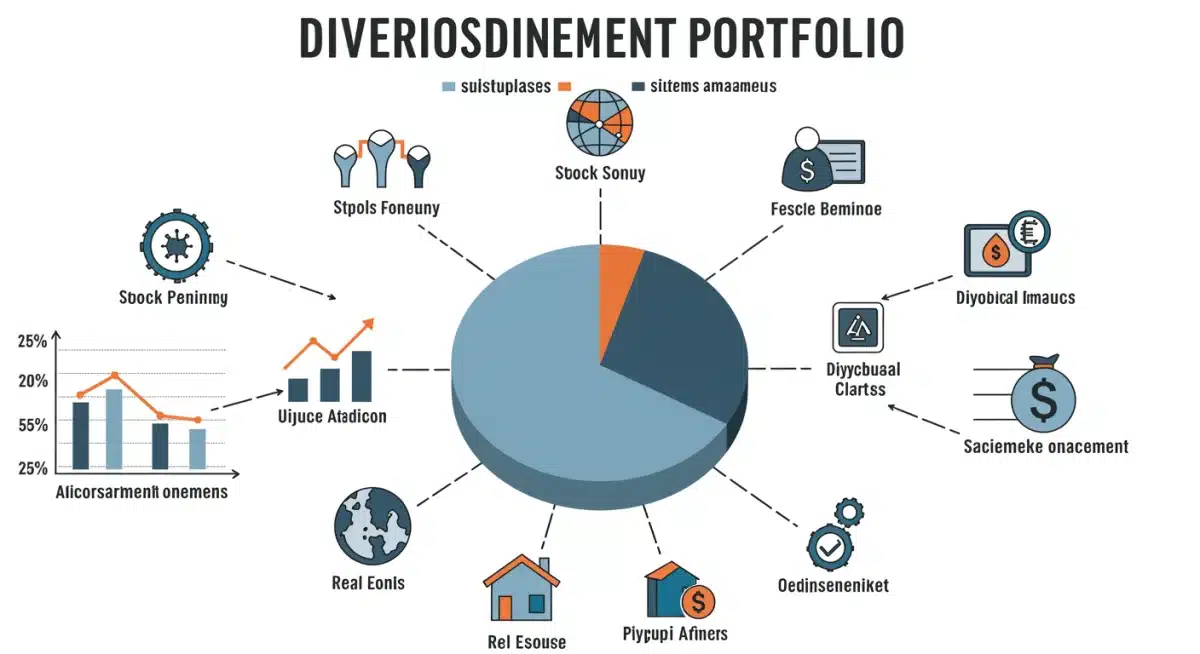
Diversification is paramount, especially with a smaller portfolio. It means spreading your investments across different asset classes, industries, and geographies to minimize risk. The old adage, ‘don’t put all your eggs in one basket,’ holds particularly true for investing. With $5,000, you can still achieve a reasonable level of diversification by focusing on broad-market funds or a combination of a few key assets.
Low-Cost Index Funds and ETFs: Your Go-To for Broad Market Exposure
For a $5,000 portfolio, low-cost index funds and Exchange Traded Funds (ETFs) are often the best starting point. These funds offer instant diversification by holding a basket of stocks or bonds that track a specific market index, like the S&P 500. They are passively managed, meaning lower fees compared to actively managed mutual funds, which can significantly eat into your returns over time. Examples include Vanguard S&P 500 ETF (VOO) or iShares Core S&P 500 (IVV). These provide exposure to hundreds of companies, spreading your risk across the broader market and offering solid growth potential.
Why Index Funds and ETFs are Ideal for Freelancers:
- Instant Diversification: You gain exposure to a wide range of assets with a single investment.
- Low Fees: Their passive management style translates to lower expense ratios, maximizing your returns.
- Accessibility: Many brokers offer commission-free trading on ETFs, making them accessible even for smaller investment amounts.
- Liquidity: ETFs can be bought and sold throughout the trading day, offering more flexibility than traditional mutual funds.
Exploring Emerging Opportunities: Tech, Green Energy, and Digital Assets
While broad market funds provide a solid foundation, 2026 also presents opportunities in specific sectors. Technology continues to innovate, green energy solutions are gaining momentum, and digital assets (like cryptocurrencies) are becoming more mainstream. For a portion of your $5,000, you might consider sector-specific ETFs that focus on these growth areas, if they align with your risk tolerance.
- Technology ETFs: Consider funds that focus on artificial intelligence, cybersecurity, or cloud computing. These sectors are poised for continued growth.
- Green Energy ETFs: As the world shifts towards sustainable practices, investments in renewable energy, electric vehicles, and sustainable infrastructure could see significant appreciation.
- Digital Assets (with caution): Cryptocurrencies like Bitcoin and Ethereum have shown immense growth potential but also extreme volatility. If you decide to allocate a small percentage (e.g., 1-5%) of your $5,000, do so with the understanding that you could lose it all. Consider using reputable exchanges and focusing on established coins. This is a higher-risk play and should only be considered after your core, diversified portfolio is established.
Considering Peer-to-Peer Lending and Robo-Advisors
For those looking for alternatives, peer-to-peer (P2P) lending platforms can offer higher interest rates than traditional savings accounts, though with higher risk. You’re effectively lending money to individuals or small businesses, and returns depend on their repayment. Similarly, robo-advisors like Betterment or Wealthfront can be excellent tools for freelancers. They use algorithms to build and manage diversified portfolios based on your risk tolerance and financial goals, often with low fees. They automate the investment process, making it easy to set up recurring contributions and rebalance your portfolio, which is a significant advantage for busy freelancers seeking efficient freelancer investment strategies.
Balancing Growth and Liquidity: A Freelancer’s Priority
The unique income structure of freelancing means that while long-term growth is important, maintaining access to your funds (liquidity) is equally, if not more, critical. Your freelancer investment strategies must reflect this dual priority.
The Importance of Liquidity for Freelancers
Liquidity refers to how easily an investment can be converted into cash without significantly affecting its value. For freelancers, this is vital. A sudden client loss, an unexpected expense, or a delayed payment can quickly deplete your cash reserves. Having a portion of your investments in highly liquid assets ensures you can weather these storms without having to sell off long-term growth assets at an unfavorable time. This is where your emergency fund plays a crucial role, but beyond that, some investment choices can offer a good balance.
Assets Providing a Balance of Growth and Accessibility
- High-Yield Savings Accounts (HYSA): While not strictly an investment, HYSAs offer better returns than traditional savings accounts while keeping your money readily accessible. They are ideal for your emergency fund and any short-term savings goals.
- Short-Term Bond ETFs: These funds invest in bonds with shorter maturities, making them less sensitive to interest rate fluctuations than long-term bonds. They offer more stability than stocks and provide a modest yield, contributing to liquidity.
- Money Market Funds: These are mutual funds that invest in highly liquid, short-term debt securities. They offer slightly higher returns than savings accounts and are very low risk, suitable for holding funds you might need within a year or two.
Strategies for Staggering Investments for Accessibility
Consider a ‘laddering’ strategy, where you divide your investments into different maturity periods. For example, if you have $5,000, you might put $2,000 into a broad market ETF for long-term growth, $1,500 into a short-term bond ETF for moderate liquidity and stability, and keep $1,500 in a high-yield savings account as an accessible buffer beyond your primary emergency fund. This approach ensures you have funds available at different levels of liquidity, matching your potential needs.
Tax Implications and Optimizing for Freelancers
Taxes are an unavoidable part of freelancing, and understanding their implications for your investments is crucial. Smart tax planning can significantly enhance your net returns and is an integral part of effective freelancer investment strategies.
Understanding Self-Employment Taxes and Investment Income
As a freelancer, you’re responsible for both the employer and employee portions of Social Security and Medicare taxes, known as self-employment tax. When you generate investment income (e.g., dividends, capital gains), this is typically taxed separately. Understanding how these different income streams are taxed is vital for accurate tax planning and avoiding surprises.
Retirement Accounts: SEP IRA and Solo 401(k)
Freelancers have excellent retirement savings options that offer significant tax advantages:
- SEP IRA (Simplified Employee Pension Individual Retirement Arrangement): This allows self-employed individuals to contribute a significant portion of their net self-employment earnings (up to 25% of compensation or $69,000 for 2024, whichever is less). Contributions are tax-deductible, and earnings grow tax-deferred until retirement.
- Solo 401(k): This option allows you to contribute both as an employee and an employer. As an employee, you can contribute up to $23,000 for 2024 (or $30,500 if age 50 or older). As an employer, you can contribute up to 25% of your net self-employment earnings. The combined limit is the same as a SEP IRA. Solo 401(k)s also offer Roth options, allowing for tax-free withdrawals in retirement.
Even with a $5,000 starting portfolio, opening one of these accounts can be incredibly beneficial. You can contribute a portion of your initial investment or future earnings to these tax-advantaged accounts, helping your money grow faster due to deferred or tax-free growth.
Health Savings Accounts (HSAs) as an Investment Vehicle
If you have a high-deductible health plan (HDHP), an HSA is a triple-tax-advantaged account: contributions are tax-deductible, earnings grow tax-free, and qualified withdrawals for medical expenses are also tax-free. Many HSAs allow you to invest funds beyond a certain cash threshold. For freelancers, an HSA can serve as an excellent investment vehicle for future medical costs while also providing another avenue for tax-advantaged growth. It’s an often-overlooked but powerful component of comprehensive freelancer investment strategies.
Long-Term Growth and Future Planning Beyond $5,000
Your initial $5,000 portfolio is just the beginning. The real power of investing comes from consistent contributions and the magic of compounding over time. As your freelance career grows and your income increases, so too should your investment contributions and the sophistication of your portfolio. This section focuses on scaling your freelancer investment strategies for sustained long-term growth.
The Power of Compounding: Start Early, Invest Consistently
Compounding is arguably the most powerful force in investing. It means earning returns on your initial investment and on the accumulated interest or gains from previous periods. The earlier you start and the more consistently you contribute, the more your money will grow exponentially over time. Even small, regular contributions can lead to substantial wealth building over decades. As a freelancer, establishing a habit of automating weekly or monthly contributions to your investment accounts, even small amounts, will pay immense dividends in the long run.
Increasing Contributions as Your Income Grows
As your freelance business flourishes and your income stabilizes or increases, make it a priority to escalate your investment contributions. Consider setting financial milestones: for every extra $1,000 you earn per month, allocate a percentage (e.g., 25-50%) to your investments. This disciplined approach ensures that your wealth grows in tandem with your professional success. Regularly review your budget and financial goals to identify opportunities to increase your investment capital.
Rebalancing Your Portfolio and Adjusting Risk
Over time, your portfolio’s asset allocation will shift due to market performance. Rebalancing involves periodically adjusting your portfolio back to your target asset allocation. For example, if stocks have performed exceptionally well, they might now constitute a larger percentage of your portfolio than you initially intended, increasing your overall risk. Rebalancing would involve selling some of your high-performing assets and reallocating those funds to underperforming assets or those that are below your target allocation. This helps maintain your desired risk level and ensures you’re not overly exposed to any single asset class.
Additionally, as you age and your financial goals evolve, your risk tolerance might change. Younger freelancers with a longer time horizon might be comfortable with more aggressive growth strategies, while those nearing retirement might prefer a more conservative approach focused on capital preservation and income. Regularly reassess your risk tolerance and adjust your portfolio accordingly.

Navigating Market Volatility and Staying Disciplined
Market volatility is an inherent part of investing. For freelancers, whose income can also be volatile, navigating these ups and downs requires a strong mindset and disciplined approach to their freelancer investment strategies.
Understanding Market Cycles and Avoiding Panic Selling
Markets move in cycles, experiencing periods of growth, consolidation, correction, and sometimes, recession. It’s crucial to understand that market downturns are a normal part of this cycle. The biggest mistake investors make is panic selling during a downturn, locking in losses. Historically, markets have always recovered and reached new highs over the long term. Instead of reacting emotionally, view downturns as opportunities to buy assets at lower prices.
Dollar-Cost Averaging: Your Best Friend in Volatile Markets
Dollar-cost averaging (DCA) involves investing a fixed amount of money at regular intervals, regardless of market conditions. This strategy helps mitigate the risk of market timing. When prices are high, your fixed investment buys fewer shares; when prices are low, it buys more shares. Over time, this averages out your purchase price, reducing the overall risk and potentially leading to better returns than trying to time the market. For freelancers with irregular income, setting up automated transfers on a consistent schedule (e.g., weekly or monthly) is a powerful way to implement DCA.
The Importance of a Long-Term Perspective
For a $5,000 portfolio, especially one aimed at significant growth, a long-term perspective is essential. Don’t expect to get rich overnight. Focus on your financial goals 5, 10, or even 20 years down the line. This long-term mindset helps you stay calm during market fluctuations and prevents impulsive decisions driven by short-term news cycles. Remember, time in the market is often more important than timing the market.
Harnessing Financial Education and Professional Guidance
Even with a solid understanding of freelancer investment strategies, continuous learning and seeking professional advice are invaluable. The financial world is constantly evolving, and staying informed is key to long-term success.
Continuous Learning: Books, Podcasts, and Online Resources
Educate yourself continuously. There are countless reputable books, podcasts, financial blogs, and online courses dedicated to personal finance and investing. Follow financial news, but be discerning about your sources. Understanding fundamental investment principles, economic indicators, and tax laws will empower you to make more confident and effective financial decisions.
When to Seek Professional Financial Advice
While you can manage your $5,000 portfolio independently, there comes a time when professional guidance becomes beneficial. Consider consulting a fee-only financial planner who specializes in working with freelancers or small business owners. They can help you:
- Develop a personalized financial plan that accounts for your unique freelance income.
- Optimize your tax strategy.
- Refine your investment portfolio as it grows.
- Plan for major life events like buying a home, saving for college, or retirement.
Even a one-time consultation can provide immense value and set you on the right path. Look for advisors with relevant certifications (e.g., CFP – Certified Financial Planner) and a fiduciary duty, meaning they are legally obligated to act in your best interest.
Conclusion: Your Path to Financial Freedom as a Freelancer
Embarking on your investment journey as a freelancer in 2026 with a $5,000 portfolio is an empowering step towards financial independence. By prioritizing your emergency fund, wisely choosing diversified, low-cost investment vehicles like index funds and ETFs, and strategically incorporating tax-advantaged accounts, you lay a robust foundation for future wealth.
Remember, successful freelancer investment strategies are not about getting rich quickly; they are about consistent effort, disciplined saving, and a long-term perspective. Embrace the unique advantages of your freelance career, such as the flexibility to scale your income and tailor your financial decisions. Stay informed, rebalance your portfolio as needed, and don’t shy away from seeking professional advice when your financial situation becomes more complex.
The road to financial freedom for a freelancer is paved with smart choices, resilience, and a proactive approach to managing your money. Your $5,000 today, invested wisely and consistently, has the potential to grow into a significant asset, providing you with the security and flexibility to truly thrive in your freelance endeavors. Start today, stay committed, and watch your financial future unfold.