Digital Nomad Visas 2026: New Opportunities for US Citizens
Anúncios
Navigating the 2026 Digital Nomad Visa Landscape: 5 Countries Opening New Doors for US Citizens
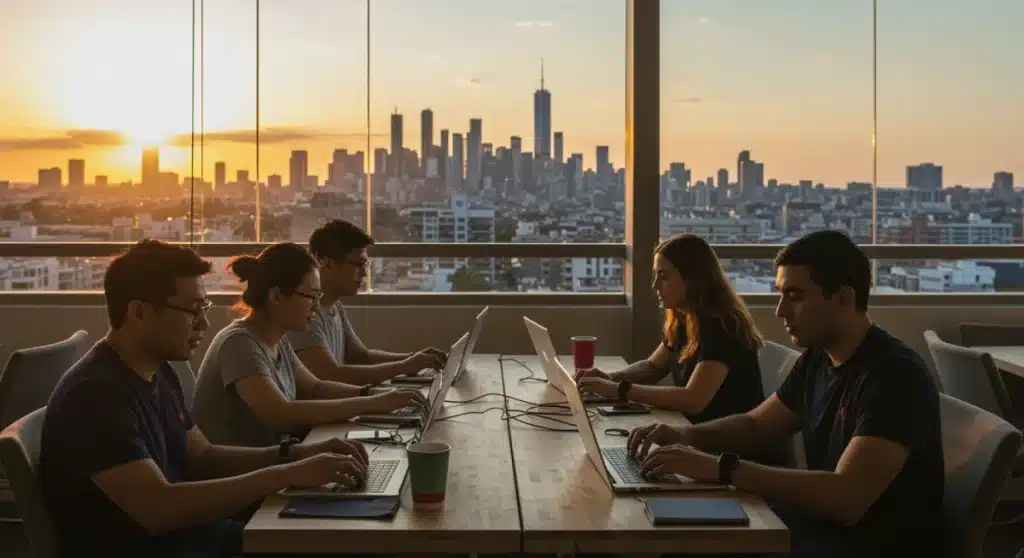
The world of remote work continues its exponential growth, transforming traditional employment models and inspiring a new generation of professionals to embrace a location-independent lifestyle. For US citizens, the appeal of exploring new cultures, experiencing different ways of life, and optimizing work-life balance from a foreign land is stronger than ever. As we look ahead to 2026, the landscape of digital nomad visas is rapidly expanding, with more countries recognizing the economic benefits and cultural enrichment that remote workers bring. This comprehensive guide will delve into the exciting opportunities emerging for US citizens, highlighting five new countries expected to offer or significantly enhance their digital nomad visa programs in 2026. Understanding these evolving policies is crucial for anyone planning their next international remote work adventure.
The concept of the digital nomad, once a niche lifestyle, has firmly entered the mainstream. Fueled by technological advancements and a global pandemic that accelerated the adoption of remote work, millions are now free to choose where they live and work. Governments worldwide are taking notice, competing to attract this valuable demographic. Digital nomads often bring high-income streams, contributing to local economies without directly competing for local jobs. They invigorate tourism, support local businesses, and often engage in cultural exchange that enriches host communities. For US citizens, who often face complex visa requirements for long-term stays in many desirable locations, the advent of specific digital nomad visas simplifies the process, offering legal residency, access to local services, and a clear pathway for extended stays.
Anúncios
As 2026 approaches, several nations are refining existing programs or launching entirely new ones, specifically targeting remote workers. This article will not only identify these promising new destinations but also provide a deep dive into what US citizens can expect in terms of eligibility, application processes, benefits, and the unique cultural experiences each country offers. We’ll explore everything from the cost of living and internet infrastructure to healthcare considerations and community support. Our aim is to equip you with the knowledge needed to make an informed decision about where your next remote work journey will take you.
The Rise of Digital Nomad Visas: A Global Trend
Before we spotlight the specific countries, it’s essential to understand the broader trend. The proliferation of digital nomad visas 2026 is a testament to a fundamental shift in global economics and labor. Countries are increasingly recognizing that attracting remote workers is a strategic move for economic development. These visas are designed to be more straightforward than traditional work permits, often requiring proof of stable income from outside the host country, health insurance, and a clean criminal record. They bridge the gap between tourist visas, which typically limit stays to 90 days, and complex long-term residency permits that often require local employment sponsorship.
Anúncios
For US citizens, this trend is particularly beneficial. While the US passport offers extensive visa-free travel, many popular European and Asian destinations still impose strict limits on stay durations. Digital nomad visas provide a legal framework for extended visits, allowing individuals to immerse themselves more deeply in a culture, establish routines, and truly experience life abroad without the constant worry of overstaying their welcome. The benefits extend beyond legality; they often include access to local banking, potential tax advantages (though always consult a tax professional), and a sense of stability that short-term travel cannot offer.
The competitive nature of this market means that countries are not just offering visas, but also developing attractive packages. This includes dedicated support services for new arrivals, co-working spaces, community events, and even incentives like tax breaks or simplified business registration. As 2026 approaches, we anticipate even more sophisticated and comprehensive programs designed to entice the global remote workforce, making it an opportune time for US citizens to consider their options.
Key Considerations for US Citizens Applying for Digital Nomad Visas in 2026
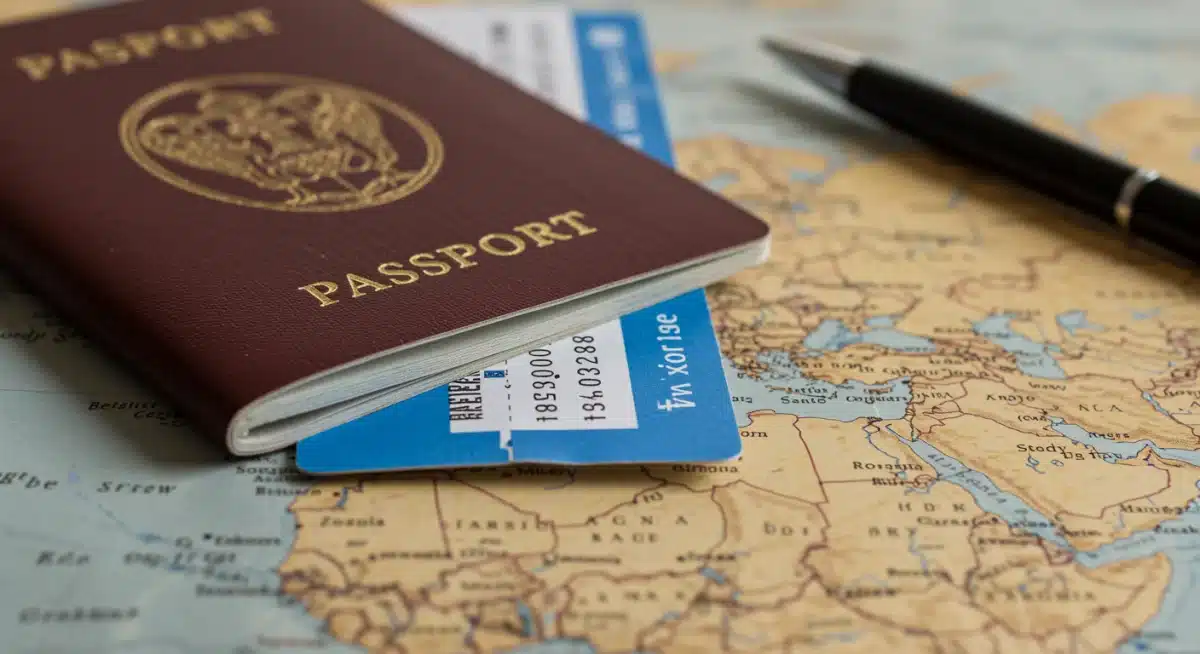
While the allure of living and working abroad is strong, preparing for a digital nomad visa application requires careful planning. For US citizens eyeing the digital nomad visas 2026, several universal factors will come into play, regardless of the destination:
- Income Requirements: Most digital nomad visas stipulate a minimum monthly income, typically ranging from $2,000 to $5,000 USD, though this can vary significantly. This income must usually come from sources outside the host country.
- Proof of Remote Work: Applicants need to demonstrate that their job can be performed remotely and that they are employed by a company outside the host country, or that they are self-employed with clients primarily outside the host country.
- Health Insurance: Comprehensive health insurance valid in the host country for the duration of the stay is almost always a mandatory requirement.
- Clean Criminal Record: A background check and often a criminal record certificate will be required.
- Passport Validity: Your US passport must be valid for at least six months beyond your intended stay.
- Accommodation Proof: Some countries may require proof of accommodation for the initial period of your stay.
- Application Fees: Be prepared for non-refundable application fees, which can range from a few hundred to over a thousand dollars.
- Tax Implications: This is a critical point. While you will likely not pay income tax in the host country on your foreign earnings under many digital nomad visa schemes, US citizens are always subject to US tax laws, regardless of where they live. Understanding the Foreign Earned Income Exclusion (FEIE) and other potential tax treaties is vital. Consulting with a tax professional specializing in expatriate taxes is highly recommended.
Understanding these general requirements will help US citizens streamline their application process for digital nomad visas 2026 and ensure a smoother transition to their new remote work location.
5 New Digital Nomad Visa Destinations for US Citizens in 2026
While many countries already offer digital nomad visas, 2026 promises to bring new and enhanced opportunities. Here are five countries that are either launching new programs or significantly improving existing ones, making them particularly attractive for US citizens:
1. Japan: The Land of the Rising Sun Embraces Remote Work
Japan, a country known for its unique blend of ancient traditions and futuristic technology, is poised to become a major player in the digital nomad scene in 2026. While details are still emerging, the Japanese government has indicated strong interest in attracting remote workers. This move is significant, as Japan has historically had more stringent visa policies.
- Why Japan? For US citizens, Japan offers an unparalleled cultural experience, from the bustling streets of Tokyo to the tranquil temples of Kyoto. Its high-speed internet, efficient public transportation, and incredibly low crime rates make it an ideal place for remote work. The culinary scene is world-class, and the opportunity to immerse oneself in Japanese language and customs is a huge draw.
- Expected Requirements (Anticipated for 2026): It is anticipated that Japan’s digital nomad visa will target individuals with a stable income (likely above $3,000-$4,000 USD per month), comprehensive health insurance, and a clean criminal record. The visa term is expected to be around one year, with potential for renewal.
- Benefits: Access to Japan’s safe and efficient infrastructure, vibrant cities, stunning natural beauty, and a rich cultural heritage. The visa will provide a legal framework for extended stays, allowing US citizens to truly experience Japan beyond a typical tourist visit.
- Challenges: The cost of living in major cities like Tokyo can be high, though more affordable options exist in regional areas. Language barriers can also be a challenge, though English is increasingly spoken in urban centers.
2. South Korea: Tech Hub with Rich History
Following in the footsteps of its East Asian neighbor, South Korea is also signaling its intent to open its doors wider to remote workers in 2026. Known for its incredible technological advancements, K-Pop culture, and delicious cuisine, South Korea offers a dynamic environment for digital nomads.
- Why South Korea? US citizens will find South Korea to be a highly connected society with some of the fastest internet speeds in the world. Its cities, like Seoul and Busan, are vibrant hubs of innovation and entertainment. The country boasts a fascinating history, beautiful landscapes, and a very safe environment.
- Expected Requirements (Anticipated for 2026): Similar to Japan, expect income requirements (possibly around $3,000-$4,000 USD monthly), proof of remote employment, and health insurance. The visa is likely to be valid for one year, with potential for extension.
- Benefits: Exceptional internet infrastructure, a thriving ex-pat community, a unique blend of modern and traditional culture, and excellent public transport. Access to cutting-edge technology and a high quality of life.
- Challenges: The language barrier can be significant outside of major tourist areas. The work culture, even for remote workers, can sometimes feel intense.
3. Portugal (Enhanced Program): A European Favorite Gets Better
Portugal already has a popular D7 visa that many digital nomads utilize, but 2026 is expected to bring significant enhancements or a dedicated, streamlined digital nomad visa. Portugal has consistently ranked high as a top destination for remote workers due to its affordable cost of living, beautiful coastline, and welcoming culture.
- Why Portugal? For US citizens, Portugal offers a temperate climate, stunning beaches, historic cities, and delicious food and wine. It’s an affordable entry point into Europe and boasts a growing English-speaking population, especially in cities like Lisbon and Porto. The existing D7 program has shown the government’s willingness to attract foreign residents.
- Expected Requirements (Enhanced for 2026): The current D7 requires proof of passive income (like pensions, rentals) or remote work income (minimum wage x 4, roughly €3,040/month in 2024). The enhanced program might focus specifically on active remote work income, potentially with a clearer, faster application process. Health insurance and a clean criminal record will remain standard.
- Benefits: EU residency, access to the Schengen Area, a relatively low cost of living compared to other Western European countries, beautiful scenery, and a relaxed lifestyle. Potential for eventual permanent residency or citizenship.
- Challenges: Bureaucracy can be slow, and learning Portuguese, while not strictly necessary in major cities, is highly recommended for deeper immersion. Housing in popular areas can be competitive.
4. Brazil: South America’s Vibrant Gem
Brazil, with its vast landscapes, vibrant culture, and diverse ecosystems, is expected to make its digital nomad visa more accessible and appealing to US citizens by 2026. While a digital nomad visa was introduced in early 2022, continuous improvements are anticipated to attract a larger share of the global remote workforce.
- Why Brazil? US citizens looking for adventure, warm weather, and a rich cultural experience will find Brazil captivating. From the Amazon rainforest to the iconic beaches of Rio de Janeiro, Brazil offers unparalleled natural beauty and a lively atmosphere. The cost of living is generally lower than in North America or Europe.
- Expected Requirements (Enhanced for 2026): The current visa requires proof of remote work and a minimum monthly income (around $1,500 USD or $18,000 USD in savings). The enhanced program might simplify the application process or offer longer initial stays. Health insurance and a clean background check are standard.
- Benefits: Stunning natural beauty, vibrant cultural scene, warm climate, and an affordable cost of living. Opportunity to learn Portuguese and explore a massive, diverse country.
- Challenges: Safety can be a concern in certain urban areas, and a basic understanding of Portuguese is highly beneficial. Internet infrastructure varies significantly by region.
5. United Arab Emirates (UAE) – Expanded Opportunities
The UAE, particularly Dubai, has been a pioneer in attracting remote workers with its virtual work visa. In 2026, we anticipate further expansion and refinement of this program, potentially including more flexible options or specific incentives for US citizens and other high-skilled remote professionals.
- Why UAE? For US citizens, the UAE offers a tax-free income environment (for income earned outside the UAE), world-class infrastructure, high-quality healthcare, and a luxurious lifestyle. It’s a global hub with excellent connectivity and a large expatriate community.
- Expected Requirements (Expanded for 2026): The current virtual work visa requires a minimum monthly income of $3,500 USD, proof of employment or business ownership, and health insurance. The expanded program might introduce different tiers or more straightforward pathways for certain professions.
- Benefits: Tax-free income, high standard of living, very safe environment, excellent global connectivity, and a diverse international community. Strategic location for travel between East and West.
- Challenges: The cost of living, especially in Dubai, can be very high. The culture is conservative, and understanding local customs is important. The climate can be extremely hot during summer months.
Preparing for Your Digital Nomad Journey in 2026
Once you’ve identified your target country among the emerging digital nomad visas 2026, the real planning begins. Here’s a checklist for US citizens to ensure a smooth transition:
- Financial Planning: Beyond meeting the income requirements, ensure you have sufficient savings for initial setup costs, unexpected expenses, and a buffer. Research the cost of living in your chosen city thoroughly.
- Tax Consultation: As mentioned, US citizens have unique tax obligations. Consult with a tax specialist to understand the Foreign Earned Income Exclusion, foreign tax credits, and state tax residency implications.
- Health Insurance: Secure comprehensive international health insurance that covers you in your chosen country. Do not underestimate the importance of this.
- Internet and Connectivity: Research internet speeds and reliability in your prospective city. While most major cities are well-equipped, rural areas might vary. Consider a local SIM card or eSIM for mobile data.
- Banking: Explore opening a local bank account once you arrive, as it can simplify day-to-day transactions. Maintain a US bank account for direct deposits and transfers.
- Accommodation: Plan your initial accommodation (e.g., Airbnb, short-term rental) and research long-term housing options. Many digital nomads start with a month-to-month rental before committing to a longer lease.
- Community and Networking: Look for online communities (Facebook groups, Reddit) of digital nomads or expatriates in your target country. These can be invaluable for advice, support, and making connections.
- Cultural Immersion: Learn basic phrases in the local language. Research local customs, etiquette, and laws to ensure a respectful and smooth integration into your new environment.
- Legal Documentation: Gather all necessary documents well in advance: passport, birth certificate, marriage certificate (if applicable), academic degrees, professional licenses, and any other documents that might be required for the visa application or local registration.
The Future of Remote Work and Global Mobility
The trend of increasing digital nomad visas 2026 is not just a temporary phenomenon; it represents a fundamental shift in how we view work and international living. As technology continues to advance, making remote work more efficient and accessible, more individuals will seek opportunities to combine their professional lives with global exploration. Governments will continue to adapt their immigration policies to attract this valuable demographic, leading to more diverse and competitive visa programs.
For US citizens, this opens up a world of possibilities that were once reserved for a select few. The ability to legally reside and work in a foreign country for an extended period offers a chance for profound personal and professional growth. It fosters cross-cultural understanding, encourages skill development, and provides unique insights into different societies.
As you plan your 2026 digital nomad adventure, remember that flexibility, adaptability, and thorough research are your greatest assets. The world is becoming increasingly interconnected, and the opportunity to be a global citizen while maintaining your career is within reach. Embrace the challenge, prepare diligently, and look forward to an enriching experience that will undoubtedly shape your future.
Conclusion: Your 2026 Digital Nomad Adventure Awaits
The year 2026 is shaping up to be a landmark year for US citizens aspiring to join the ranks of digital nomads. With countries like Japan, South Korea, Portugal, Brazil, and the UAE either introducing new or significantly enhancing their digital nomad visa programs, the options for remote work abroad are more exciting and accessible than ever before. These visas offer not just a legal pathway to extended stays but also an invitation to immerse oneself in new cultures, expand horizons, and achieve an unparalleled work-life balance.
While the prospect of living and working in a foreign country is thrilling, it requires diligent preparation. From understanding the specific requirements of each visa program to managing financial and tax implications, and ensuring you have adequate health coverage, every step is crucial. By leveraging the information provided in this guide and conducting your own detailed research, US citizens can confidently navigate the 2026 digital nomad visa landscape and embark on a truly transformative journey. The world is your office, and 2026 is your year to explore it.