Navigating the 2026 Digital Nomad Visa Landscape in the United States: A 3-Month Outlook for Aspiring Remote Workers

Anúncios
Navigating the 2026 Digital Nomad Visa Landscape in the United States: A 3-Month Outlook for Aspiring Remote Workers
The allure of the United States as a hub for innovation, culture, and economic opportunity has long captivated individuals worldwide. For digital nomads, the prospect of living and working remotely from American soil presents an exciting, albeit complex, challenge. As we look towards 2026, the concept of a dedicated US Digital Nomad Visa remains a hot topic, with ongoing discussions and potential legislative shifts that could reshape the landscape for aspiring remote workers. This comprehensive guide offers a 3-month outlook, dissecting the current environment, anticipated changes, and strategic advice for those dreaming of a US-based remote work lifestyle.
The global rise of remote work has undeniably accelerated the demand for specific immigration pathways tailored to digital nomads. While many countries have introduced bespoke digital nomad visas, the United States has historically lagged in this regard, relying on existing visa categories that often don’t perfectly fit the remote worker’s profile. However, with increasing pressure from the tech sector, remote work advocates, and the economic benefits that digital nomads bring, 2026 could mark a pivotal year. Understanding the nuances of this evolving situation is crucial for anyone planning to leverage the potential opportunities.
Anúncios
The Current State of US Immigration for Remote Workers
Before delving into the future, it’s essential to understand the present. Currently, the United States does not offer a specific US Digital Nomad Visa. Remote workers seeking to live and work in the US must navigate existing visa categories, which are primarily designed for traditional employment, tourism, or investment. This often leads to a convoluted and sometimes frustrating process. The most common pathways, each with significant limitations for pure digital nomads, include:
- B-1 (Business Visitor) / B-2 (Tourist Visitor) Visas: These visas are strictly for short-term visits. While a B-1 visa allows for business activities like attending conferences or negotiating contracts, it explicitly prohibits engaging in productive employment for a US employer or earning income from a US source. For digital nomads working for foreign companies, the line can be blurry, but generally, sustained remote work while physically present in the US on a B-1/B-2 visa is not permitted and can lead to issues upon re-entry or during visa interviews.
- H-1B Visa (Specialty Occupations): This is a non-immigrant visa that allows US employers to temporarily employ foreign workers in specialty occupations. It requires a US employer sponsor, a job offer, and specific educational qualifications. It is highly competitive, cap-subject, and fundamentally not designed for individuals who wish to work remotely for a foreign company without a US sponsor.
- L-1A/L-1B Visa (Intracompany Transferee): This visa is for employees of international companies who are being transferred to a US office of the same company. Again, it requires a corporate structure and a direct transfer, not independent remote work.
- O-1 Visa (Individuals with Extraordinary Ability or Achievement): This visa is for individuals who possess extraordinary ability in the sciences, arts, education, business, or athletics, or who have a demonstrated record of extraordinary achievement in the motion picture or television industry. While some highly successful freelancers or entrepreneurs might qualify, it’s a high bar and not a general solution for most digital nomads.
- E-2 Visa (Treaty Investors): This visa is for nationals of countries with which the US maintains a treaty of commerce and navigation, who are coming to the US to develop and direct the operations of an enterprise in which they have invested a substantial amount of capital. This is an option for entrepreneurs, not typically for employees of foreign companies.
The lack of a direct pathway forces many digital nomads to either operate in a legal grey area, risk overstaying, or simply avoid the US altogether. This scenario is increasingly recognized as a missed economic opportunity for the United States, paving the way for potential policy changes.
Anúncios
The Case for a US Digital Nomad Visa: Economic Incentives and Global Trends
The economic benefits of attracting digital nomads are becoming undeniable. These individuals often bring significant foreign income, contributing to local economies through housing, consumption, and services, without directly competing for local jobs. They also foster innovation and cultural exchange. Countries worldwide have recognized this, leading to a proliferation of digital nomad visas:
- European Pioneers: Countries like Portugal, Spain, Croatia, and Estonia have established successful digital nomad visa programs, attracting thousands of remote workers and boosting their economies.
- Caribbean and Latin American Initiatives: Barbados, Costa Rica, and Mexico have also entered the fray, offering attractive packages for remote workers seeking warmer climates and vibrant cultures.
- Asian Entrants: Thailand and Indonesia, among others, are actively developing or have launched their own digital nomad visa schemes.
The US, by not having a dedicated US Digital Nomad Visa, is effectively missing out on a share of this growing global talent pool and the economic injection they represent. This international trend, coupled with the continued growth of remote work domestically, is creating a strong impetus for legislative action within the US.
3-Month Outlook: What to Expect Leading Up to 2026
Month 1: Early 2026 – Continued Advocacy and Legislative Discussions
As we enter early 2026, expect to see continued advocacy from various stakeholders. Tech industry leaders, remote work organizations, and even some state-level economic development agencies are likely to intensify their lobbying efforts for a federal US Digital Nomad Visa. These efforts will focus on highlighting the economic advantages – increased tax revenue, local spending, and the potential to attract highly skilled individuals who can contribute to the American innovation ecosystem.
Legislation in the US is a slow and often complex process. While a dedicated digital nomad visa bill might be introduced or re-introduced in Congress, its immediate passage is unlikely. However, the discussions will serve to keep the issue on the legislative agenda, raising awareness among policymakers about the need for a modern immigration solution for remote workers. We might also see think tanks and research institutions publishing reports outlining the economic impact, further fueling the debate.
For aspiring digital nomads, this period will be characterized by a lot of speculation and news. It’s crucial to follow reputable immigration news sources, congressional updates, and reports from organizations like the National Immigration Forum or the Cato Institute, which often publish analyses on immigration policy.
Month 2: Mid-2026 – Potential for Pilot Programs or State-Level Initiatives
While federal legislation for a comprehensive US Digital Nomad Visa might still be some way off, the mid-2026 period could see the emergence of more localized or experimental approaches. Some states or even specific cities, particularly those eager to boost their economies and attract talent, might launch pilot programs or initiatives designed to lure remote workers. These might not be full-fledged visas but could involve:
- Incentive Programs: States like West Virginia, Oklahoma, and Vermont have already experimented with programs offering financial incentives to remote workers who relocate to their areas. These existing initiatives could be expanded or new ones launched, potentially offering more streamlined processes for certain types of foreign remote workers, although still operating within existing federal visa frameworks.
- Advocacy for Special Designations: Pressure might mount on the Department of Homeland Security (DHS) to consider special designations or interpretations of existing visa categories that could be more accommodating to digital nomads. This is a less likely but not impossible scenario, particularly if there’s significant economic pressure and a clear framework proposed.
- Private-Public Partnerships: We might witness private sector initiatives, perhaps led by tech companies or co-working spaces, that aim to facilitate the entry and integration of foreign remote workers, even if a direct visa isn’t available. These would likely focus on providing resources and support within the existing legal framework.
During this phase, it would be wise for remote workers to research specific state and city initiatives. Some regions are more proactive in attracting remote talent, and understanding their local policies and support systems can be beneficial. Networking with existing expat and remote worker communities in potential target locations could also provide valuable insights.
Month 3: Late 2026 – Increased Clarity and Preparation for Future Legislation
By late 2026, the discussion around a US Digital Nomad Visa is likely to gain more concrete shape. While a fully enacted federal visa program might still be in the future, this period could bring:
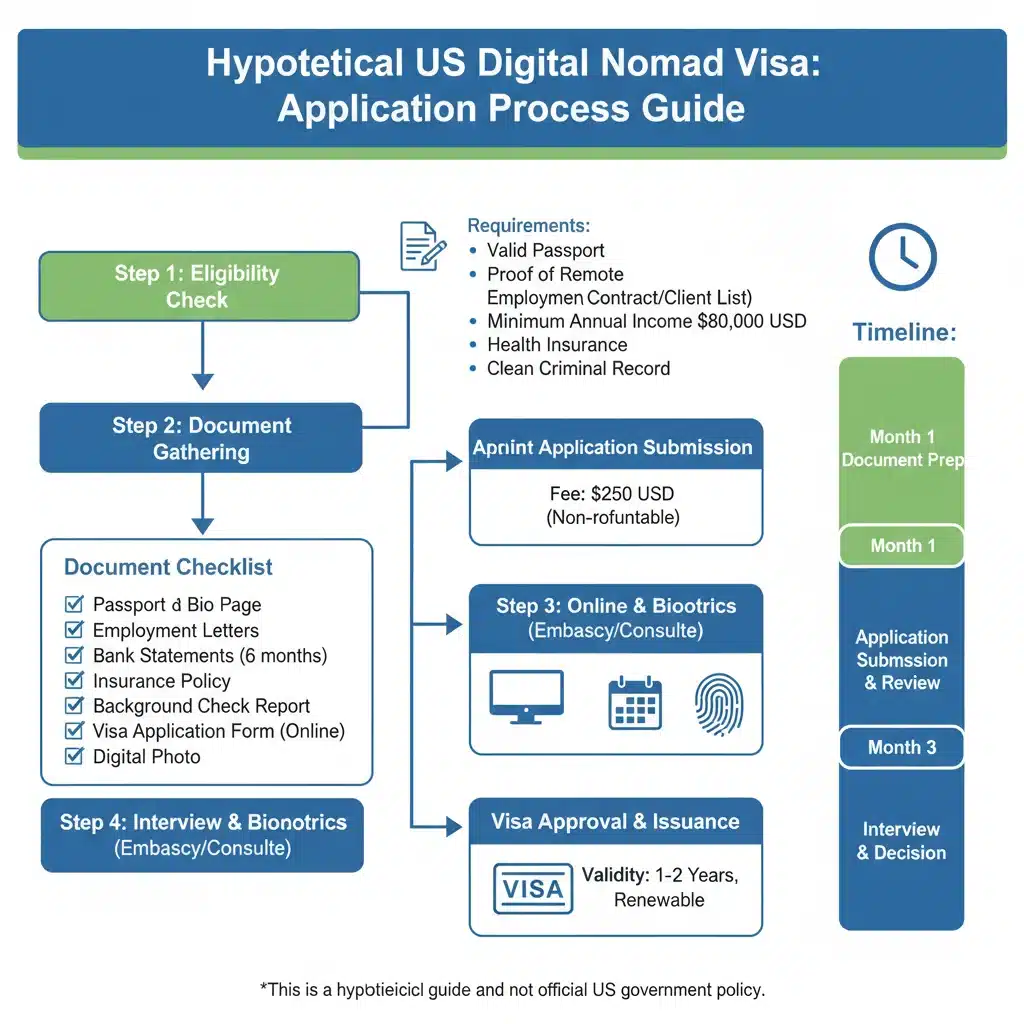
- Draft Legislation: We might see more refined draft legislation for a digital nomad visa making its way through congressional committees. These drafts would likely outline specific requirements, such as minimum income thresholds, health insurance mandates, proof of remote employment with a foreign entity, and potential fees.
- Public Comment Periods: If significant legislative progress is made, there could be public comment periods where individuals and organizations can provide feedback on proposed visa structures. This is an opportunity for the digital nomad community to voice their needs and concerns.
- Increased Awareness: The concept of a US Digital Nomad Visa will likely be more widely understood and discussed in mainstream media, leading to greater public awareness and potentially building momentum for its eventual implementation.
For aspiring digital nomads, this period is crucial for preparation. Even without a concrete visa, understanding the likely requirements based on international precedents and proposed legislation can help you get ready. This includes:
- Financial Preparedness: Start building a strong financial history and ensuring you meet potential income thresholds.
- Documentation: Organize your professional references, proof of remote employment, and educational qualifications.
- Health Insurance: Research international health insurance options that would cover you in the US.
Key Considerations for a Future US Digital Nomad Visa
Based on global trends and typical immigration requirements, any future US Digital Nomad Visa is likely to include several key components:
Income Requirements
Most digital nomad visas globally require applicants to demonstrate a stable income above a certain threshold, ensuring they can support themselves without becoming a burden on the host country’s public funds. For the US, this threshold could be significant, reflecting the higher cost of living in many American cities. Expect a minimum monthly income requirement, potentially ranging from $3,000 to $5,000 USD or more, depending on the specific legislation.
Proof of Remote Employment
Applicants will undoubtedly need to provide clear evidence of remote employment with a company based outside the United States, or demonstrate self-employment with clients predominantly located outside the US. This would typically involve employment contracts, client agreements, and bank statements showing regular income from foreign sources.
Health Insurance
Given the US healthcare system, comprehensive health insurance will almost certainly be a mandatory requirement. This would need to cover the applicant for the duration of their stay in the US, providing peace of mind for both the individual and the host country.
Clean Criminal Record
As with all US visa applications, a thorough background check will be conducted, requiring applicants to have a clean criminal record. This is a standard security measure for entry into the country.
Taxation Implications
This is one of the most complex aspects. While a digital nomad visa might allow you to reside in the US, understanding your tax obligations will be paramount. Depending on your length of stay and income source, you could become a US tax resident, subject to US federal and state income taxes. It is crucial to consult with a tax professional specializing in international taxation well in advance.
Duration and Renewability
Typical digital nomad visas offer initial stays of 1 to 2 years, with options for renewal. A US version would likely follow a similar pattern, balancing the desire to attract long-term residents with the need for flexibility.
Preparing for the Future: Actionable Steps for Aspiring Digital Nomads
Even without a definitive US Digital Nomad Visa in place, there are proactive steps you can take to position yourself favorably for any future opportunities:
- Strengthen Your Financial Standing: Consistently save and demonstrate a robust income stream. Maintain clear financial records that can easily prove your remote earnings.
- Solidify Your Remote Work Status: Ensure your employment contracts clearly state your remote work arrangement and that your employer is based outside the US. If self-employed, have well-documented client contracts and invoices.
- Build a Strong Professional Portfolio: Showcase your skills and experience. A strong professional background can only help your case, regardless of the visa type.
- Research US Tax Laws: Familiarize yourself with the basics of US tax residency rules and potential tax implications for foreign income. This will be a critical component of any long-term stay.
- Explore Health Insurance Options: Begin researching international health insurance providers that offer coverage in the United States.
- Stay Informed: Regularly check official US government immigration websites (USCIS, Department of State), reputable immigration law firms’ blogs, and trusted news sources for updates on visa policy changes.
- Network with Other Digital Nomads: Join online communities and forums where digital nomads discuss their experiences and share information about visa processes.
- Consider Shorter-Term Explorations: If feasible, explore the US on a B-2 tourist visa (strictly for tourism, no remote work beyond checking emails, etc.) to get a feel for potential locations and communities. This helps in making informed decisions once a visa pathway becomes available.
Potential Challenges and Hurdles
Even if a US Digital Nomad Visa is introduced, it won’t be without its challenges. The US immigration system is notoriously complex, and any new category would likely face:
- High Demand: The US is a highly desirable destination, so demand for any such visa would likely be immense, potentially leading to competitive application processes.
- Bureaucratic Delays: The processing times for US visas can be lengthy, and a new category might initially experience significant backlogs.
- Evolving Requirements: The initial requirements might change over time as the program matures, requiring applicants to stay updated.
- State vs. Federal Laws: Navigating the interplay between federal immigration law and state-specific regulations (e.g., driver’s licenses, local taxes) could add layers of complexity.
The Broader Impact: How a US Digital Nomad Visa Could Reshape the Nation
The introduction of a US Digital Nomad Visa would have far-reaching implications beyond just individual remote workers. It could:
- Stimulate Local Economies: Digital nomads tend to spend their foreign-earned income locally, supporting small businesses, real estate markets, and service industries in the areas they choose to reside. This is particularly beneficial for less populous or economically struggling regions that could benefit from an influx of new residents and their spending power.
- Foster Innovation and Entrepreneurship: Digital nomads often embody an entrepreneurial spirit. Attracting them to the US could lead to the formation of new businesses, the exchange of innovative ideas, and a boost to the country’s overall entrepreneurial ecosystem. Their diverse perspectives and international experiences can enrich local communities and industries.
- Enhance Cultural Exchange: A more open approach to remote worker immigration promotes cultural diversity and understanding. Digital nomads bring unique cultural backgrounds, traditions, and global perspectives that can enrich American society and foster a more interconnected world.
- Increase US Soft Power: By making it easier for global talent to experience life in the US, the country can enhance its ‘soft power’ – its ability to attract and persuade through cultural and ideological appeal. This can strengthen international relationships and improve global perceptions of the United States.
- Address Brain Drain Concerns: While not directly related to attracting foreign talent, a digital nomad visa could also indirectly help retain American talent. If the US becomes a more attractive hub for remote work, it might encourage American digital nomads who have left the country for other visa-friendly destinations to consider returning home.
- Modernize Immigration Policies: The adoption of a digital nomad visa would signal a modernization of US immigration policies, bringing them in line with global trends and acknowledging the fundamental shift in how work is performed in the 21st century. This could pave the way for further reforms that make the immigration system more agile and responsive to economic and social needs.
The potential ripple effects are substantial, indicating that the push for a US Digital Nomad Visa is not just about convenience for individuals, but about a strategic economic and cultural investment for the nation as a whole.
Conclusion: A Glimmer of Hope for the US Digital Nomad Visa in 2026
While a fully operational US Digital Nomad Visa by late 2026 is still speculative, the momentum is undeniably building. The global landscape, coupled with domestic economic incentives, makes a compelling case for the United States to adapt its immigration policies to the realities of remote work. The 3-month outlook suggests a period of intense discussion, potential localized experiments, and increasing clarity on what such a visa might entail.
For aspiring digital nomads, the key is proactive preparation and staying informed. By strengthening your financial foundation, organizing your professional documentation, and understanding the likely requirements, you’ll be well-positioned to seize the opportunity should a dedicated US Digital Nomad Visa become a reality. The dream of experiencing the American remote work lifestyle is closer than ever, and 2026 could very well be the year it begins to take concrete shape. Keep your eyes on the horizon, prepare diligently, and be ready to embark on your US digital nomad adventure.