Beyond Zoom: Top Collaboration Platforms for US Remote Teams in 2026

Anúncios
Beyond Zoom: 7 Innovative Collaboration Platforms US Remote Teams Are Adopting in 2026 for Seamless Workflow
The landscape of work has undergone a seismic shift, with remote and hybrid models becoming the new standard, particularly across the United States. While tools like Zoom, Slack, and Microsoft Teams laid the groundwork for virtual connectivity, the demands of 2026 are pushing beyond basic video calls and chat functionalities. US remote teams are actively seeking and adopting a new generation of innovative collaboration platforms that promise not just connectivity, but truly seamless workflow, enhanced productivity, and a deeper sense of team cohesion. This article delves into the cutting-edge solutions poised to redefine how we think about remote team collaboration, offering a glimpse into the future of virtual workplaces.
Anúncios
The evolution of remote work has been rapid and relentless. What started as a necessity in the early 2020s has matured into a strategic advantage for many organizations. Companies are no longer just surviving with remote setups; they are thriving. However, this success hinges on the right technological infrastructure. Traditional tools, while still valuable, often fall short in addressing the nuanced challenges of sustained remote operations: fostering spontaneous interactions, managing complex projects across time zones, ensuring data security without compromising accessibility, and combating digital fatigue. The next wave of collaboration platforms is designed precisely to overcome these hurdles, offering integrated, intelligent, and immersive experiences that make remote team collaboration feel as natural and effective as in-person interaction.
In this comprehensive exploration, we will unpack seven innovative platforms that are gaining significant traction among US remote teams. These aren’t just incremental improvements; they represent a paradigm shift in how distributed teams communicate, cooperate, and create. From AI-powered virtual workspaces to immersive augmented reality environments and hyper-personalized project management systems, the future of remote team collaboration is here, and it’s more dynamic and engaging than ever before. Understanding these tools is not just about staying current; it’s about equipping your team with the capabilities to lead in a perpetually evolving global marketplace.
The Shifting Paradigm of Remote Team Collaboration: Why Traditional Tools Fall Short
For years, Zoom was synonymous with remote work. Its ease of use and widespread adoption made it an indispensable tool for countless organizations. However, as remote work transitioned from a temporary measure to a permanent fixture, the limitations of video conferencing-centric platforms became increasingly apparent. While excellent for scheduled meetings, they often struggle to replicate the serendipitous interactions, the shared physical presence, and the nuanced non-verbal cues that are vital for strong team dynamics and creative problem-solving. This gap has spurred the development of more holistic solutions for remote team collaboration.
Anúncios
Beyond Basic Communication: The Need for Integrated Workflows
Modern remote teams require more than just chat and video. They need platforms that integrate communication, project management, file sharing, and even virtual whiteboarding into a cohesive ecosystem. Juggling multiple disparate tools leads to context switching, information silos, and ultimately, reduced productivity. The ideal collaboration platform for 2026 aims to be a single source of truth, minimizing the need to jump between applications and streamlining every aspect of the workflow. This integration is crucial for effective remote team collaboration, allowing teams to maintain momentum and focus without digital friction.
Combating Digital Fatigue with Immersive Experiences
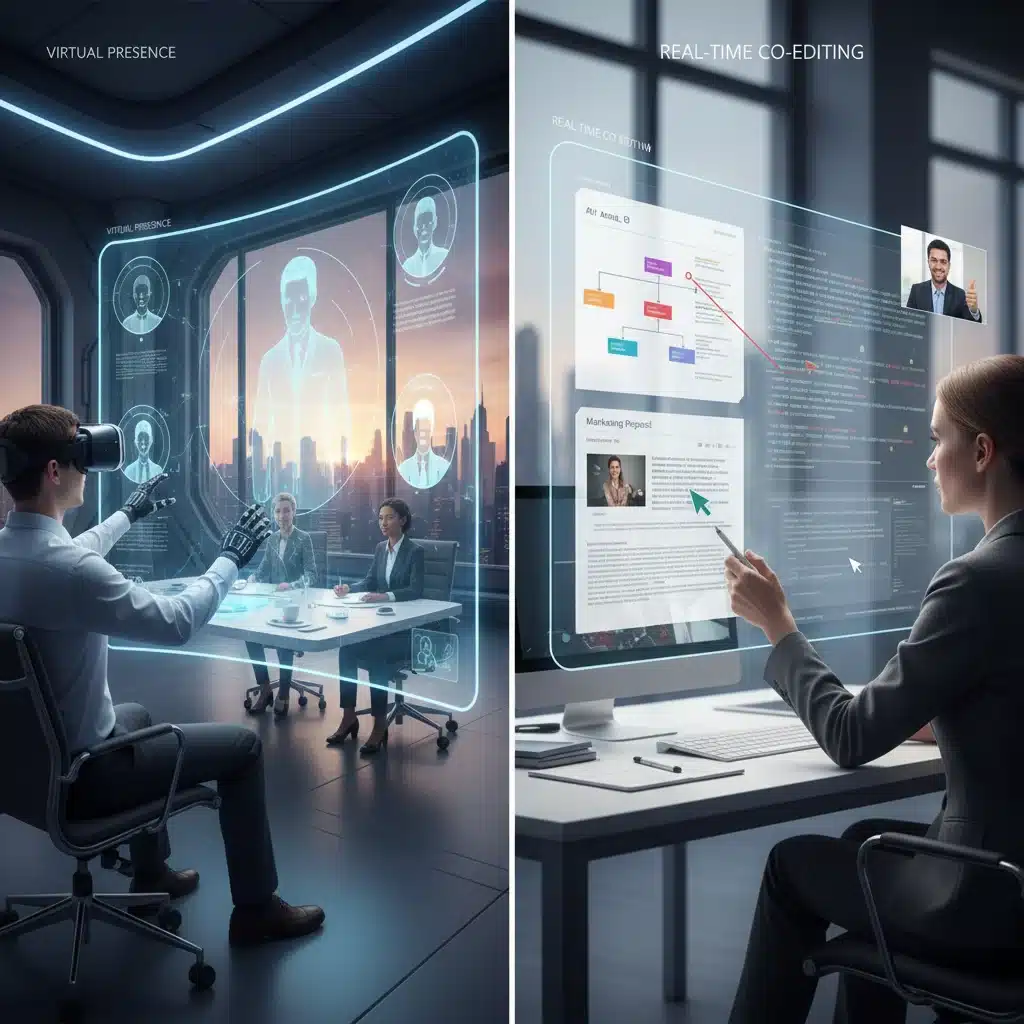
One of the biggest challenges of prolonged remote work is digital fatigue, often caused by endless video calls and a lack of dynamic interaction. The next generation of platforms addresses this by introducing more immersive and engaging experiences. Think virtual reality (VR) meeting rooms, augmented reality (AR) co-creation spaces, and persistent digital environments that foster a sense of presence and belonging. These innovations are designed to make remote team collaboration less draining and more inspiring, transforming passive participation into active engagement.
The Rise of AI in Enhancing Productivity and Decision-Making
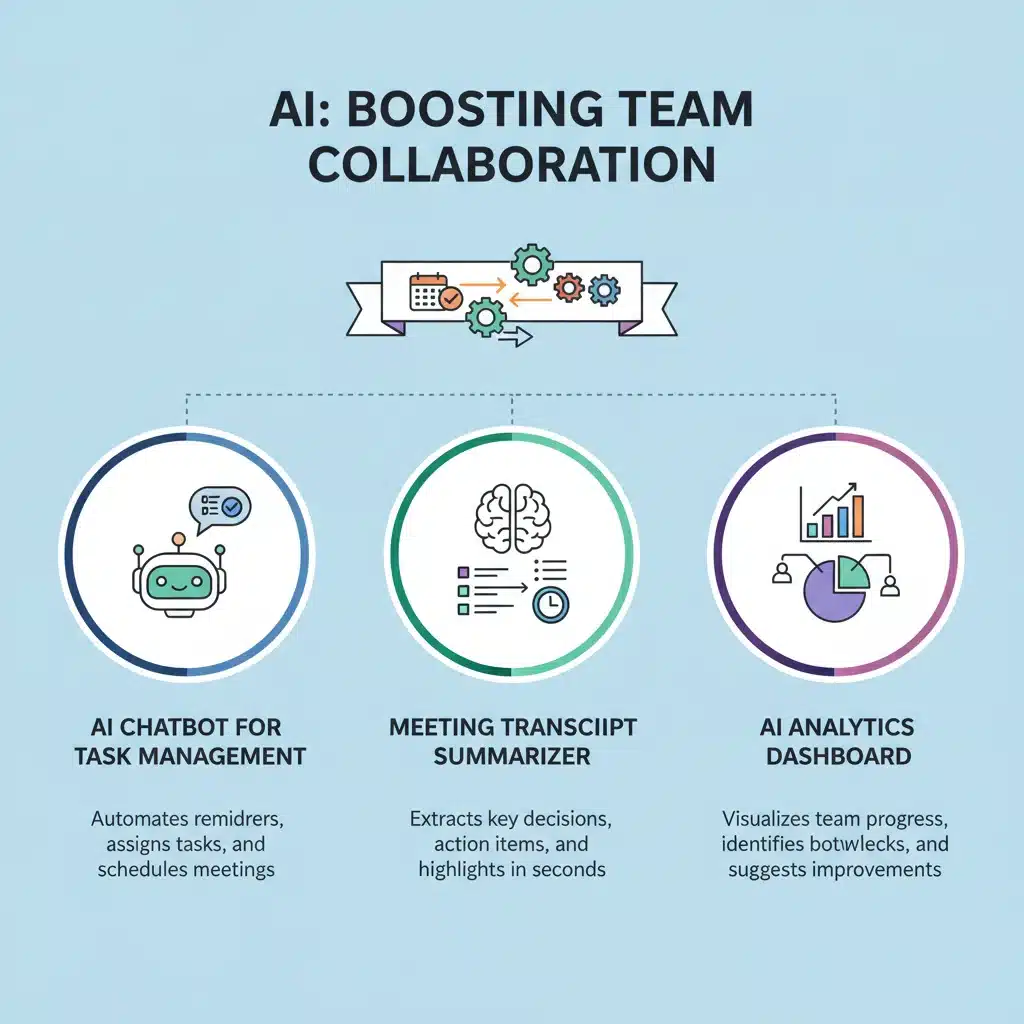
Artificial intelligence is no longer a futuristic concept; it’s an integral component of leading collaboration platforms. AI-powered features are revolutionizing how teams manage tasks, analyze data, and even facilitate conversations. From intelligent meeting summaries and automated transcription to predictive analytics for project timelines and smart recommendations for resource allocation, AI is empowering teams to work smarter, not just harder. This intelligent assistance is becoming a cornerstone of efficient remote team collaboration, enabling faster decision-making and optimizing operational processes.
7 Innovative Collaboration Platforms Redefining Remote Team Collaboration in 2026
1. Spatial: Immersive 3D Workspaces for Enhanced Presence
Spatial is at the forefront of transforming remote team collaboration through its immersive 3D workspaces. Moving beyond flat video calls, Spatial allows users to interact as realistic avatars in shared virtual environments. Imagine conducting a brainstorming session where team members can virtually walk around a shared digital whiteboard, place sticky notes, and interact with 3D models as if they were in the same physical room. This platform leverages VR/AR technology to create a sense of presence that significantly reduces digital fatigue and enhances creative problem-solving.
- Key Features: Realistic avatars, persistent 3D rooms, virtual whiteboards, 3D model interaction, screen sharing in a spatial context, cross-device compatibility (VR headsets, web, mobile).
- Why US Teams Are Adopting It: For design reviews, collaborative workshops, virtual events, and fostering a stronger sense of team presence, especially for highly visual or creative projects. It brings a new dimension to remote team collaboration, making virtual interactions feel more natural and engaging.
- Impact on Workflow: Drastically improves engagement in virtual meetings, allows for more intuitive spatial organization of ideas, and makes complex visual information easier to convey and discuss collaboratively.
2. ClickUp 3.0: The Ultimate All-in-One Productivity Hub
While ClickUp has been a strong contender in project management for a while, its 3.0 iteration solidifies its position as an all-encompassing productivity hub, meticulously designed for modern remote team collaboration. It goes far beyond task management, integrating docs, whiteboards, chat, goals, and even advanced reporting into a single, highly customizable platform. The emphasis is on flexibility, allowing teams to tailor their workspace to their specific methodologies, whether Agile, Scrum, or a custom hybrid approach.
- Key Features: Customizable workflows, AI-powered task creation and summarization, advanced reporting and analytics, integrated communication channels, robust document management, whiteboarding, goal tracking.
- Why US Teams Are Adopting It: To consolidate disparate tools into one platform, reduce context switching, and gain comprehensive oversight of projects and team performance. Its versatility makes it suitable for teams of all sizes and industries, optimizing remote team collaboration efficiency.
- Impact on Workflow: Centralizes all project-related information, automates routine tasks, provides real-time insights into progress, and fosters transparent communication, leading to significant boosts in overall team productivity.
3. Notion AI: Intelligent Knowledge Management and Co-Creation
Notion has long been celebrated for its flexible workspace that combines notes, databases, wikis, and project management. The integration of Notion AI elevates this platform to a new level, transforming it into an intelligent co-creation and knowledge management powerhouse for remote team collaboration. Notion AI can generate content, summarize documents, brainstorm ideas, translate text, and even help structure complex projects, acting as a smart assistant embedded directly into the team’s workspace.
- Key Features: AI-powered content generation, summarization, translation, brainstorming; flexible database and page structures; integrated wikis and documentation; real-time collaborative editing.
- Why US Teams Are Adopting It: For streamlined documentation, enhanced content creation, intelligent information retrieval, and collaborative knowledge building. It empowers teams to create, organize, and share information more efficiently, making it invaluable for effective remote team collaboration.
- Impact on Workflow: Accelerates content creation, ensures consistent documentation, reduces time spent searching for information, and enables teams to leverage collective knowledge more effectively.
4. Gather.town: Pixelated Worlds for Spontaneous Interaction
Gather.town offers a unique, retro-pixelated virtual world experience designed to replicate the spontaneity and casual interactions of a physical office. Unlike traditional video conferencing, users navigate avatars through custom-designed spaces, allowing for impromptu conversations when avatars get close, or private meetings in designated rooms. This approach significantly combats the isolation often felt by remote workers and fosters a stronger sense of community, crucial for healthy remote team collaboration.
- Key Features: Customizable virtual office spaces, proximity-based video/audio chat, interactive objects (whiteboards, screens), private meeting rooms, integration with external tools.
- Why US Teams Are Adopting It: To foster spontaneous discussions, replicate office culture, host virtual social events, and reduce feelings of isolation. It’s particularly popular for teams looking to inject fun and informal interaction back into their remote team collaboration.
- Impact on Workflow: Increases informal communication and collaboration, builds stronger team bonds, and makes virtual work feel more human and less transactional.
5. Miroverse Enterprise: Scalable Visual Collaboration for Large Organizations
Miro has long been a leader in online whiteboarding, but Miroverse Enterprise takes visual remote team collaboration to a new level for large organizations. It provides a vast library of templates, integrations, and advanced security features tailored for complex corporate environments. This platform allows teams to brainstorm, strategize, design, and plan visually, breaking down geographical barriers and fostering creative alignment across departments and time zones. Its robust capabilities are essential for scaling collaborative efforts effectively.
- Key Features: Extensive template library (strategy, agile, design thinking), robust security and compliance, advanced administrative controls, deep integrations with enterprise tools (Jira, Confluence, Microsoft Teams), real-time multi-user editing.
- Why US Teams Are Adopting It: For large-scale brainstorming, strategic planning sessions, design sprints, and cross-functional project alignment. Its enterprise-grade features ensure security and scalability, making it ideal for comprehensive remote team collaboration within big companies.
- Impact on Workflow: Enhances visual communication, accelerates decision-making, promotes inclusive participation in workshops, and ensures all stakeholders are aligned on project goals and progress.
6. Coda: Documents That Act Like Apps for Dynamic Workflows
Coda challenges the traditional document format by allowing users to build documents that behave like applications. It combines the flexibility of a doc with the power of a spreadsheet and the functionality of an app. This means teams can create highly customized tools for project management, CRM, internal wikis, and more, all within a single, collaborative document. Coda’s ‘building block’ approach empowers teams to design their ideal workflow for remote team collaboration without needing to code.
- Key Features: Customizable ‘docs that act like apps’, integrated tables, buttons, and formulas; robust integrations with popular services; real-time collaboration; extensive template gallery.
- Why US Teams Are Adopting It: To create custom tools for unique team needs, consolidate various processes into one dynamic document, and eliminate the need for multiple specialized apps. It’s perfect for teams that need highly adaptable solutions for remote team collaboration.
- Impact on Workflow: Streamlines complex processes, reduces reliance on external software, empowers non-technical users to build powerful tools, and centralizes operational data within a flexible document structure.
7. Microsoft Loop: Fluid Components for Seamless Co-Creation
Microsoft Loop is an innovative platform centered around ‘Loop components’ – portable pieces of content (like tables, task lists, or paragraphs) that can be co-edited in real-time across various applications (Outlook, Teams, Word, etc.). This means a task list created in a Loop workspace can be embedded into an email, updated by a team member in Teams, and then automatically reflect those changes everywhere it exists. Loop aims to break down barriers between applications and foster truly fluid remote team collaboration.
- Key Features: Loop components (portable, real-time co-editable content blocks), Loop pages (flexible canvases), Loop workspaces (shared project spaces), deep integration with Microsoft 365 ecosystem.
- Why US Teams Are Adopting It: For seamless co-creation across different apps, reducing the need to copy-paste or manually update information, and keeping everyone aligned on the latest content. It’s particularly beneficial for organizations heavily invested in the Microsoft ecosystem, optimizing their remote team collaboration.
- Impact on Workflow: Eliminates information silos between applications, ensures everyone is working on the most current version of content, and streamlines communication by making updates instantly visible across all relevant platforms.
Key Considerations When Choosing a Remote Team Collaboration Platform in 2026
With such a rich array of innovative platforms, selecting the right one for your US remote team in 2026 requires careful consideration. It’s not just about the flashiest features but about finding a tool that genuinely enhances your team’s unique workflow and culture. Here are critical factors to keep in mind:
Integration Capabilities
No platform exists in a vacuum. Evaluate how well a new tool integrates with your existing tech stack (CRM, HRIS, accounting software, etc.). Seamless integrations prevent data silos and ensure a smooth flow of information, which is paramount for effective remote team collaboration. Look for open APIs and a strong ecosystem of third-party connectors.
Security and Compliance
Data security is non-negotiable. Ensure that any chosen platform meets industry-standard security protocols, offers robust data encryption, and complies with relevant regulations (e.g., GDPR, HIPAA if applicable). For US-based teams, understanding data residency and compliance with local laws is crucial. Trust in the platform’s security measures is foundational to successful remote team collaboration.
Scalability and Flexibility
Your team’s needs will evolve. Choose a platform that can scale with your organization, accommodating growth in team size and changes in project complexity. Flexibility in customization, workflow automation, and user permissions is also vital to adapt the tool to your unique requirements for remote team collaboration.
User Experience and Adoption
Even the most feature-rich platform is useless if your team doesn’t adopt it. Prioritize intuitive design, ease of use, and a minimal learning curve. Conduct pilot programs and gather feedback to ensure the chosen tool resonates with your team members. A positive user experience drives higher adoption rates and maximizes the return on investment in remote team collaboration tools.
Cost-Effectiveness and ROI
Beyond the sticker price, consider the total cost of ownership, including training, maintenance, and potential productivity gains. Evaluate the return on investment (ROI) by assessing how the platform can reduce operational costs, accelerate project delivery, and improve overall team efficiency. A strategic investment in remote team collaboration tools can yield significant long-term benefits.
Support and Community
Reliable customer support and an active user community can be invaluable. Look for platforms that offer comprehensive documentation, responsive support channels, and forums where users can share tips and best practices. Strong support ensures that any issues are resolved quickly, minimizing disruptions to your remote team collaboration efforts.
The Future is Integrated, Immersive, and Intelligent Remote Team Collaboration
The year 2026 marks a significant inflection point in the evolution of remote team collaboration. The reliance on basic video conferencing and fragmented tools is rapidly fading, replaced by a demand for integrated, immersive, and intelligent platforms. The seven platforms highlighted above – Spatial, ClickUp 3.0, Notion AI, Gather.town, Miroverse Enterprise, Coda, and Microsoft Loop – represent the vanguard of this new era. They are not just tools; they are environments designed to foster creativity, enhance productivity, and build stronger connections among distributed teams.
For US remote teams, embracing these innovative solutions is not merely about technological adoption; it’s about strategic advantage. It’s about creating a work environment where geographical distance is no longer a barrier to seamless workflow, spontaneous interaction, or deep collaboration. By carefully evaluating their needs and investing in the right platforms, organizations can empower their remote workforce to achieve unprecedented levels of efficiency, engagement, and success in the years to come. The future of remote team collaboration is bright, dynamic, and full of exciting possibilities.
As businesses continue to navigate the complexities of a globalized, digitally-driven economy, the ability to facilitate superior remote team collaboration will remain a critical differentiator. The platforms of 2026 offer a glimpse into a future where virtual workspaces are not just functional but truly transformative, enabling teams to push the boundaries of what’s possible, regardless of where their members are located.