Advanced Productivity Features for Remote Teams in 2026

In 2026, remote teams leverage advanced productivity features in key applications to enhance collaboration, automate tasks, and gain deeper insights, moving beyond basic functionality to achieve unparalleled operational efficiency.
The landscape of remote work continues to evolve, pushing the boundaries of what’s possible with digital tools. Advanced productivity features are no longer just a luxury but a necessity for remote teams aiming for peak performance in 2026. This article delves into how leading applications are transforming remote collaboration, offering insights into functionalities that go far beyond their basic offerings.
The Evolution of Remote Work Tools: Beyond Basic Functionality
Remote work has cemented its place in the global economy, and with it, the demand for sophisticated productivity tools has skyrocketed. What began as simple communication platforms and file-sharing services has blossomed into an ecosystem of integrated, intelligent applications. In 2026, teams are not just looking for tools that facilitate work, but ones that actively enhance efficiency, automate mundane tasks, and provide actionable insights.
The journey from basic functionalities to advanced features reflects a deeper understanding of remote team dynamics. Early tools focused on replicating in-office interactions. Today, the emphasis is on creating entirely new paradigms of collaboration that leverage AI, machine learning, and predictive analytics to empower distributed workforces.
AI-Driven Automation and Predictive Analytics
One of the most significant shifts has been the integration of artificial intelligence into everyday productivity applications. AI now handles tasks that once consumed valuable human time, freeing up team members to focus on strategic initiatives.
- Automated Task Delegation: AI algorithms can analyze project requirements and team member availability to suggest optimal task assignments, reducing manual oversight.
- Predictive Scheduling: Tools can forecast potential bottlenecks in project timelines and suggest adjustments based on historical data and current workloads.
- Smart Document Summarization: AI reads through extensive documents, extracting key information and providing concise summaries, saving hours of reading time.
This evolution ensures that teams can operate with greater agility and foresight, making data-driven decisions rather than relying on guesswork. The competitive edge in remote work now lies in how effectively teams can harness these advanced capabilities.
Elevating Project Management with Next-Gen Features
Project management in 2026 is far more intricate than simple task lists and deadlines. Modern platforms integrate deep analytics, AI-powered insights, and hyper-customizable workflows to handle complex, multi-locational projects with unprecedented precision. These tools are designed to anticipate challenges and optimize resource allocation.
The ability to visualize project progress in real-time, coupled with AI-driven risk assessment, transforms how project managers steer their initiatives. They can identify potential roadblocks before they materialize, making proactive adjustments rather than reactive fixes. This level of foresight is invaluable for maintaining momentum and hitting key milestones consistently.
Dynamic Resource Allocation and Skill Matching
Beyond traditional Gantt charts, advanced project management applications now offer dynamic resource allocation. This means not just assigning tasks, but intelligently matching tasks with the most suitable team members based on their skills, availability, and even historical performance data.
- Automated Skill Recognition: Systems analyze team members’ past projects and certifications to build a comprehensive skill profile.
- Optimized Workload Balancing: Algorithms prevent burnout by distributing tasks evenly, taking into account individual capacity and project urgency.
- Cross-Functional Team Formation: AI suggests optimal team compositions for new projects, ensuring a balanced mix of expertise and experience.
These features empower project leads to build more effective teams and ensure that every individual is contributing their best work, leading to higher project success rates and improved team morale.
Revolutionizing Communication and Collaboration Platforms
Communication tools have moved beyond simple chat and video calls to become integrated collaboration hubs. In 2026, these platforms offer immersive experiences, intelligent content sharing, and AI-powered meeting summaries, transforming how remote teams interact and co-create. The focus is on reducing communication friction and enhancing understanding across geographical divides.
The shift towards more contextual and intelligent communication is evident in features that anticipate user needs. For instance, a platform might automatically suggest relevant documents during a conversation or provide real-time language translation for diverse teams. This creates a more inclusive and efficient communication environment.
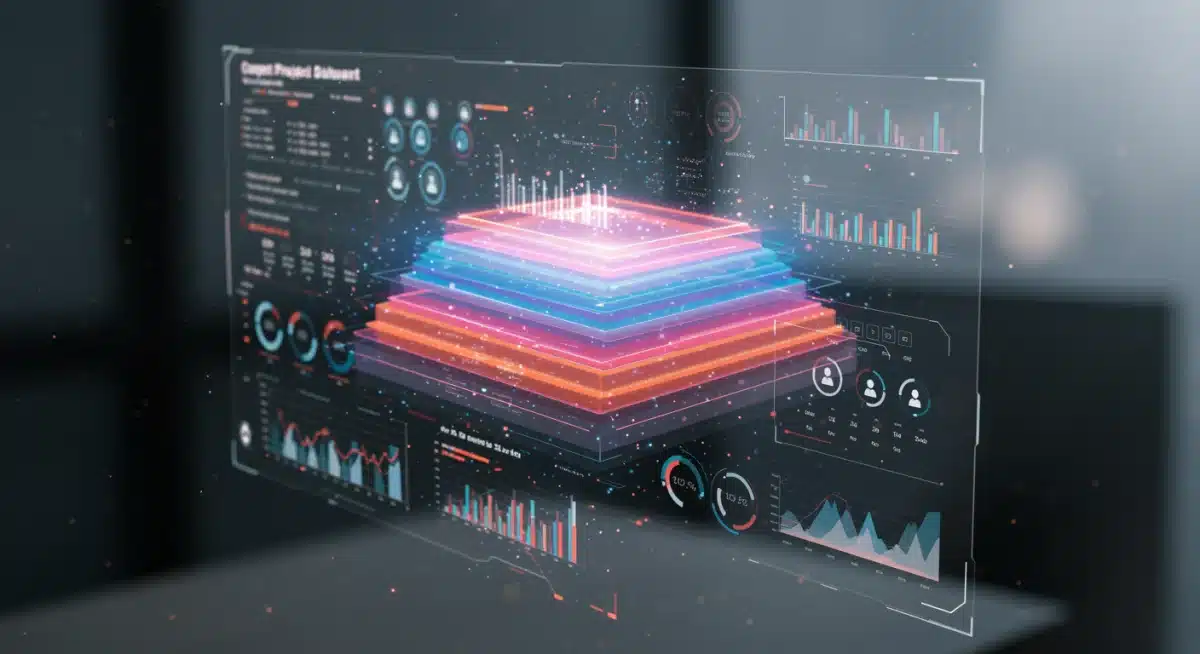
Advanced collaboration features facilitate seamless co-creation, allowing multiple users to work on the same document or design in real-time, with version control and conflict resolution handled automatically by the system. This eliminates the back-and-forth typically associated with collaborative work.
Immersive Virtual Workspaces and AI-Enhanced Meetings
Virtual workspaces are becoming increasingly sophisticated, offering immersive environments that mimic physical offices. Beyond video conferencing, these platforms integrate augmented reality (AR) and virtual reality (VR) elements to create a more engaging and productive remote interaction.
- Persistent Virtual Rooms: Teams can maintain dedicated virtual spaces where documents, whiteboards, and project dashboards are always accessible, fostering a sense of continuity.
- AI-Powered Transcription and Summarization: Meetings are automatically transcribed, key discussion points are highlighted, and action items are flagged, making follow-ups more efficient.
- Real-time Mood and Engagement Analysis: Some advanced tools use AI to gauge participant engagement during virtual meetings, providing anonymous feedback to presenters.
These innovations ensure that remote communication is not just functional but also highly effective, bridging the gap between physical and virtual presence and fostering stronger team bonds.
Streamlining Document Management and Knowledge Sharing
Efficient document management and knowledge sharing are critical for any remote team. In 2026, these systems are no longer just repositories but intelligent ecosystems that actively help teams find, create, and disseminate information. They integrate semantic search, AI-driven content generation, and dynamic access controls to ensure data integrity and accessibility.
The challenge of information overload is tackled head-on by these advanced systems. They don’t just store documents; they understand their context, relate them to ongoing projects, and present them in a way that is most relevant to the user. This means less time spent searching and more time spent utilizing valuable information.
Intelligent Content Discovery and Version Control
Finding the right information quickly is paramount. Modern document management systems employ intelligent content discovery mechanisms that go beyond keyword searches, understanding the intent behind a query.
- Semantic Search Capabilities: Users can search using natural language, and the system understands contextual meanings to retrieve highly relevant documents.
- Automated Tagging and Categorization: AI automatically tags and categorizes documents based on their content, making organization effortless.
- Advanced Versioning with AI Conflict Resolution: When multiple team members edit a document, the system intelligently merges changes and flags potential conflicts for review.
These features ensure that knowledge is not siloed but flows freely and intelligently throughout the organization, empowering every team member with the information they need to succeed.
Enhancing Personal Productivity with Integrated AI Assistants
Beyond team-wide tools, individual productivity has also seen significant advancements. In 2026, personal AI assistants are deeply integrated into daily workflows, offering personalized insights, proactive task management, and intelligent scheduling. These assistants act as digital copilots, helping remote workers maximize their focus and output.
These AI assistants learn individual work patterns, preferences, and even cognitive states to offer tailored support. They can identify times of peak concentration and suggest tasks accordingly, or flag when a break might be beneficial to prevent burnout. This personalized approach to productivity is a game-changer for remote workers.
Personalized Workflows and Proactive Reminders
AI assistants are no longer just setting alarms; they are orchestrating entire workflows, learning from user behavior to optimize daily schedules and task prioritization.
- Contextual Task Prioritization: The AI analyzes deadlines, dependencies, and individual energy levels to suggest the most impactful tasks for the day.
- Intelligent Notification Management: Assistants filter out distractions, only delivering urgent or highly relevant notifications based on current focus and calendar events.
- Automated Routine Optimization: Over time, the AI learns and suggests optimal routines for deep work, meetings, and breaks, adapting to an individual’s unique circadian rhythm.
By taking on the cognitive load of organizing and prioritizing, these AI assistants enable remote professionals to achieve a state of flow more consistently and maintain high levels of productivity without feeling overwhelmed.
The Future Landscape: Integrating AR/VR and Quantum Computing Benefits
Looking further into 2026 and beyond, the integration of augmented reality (AR) and virtual reality (VR) into productivity applications is set to redefine remote collaboration. Imagine virtual meeting rooms where team members interact with 3D models and data visualizations as if they were in the same physical space. This level of immersion will foster deeper understanding and more intuitive interaction, breaking down geographical barriers even further.
Quantum computing, while still in its nascent stages for widespread application, promises to revolutionize data processing and AI capabilities. When integrated, it could enable productivity tools to process vast datasets at speeds unimaginable today, leading to even more sophisticated predictive analytics, hyper-personalized AI assistants, and real-time optimization across all facets of remote work.
Ethical AI and Data Privacy in Advanced Tools
As these tools become more intelligent and integrated, the ethical implications surrounding AI and data privacy become paramount. Developers are increasingly focusing on building transparent AI models and robust privacy frameworks to ensure user trust and compliance with evolving regulations.
- Explainable AI (XAI): New tools provide insights into how AI makes its decisions, allowing users to understand and trust the recommendations.
- Enhanced Data Encryption and Sovereignty: Companies are offering more granular control over data location and access, respecting diverse privacy laws.
- Bias Detection and Mitigation: AI systems are being designed with built-in mechanisms to detect and reduce algorithmic bias, ensuring fair and equitable outcomes for all team members.
The future of productivity tools will not only be about technological advancement but also about responsible innovation, ensuring that these powerful capabilities are used to empower, not compromise, the remote workforce.
| Key Feature | Benefit for Remote Teams |
|---|---|
| AI-Driven Automation | Automates routine tasks, freeing human effort for strategic work and innovation. |
| Dynamic Resource Allocation | Optimizes task assignments based on skills and availability, preventing burnout. |
| Immersive Virtual Workspaces | Enhances communication and co-creation through AR/VR elements for deeper engagement. |
| Intelligent Content Discovery | Enables quick and contextual retrieval of information, boosting knowledge sharing. |
Frequently Asked Questions About Advanced Productivity Tools
Advanced AI automates mundane tasks like scheduling and data summarization, freeing team members to focus on high-value work. It also provides predictive insights, helping teams anticipate challenges and optimize workflows proactively, leading to significant efficiency gains and better resource utilization.
Immersive virtual workspaces are advanced digital environments that use AR/VR to simulate physical offices. They allow remote teams to interact with 3D models, data visualizations, and project boards in a shared virtual space, enhancing collaboration and engagement beyond traditional video calls.
Modern advanced productivity tools prioritize data privacy through robust encryption, granular access controls, and adherence to global data protection regulations. Many also incorporate Explainable AI (XAI) to ensure transparency in how AI processes data and makes decisions, building user trust.
Yes, by automating task delegation and providing intelligent workload balancing, these tools help distribute work fairly and prevent individual overload. Personal AI assistants can also suggest breaks and optimize routines based on individual patterns, contributing significantly to well-being and reducing burnout risk.
While still emerging, quantum computing is expected to revolutionize data processing speeds, enabling even more sophisticated AI and predictive analytics in productivity apps. This could lead to hyper-personalized insights, real-time optimization of complex tasks, and breakthroughs in problem-solving for remote teams.
Conclusion
The journey beyond basic functionalities in productivity applications is reshaping the very fabric of remote work in 2026. From AI-driven automation and intelligent project management to immersive collaboration spaces and personalized AI assistants, these advanced features are not merely incremental improvements; they represent a fundamental shift in how remote teams operate. By embracing these cutting-edge tools, organizations can unlock unprecedented levels of efficiency, foster deeper collaboration, and empower their distributed workforces to achieve their full potential, ensuring they remain competitive and innovative in an ever-evolving global landscape.