Future of Collaboration: Top 4 Productivity Tools for Remote Teams

The future collaboration tools are revolutionizing remote teamwork by integrating AI, immersive experiences, and advanced analytics, paving the way for unprecedented productivity and connectivity.
The landscape of work is continuously evolving, and by 2026, remote and hybrid models will be even more deeply entrenched in our professional lives. This shift necessitates a re-evaluation of how we collaborate, leading to the emergence of highly sophisticated and intuitive future collaboration tools. These aren’t just incremental updates; they represent a fundamental reimagining of how teams connect, create, and achieve shared goals, promising to redefine productivity and engagement across distributed workforces.
The Evolution of Remote Work and Collaboration Needs
Remote work, once a niche concept, has become a cornerstone of global business operations. This transformation has profoundly altered how teams interact, placing new demands on technology to bridge geographical distances and foster a sense of unity and shared purpose. Traditional tools, while foundational, often fall short in addressing the complex needs of a hyper-distributed workforce, prompting a rapid evolution in collaboration software.
The challenges of remote work extend beyond mere communication. They encompass maintaining team cohesion, ensuring equitable access to information, managing diverse time zones, and fostering spontaneous interactions that often drive innovation in physical workspaces. As we look towards 2026, the emphasis shifts from simply enabling remote work to optimizing it for peak performance and employee well-being.
Beyond Basic Communication: The Integrated Ecosystem
Early remote work often relied on a patchwork of disparate tools for video conferencing, chat, and file sharing. This fragmented approach frequently led to context switching, information silos, and reduced efficiency. The future demands an integrated ecosystem where all aspects of collaboration—from project management to creative ideation—reside within a unified, intuitive platform.
- Unified Workspaces: Consolidating tasks, documents, and communications in a single interface.
- Seamless Integrations: Effortlessly connecting with other essential business applications.
- Contextual Information: Providing relevant data and insights directly within workflows.
- Personalized Experiences: Adapting to individual user preferences and work styles.
The goal is to create a digital environment that feels as fluid and natural as in-person collaboration, minimizing friction and maximizing productive output. This integrated approach not only streamlines operations but also reduces cognitive load for employees, allowing them to focus more on creative problem-solving and less on managing their tool stack.
In conclusion, the evolving demands of remote work necessitate a paradigm shift in collaboration tools. The focus is no longer just on communication, but on creating comprehensive, integrated ecosystems that support every facet of remote teamwork, setting the stage for truly innovative solutions.
AI-Powered Project Management Platforms: Predictive Productivity
As remote teams grow in complexity and size, managing projects efficiently becomes a monumental task. This is where AI-powered project management platforms are stepping in, offering capabilities far beyond traditional task tracking. By 2026, these tools will leverage artificial intelligence to provide predictive insights, automate routine tasks, and optimize resource allocation, fundamentally changing how projects are executed.
These advanced platforms are designed to analyze vast amounts of project data, including past performance, team member availability, and task dependencies. Through machine learning algorithms, they can identify potential bottlenecks before they occur, suggest optimal timelines, and even recommend the best team members for specific tasks based on their skills and workload. This proactive approach minimizes delays and maximizes efficiency.
Automated Workflow Optimization
One of the most significant advantages of AI in project management is its ability to automate workflow optimization. Imagine a system that automatically adjusts project schedules based on real-time progress, reassigns tasks when a team member is overloaded, or even drafts initial project reports. This level of automation frees up project managers from administrative burdens, allowing them to focus on strategic oversight and team development.
Furthermore, AI-driven platforms can learn from successful project patterns and apply those insights to new initiatives. This continuous learning cycle ensures that processes are constantly refined, leading to improved outcomes over time. The system becomes a living, evolving entity that actively contributes to project success.
- Predictive Analytics: Forecasting project timelines and potential risks.
- Intelligent Task Assignment: Matching tasks to skills and availability for optimal performance.
- Automated Reporting: Generating progress updates and performance metrics with minimal effort.
- Resource Optimization: Dynamically allocating resources to prevent burnout and maximize output.
The integration of AI into project management is not just about making things faster; it’s about making them smarter. By providing actionable insights and automating complex processes, these platforms empower remote teams to achieve unprecedented levels of productivity and project success.
In summary, AI-powered project management platforms are poised to transform how projects are managed in remote settings. Their predictive capabilities and automation features will drive efficiency, mitigate risks, and allow teams to deliver high-quality results consistently, making them indispensable future collaboration tools.
Immersive Virtual Reality Workspaces: Beyond Video Calls
While video conferencing has been a lifeline for remote teams, it often lacks the depth of in-person interaction. By 2026, immersive virtual reality (VR) workspaces will begin to bridge this gap, offering a sense of presence and collaboration that goes far beyond traditional 2D screens. These environments will allow teams to meet, brainstorm, and even design together in highly realistic and interactive 3D spaces.
Imagine conducting a meeting where you can walk around a virtual conference room, gesture naturally, and even share and manipulate 3D models as if they were physically present. VR workspaces foster a deeper sense of connection and engagement, reducing the feelings of isolation that can sometimes accompany remote work. They also open up new possibilities for creative collaboration and problem-solving, particularly for design-centric teams.
Enhancing Creative Brainstorming and Design
For creative industries and product development teams, VR workspaces offer revolutionary potential. Instead of sharing screens or static mock-ups, designers can collaborate on 3D prototypes in real-time, making adjustments and receiving immediate feedback within an immersive environment. This accelerates design cycles and improves the quality of iterative work.
Brainstorming sessions also benefit immensely from VR. Teams can utilize virtual whiteboards that extend infinitely, manipulate digital sticky notes, and even create dynamic visual representations of ideas. The spatial freedom and interactive elements of VR facilitate more fluid and imaginative discussions, leading to breakthrough innovations.
- Enhanced Presence: Feeling truly ‘there’ with colleagues, regardless of physical location.
- Interactive 3D Environments: Manipulating objects and data in a shared virtual space.
- Natural Communication: Utilizing spatial audio and realistic avatars for more intuitive interactions.
- Global Accessibility: Connecting team members from any corner of the world in a shared virtual room.
The development of more affordable and comfortable VR hardware, coupled with increasingly sophisticated software, makes these immersive workspaces a viable and exciting prospect for the future collaboration tools landscape. They promise to make remote collaboration not just functional, but truly engaging and inspiring.
In conclusion, immersive virtual reality workspaces are set to redefine remote interaction, moving beyond the limitations of video calls to offer deeply engaging and productive collaborative environments. These platforms will be crucial for fostering creativity and connection in the remote teams of 2026 and beyond.
Hyper-Personalized Productivity Dashboards: Tailored Workflows
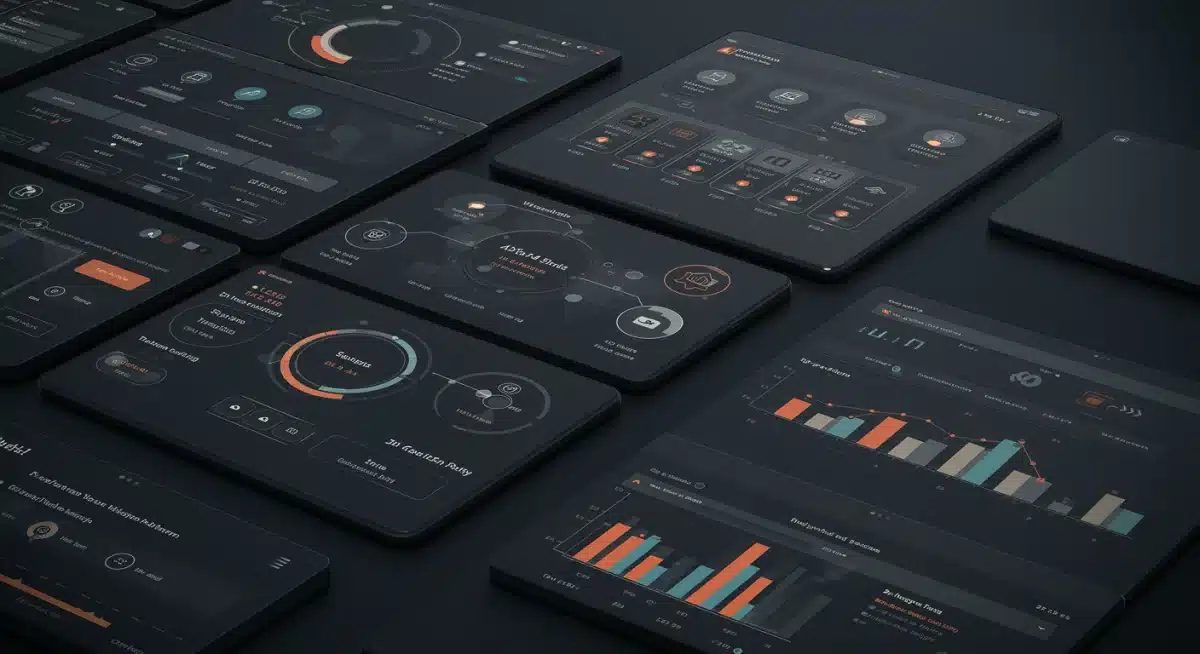
The ‘one-size-fits-all’ approach to productivity tools is rapidly becoming obsolete. The future of collaboration demands platforms that adapt to individual work styles, preferences, and roles. Hyper-personalized productivity dashboards, powered by AI and user analytics, are emerging as essential future collaboration tools for optimizing individual and team efficiency.
These dashboards go beyond simple customization. They intelligently learn from a user’s habits, project assignments, and communication patterns to present the most relevant information and tools at the right time. For example, an engineer might see their current code repositories and active bug reports prominently displayed, while a marketing specialist’s dashboard might prioritize campaign performance metrics and content calendars.
Adaptive Interfaces and Proactive Suggestions
The beauty of hyper-personalized dashboards lies in their adaptive interfaces. They can dynamically rearrange layouts, suggest relevant tasks, and even nudge users towards completing high-priority items based on their individual workflow and deadlines. This proactive assistance minimizes distractions and helps individuals maintain focus on their most impactful work.
Moreover, these dashboards can integrate data from various applications, presenting a holistic view of an individual’s workload and progress across different projects and tools. This eliminates the need to jump between multiple applications to gather information, streamlining the workday and reducing cognitive overhead.
- Intelligent Task Prioritization: Highlighting critical tasks based on deadlines and dependencies.
- Customizable Views: Allowing users to arrange information in a way that suits their cognitive style.
- Cross-Application Integration: Pulling data from all connected tools into a single, cohesive view.
- Learning Algorithms: Adapting to user behavior to provide increasingly relevant recommendations.
By tailoring the digital workspace to each individual, hyper-personalized productivity dashboards empower employees to work more effectively and autonomously. This level of customization not only boosts individual output but also contributes to a more engaged and satisfied remote workforce.
In conclusion, hyper-personalized productivity dashboards represent a significant leap in optimizing individual efficiency within remote teams. By adapting to unique user needs and providing proactive, relevant information, these tools will be instrumental in maximizing productivity and job satisfaction by 2026.
Secure Decentralized Collaboration Platforms: Trust and Autonomy
As remote work becomes more prevalent, the need for robust security and data privacy in collaboration tools has never been greater. Decentralized collaboration platforms, built on blockchain technology and advanced encryption, are emerging as critical future collaboration tools that prioritize trust, transparency, and user autonomy. These platforms offer a powerful alternative to centralized systems, reducing vulnerabilities and enhancing data integrity.
Decentralized platforms distribute data across a network of computers rather than storing it on a single server, making them inherently more resilient to cyberattacks and data breaches. Each transaction, communication, or document modification is recorded on an immutable ledger, providing an unalterable audit trail and ensuring the integrity of all collaborative efforts. This level of security is paramount for sensitive projects and compliance-heavy industries.
Enhanced Data Privacy and Ownership
A key advantage of decentralized systems is the enhanced data privacy they offer. Users and organizations retain greater control over their data, defining who can access what information and under what conditions. This is a significant departure from traditional platforms where data ownership and access can be less transparent, leading to concerns about privacy and misuse.
Furthermore, the peer-to-peer nature of these platforms can foster a greater sense of trust and autonomy among team members. Without a central authority controlling all aspects of communication and data, teams can operate with more independence and transparency, which can be particularly beneficial for highly distributed or cross-organizational projects.
- Blockchain-Powered Security: Immutable ledgers for tamper-proof data and communications.
- End-to-End Encryption: Protecting all data in transit and at rest from unauthorized access.
- User-Controlled Access: Granular permissions allowing individuals to manage who sees their data.
- Auditability and Transparency: Clear, verifiable records of all collaborative activities.
The adoption of secure decentralized collaboration platforms signals a move towards a more resilient and trustworthy digital work environment. By safeguarding sensitive information and empowering users with greater data control, these tools will be foundational for the secure remote work of the future.
In conclusion, secure decentralized collaboration platforms are poised to become indispensable by 2026, offering unparalleled security, data privacy, and user autonomy. Their robust architecture and transparent operations will build trust and foster efficient, secure teamwork in an increasingly remote world.
The Synergy of Future Collaboration Tools: A Holistic Approach
While each of the innovative productivity tools discussed offers distinct advantages, the true power of the future collaboration tools lies in their synergistic integration. By 2026, the most effective remote teams will leverage a combination of AI-powered project management, immersive VR workspaces, hyper-personalized dashboards, and secure decentralized platforms to create a holistic and highly optimized work environment. This integrated approach ensures that every aspect of remote collaboration, from task execution to creative ideation and secure communication, is seamlessly supported.
Imagine a scenario where an AI-powered project manager identifies a potential bottleneck, automatically schedules a VR brainstorming session with the relevant team members, who then join their personalized VR workspace to collaboratively solve the problem using interactive 3D models. All communications and decisions within this process are securely logged on a decentralized platform, and individual progress is reflected in real-time on hyper-personalized dashboards. This level of seamless integration minimizes friction, maximizes efficiency, and fosters an unparalleled sense of team cohesion.
Breaking Down Digital Silos
The traditional challenge of remote work has been the existence of digital silos, where information and efforts are fragmented across various tools and platforms. The synergistic integration of future collaboration tools aims to dismantle these silos, creating a unified flow of information and activity. This interconnected ecosystem ensures that all team members, regardless of their location or role, have access to the most current and relevant data, fostering transparency and reducing misunderstandings.
Moreover, this holistic approach allows for a more comprehensive analysis of team performance and individual contributions. AI can draw insights from across all integrated tools to provide a clearer picture of productivity, engagement, and areas for improvement, enabling managers to make data-driven decisions that benefit the entire team.
- Interconnected Workflows: Seamless transitions between different tools and functionalities.
- Comprehensive Data Insights: AI analyzing data from across the entire collaboration ecosystem.
- Enhanced Team Cohesion: A unified digital environment fostering a shared sense of purpose.
- Scalable Solutions: Platforms designed to grow and adapt with evolving team needs.
The future of remote collaboration is not about any single tool, but about how these advanced tools work together to create a powerful, intelligent, and secure environment. This synergy will be the defining characteristic of high-performing remote teams in the years to come.
In conclusion, the combined power of AI-driven project management, VR workspaces, personalized dashboards, and decentralized platforms will create an unparalleled collaborative ecosystem by 2026. This holistic approach will break down digital silos, enhance team cohesion, and redefine productivity for remote workforces globally.
Preparing for the Future: Adopting Innovative Collaboration Strategies
The rapid advancement of future collaboration tools presents both exciting opportunities and new challenges for organizations. To fully leverage the potential of these innovations, companies must adopt forward-thinking strategies that go beyond merely implementing new software. It requires a cultural shift towards embracing continuous learning, adaptability, and a proactive approach to technology integration. Organizations that invest in preparing their teams for these tools will gain a significant competitive advantage in the evolving remote work landscape.
Successful adoption hinges on comprehensive training programs that not only teach the functionalities of new tools but also explain the underlying principles and benefits. Employees need to understand how these tools will enhance their productivity, streamline their workflows, and contribute to overall team success. Furthermore, creating a feedback loop where employees can share their experiences and suggest improvements will be crucial for refining the implementation process and ensuring widespread acceptance.
Cultivating a Culture of Digital Fluency
Beyond specific tool training, fostering a culture of digital fluency is paramount. This means encouraging employees to explore new technologies, understand their capabilities, and proactively seek ways to integrate them into their daily work. It involves providing resources for self-paced learning and creating internal communities where team members can share best practices and support each other in navigating new digital environments.
Leadership plays a vital role in this cultural shift by championing the adoption of new tools and demonstrating their value through their own usage. When leaders actively engage with and promote innovative collaboration strategies, it sends a powerful message to the entire organization, encouraging broader participation and accelerating the journey toward a more efficient and connected remote workforce.
- Ongoing Training: Regular sessions to keep teams updated on new features and best practices.
- Feedback Mechanisms: Channels for employees to provide input and shape tool development.
- Champion Programs: Identifying and empowering early adopters to guide their peers.
- Strategic Integration: Planning how new tools fit into existing workflows and systems.
The journey towards fully realizing the potential of future collaboration tools is continuous. It requires a commitment to innovation, a focus on employee empowerment, and a willingness to adapt strategies as technology evolves. By taking these steps, organizations can ensure they are well-prepared to thrive in the dynamic remote work environment of 2026 and beyond.
In conclusion, preparing for the future of collaboration involves more than just acquiring new tools; it demands a strategic approach to training, cultural development, and continuous adaptation. By fostering digital fluency and encouraging proactive engagement, organizations can unlock the full potential of innovative collaboration technologies for sustained success.
| Key Innovation | Impact on Remote Teamwork |
|---|---|
| AI Project Management | Predictive insights and automation for optimized task allocation and project timelines. |
| VR Workspaces | Immersive 3D environments for enhanced presence, brainstorming, and design collaboration. |
| Personalized Dashboards | Tailored interfaces and proactive suggestions for individual workflow optimization. |
| Decentralized Platforms | Enhanced security, data privacy, and user autonomy through blockchain technology. |
Frequently Asked Questions About Future Collaboration Tools
AI in future collaboration tools offers predictive analytics for project timelines, automated task assignment, and intelligent resource optimization. It streamlines workflows, reduces manual effort, and helps teams anticipate and mitigate potential issues, leading to more efficient project execution and higher quality outcomes.
VR workspaces will transform remote meetings by providing immersive 3D environments that offer a greater sense of presence and natural interaction. Teams can conduct brainstorming sessions with virtual whiteboards, manipulate 3D models collaboratively, and experience deeper engagement than traditional video calls allow, fostering creativity.
Personalized productivity dashboards adapt to individual work styles and roles, presenting the most relevant information and tools proactively. They minimize distractions, prioritize tasks intelligently, and integrate data from various applications, creating a tailored and highly efficient workspace for each team member.
Decentralized platforms enhance security by distributing data across a network, making them more resistant to cyberattacks and data breaches. Built on blockchain, they offer immutable audit trails, end-to-end encryption, and user-controlled access, ensuring greater data privacy and transparency for sensitive collaborative efforts.
Organizations should prepare by investing in continuous training, fostering a culture of digital fluency, and establishing feedback mechanisms. Leaders should champion new tools, providing resources for learning and encouraging proactive integration to ensure smooth adoption and maximize the benefits of these advanced technologies.
Conclusion
The journey towards 2026 and beyond promises a revolutionary shift in how remote teams collaborate, driven by the emergence of sophisticated future collaboration tools. From AI-powered project management and immersive VR workspaces to hyper-personalized productivity dashboards and secure decentralized platforms, these innovations are not just enhancing existing capabilities but fundamentally redefining the possibilities of remote work. Organizations that embrace these technologies and strategically integrate them into their operations, coupled with a commitment to fostering digital fluency and continuous learning, will be best positioned to thrive. The future of collaboration is intelligent, immersive, personalized, and secure, ensuring that remote teams can achieve unprecedented levels of productivity, creativity, and connection.