Beyond Noise-Canceling: 4 Advanced Strategies for Remote Focus Zones
Anúncios
Beyond Noise-Canceling: 4 Advanced Strategies to Create a Focus Zone in Any Remote Setting by 2027
The landscape of work has irrevocably shifted. Remote work, once a niche perk, is now a foundational pillar for countless organizations worldwide. While the flexibility and autonomy it offers are undeniable, the challenge of maintaining peak productivity amidst the distractions of home life remains a persistent hurdle. For years, the go-to solution for creating a personal sanctuary of concentration has been the trusty pair of noise-canceling headphones. And while these remain an invaluable tool, the year 2027 demands a more sophisticated, multi-faceted approach. We need to move beyond noise-canceling to truly master the art of the remote focus strategies.
This article delves into four advanced strategies that transcend simple auditory isolation, offering a holistic framework for cultivating an impenetrable focus zone, regardless of your physical environment. We’re talking about leveraging cognitive science, environmental design, and technological innovations to craft an optimal mental and physical space for deep work. By implementing these strategies, you’ll not only minimize external disruptions but also proactively enhance your cognitive performance, leading to unprecedented levels of efficiency and output in your remote role.
Anúncios
1. The Cognitive Architecture of Focus: Designing Your Mental Workspace
Before we even consider physical tools or environmental hacks, understanding the cognitive underpinnings of focus is paramount. Our brains are not designed for constant, fragmented attention. True deep work requires sustained concentration, and achieving this in a remote setting necessitates a deliberate approach to managing our mental resources. This is where cognitive architecture comes into play, providing robust remote focus strategies.
The Pomodoro Technique Reimagined: Hyper-Focused Sprints
While the traditional Pomodoro Technique (25 minutes of work, 5 minutes break) is a good starting point, we need to evolve it for the demands of 2027. Consider ‘hyper-focused sprints.’ Instead of fixed intervals, tailor your work blocks to your energy cycles and task complexity. Utilize biofeedback apps or wearables that track your focus levels and heart rate variability to identify your peak concentration windows. During these windows, commit to uninterrupted deep work sessions that could range from 45 to 90 minutes. The key is absolute commitment during these periods – no notifications, no context switching, just pure, unadulterated focus on a single, critical task. This advanced application of the Pomodoro principle is a core remote focus strategies.
Anúncios
Task Batching and Context Switching Minimization
One of the silent killers of remote productivity is context switching. Each time you shift from one type of task to another (e.g., coding to email to a meeting), your brain incurs a ‘switching cost,’ losing valuable time and mental energy. To combat this, implement aggressive task batching. Group similar tasks together and dedicate specific blocks of time to them. For instance, designate an hour each morning for responding to emails and messages, another block for creative work, and a separate one for administrative duties. By minimizing the frequency of context switching, you allow your brain to enter and remain in a flow state more easily, significantly boosting your remote focus strategies.
Pre-commitment and Environment Priming
Leverage the psychological principle of pre-commitment. Before starting your workday, explicitly define your most important tasks (MITs) and commit to tackling them during your designated focus blocks. Furthermore, ‘prime’ your environment. This isn’t just about physical tidiness; it’s about mentally preparing yourself. Spend 5-10 minutes clearing your desktop, closing irrelevant tabs, and mentally rehearsing the task at hand. This ritualistic preparation signals to your brain that it’s time to enter a state of deep work, reinforcing your remote focus strategies.
2. Environmental Optimization Beyond the Headset: Sensory Sanctuary
Noise-canceling headphones address auditory distractions, but our environment is a symphony of sensory inputs. To truly create a focus zone, we must optimize all sensory channels. This goes far beyond simply turning down the volume; it’s about crafting a ‘sensory sanctuary’ that supports sustained concentration. These advanced environmental adjustments are crucial remote focus strategies.
Dynamic Lighting for Cognitive Performance
The type and intensity of light significantly impact our circadian rhythm, mood, and cognitive function. By 2027, static lighting is a relic of the past. Invest in smart lighting systems that can dynamically adjust color temperature and brightness throughout the day. Cool, bright white light (around 5000K-6500K) can enhance alertness and focus during peak work hours, while warmer, dimmer light in the late afternoon can signal winding down. Natural light, of course, remains paramount. Position your workspace to maximize exposure to natural light, which has been proven to improve mood and reduce eye strain. This intelligent use of light is a powerful remote focus strategies.
Acoustic Design: Beyond Noise-Canceling
While headphones block external noise, they don’t address internal acoustics. Hard surfaces create echoes and reverberations that can be subtly distracting, even if you can’t consciously hear them. Integrate acoustic panels, soft furnishings, and even specific types of plants (like snake plants or peace lilies) that absorb sound waves. Consider a ‘soundscaping’ approach using ambient sound generators (e.g., binaural beats, nature sounds, or even specific frequencies known to induce focus). The goal is to create a consistent, non-intrusive auditory backdrop that promotes concentration rather than simply blocking noise. This thoughtful acoustic design is a key component of effective remote focus strategies.
Ergonomics and Biometric Feedback Integration
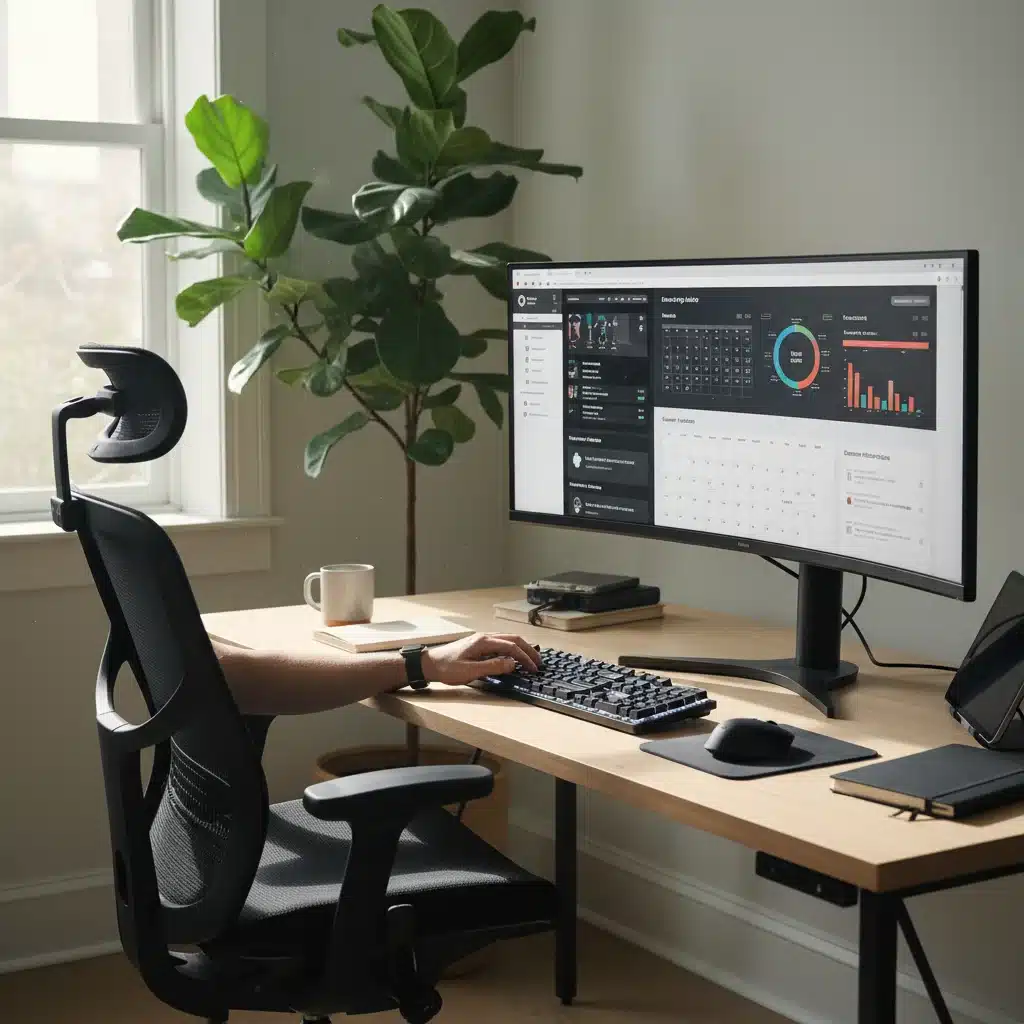
Physical discomfort is a major distraction. An ergonomic setup is non-negotiable. However, by 2027, this includes integrating biometric feedback. Smart chairs or desk sensors can monitor your posture, reminding you to adjust before discomfort sets in. Wearable tech can track your stress levels, heart rate, and even micro-movements, providing real-time data on your physical state. This data can then be used to prompt micro-breaks, suggest posture adjustments, or even trigger environmental changes (e.g., a subtle change in lighting or ambient sound) to optimize your physical comfort and, by extension, your mental focus. Prioritizing physical well-being through advanced ergonomics is a vital part of remote focus strategies.
3. Digital Detox and Hyper-Focused Tool Stacks
In the remote work paradigm, digital tools are both our greatest asset and our most insidious distraction. True remote focus strategies require a disciplined approach to our digital environment, moving beyond simple notification blocking to a complete overhaul of our digital habits and tool utilization.
The ‘Zero-Inbox’ for Digital Distractions
Just as you aim for a clean email inbox, apply the ‘zero-inbox’ philosophy to all digital distractions. This means ruthlessly unsubscribing from irrelevant newsletters, muting non-essential group chats, and uninstalling distracting social media apps from your work devices. The fewer digital ‘inputs’ vying for your attention, the more mental bandwidth you free up for deep work. Implement stringent notification management – not just turning them off, but actively deciding which apps are allowed to interrupt you and when. This proactive digital decluttering is a crucial remote focus strategies.
Specialized Focus-Enhancing Software and AI Companions
The market for productivity software has exploded, but by 2027, we’re seeing the emergence of highly specialized, AI-powered tools designed specifically for deep work. These tools go beyond simple task management. Look for applications that:
- Block distracting websites and applications intelligently: Not just blacklisting, but learning your work patterns and proactively suggesting focus modes.
- Summarize communications: AI tools that can distill the essence of long email threads or chat histories, saving you precious time and cognitive load.
- Generate ‘focus music’ based on biofeedback: Dynamically adjusting ambient sounds or music based on your real-time brainwave activity or heart rate to optimize concentration.
- Provide ‘digital accountability partners’: AI-powered bots that check in on your progress, remind you of your MITs, and even gamify your focus sessions.
By curating a lean, hyper-focused tool stack, you transform your digital environment from a source of distraction into a powerful ally for your remote focus strategies.
Scheduled Digital ‘Breaks’ vs. Constant Connectivity
Instead of constantly dipping in and out of social media or news feeds, schedule dedicated ‘digital break’ times. These are intentional periods where you allow yourself to engage with non-work-related digital content. By compartmentalizing your digital consumption, you prevent it from bleeding into your focus blocks. This structured approach to digital interaction is far more effective than trying to resist constant temptation, forming a vital part of your remote focus strategies.
4. The Immersive Focus Pod: Leveraging Spatial Computing and Biometrics
Looking further into the future of remote focus strategies, the concept of a dedicated ‘focus pod’ or ‘cognitive chamber’ is emerging. This isn’t necessarily a physical room but a confluence of technologies designed to create an immersive, distraction-free work environment, accessible from anywhere.
Virtual and Augmented Reality for Immersive Workspaces
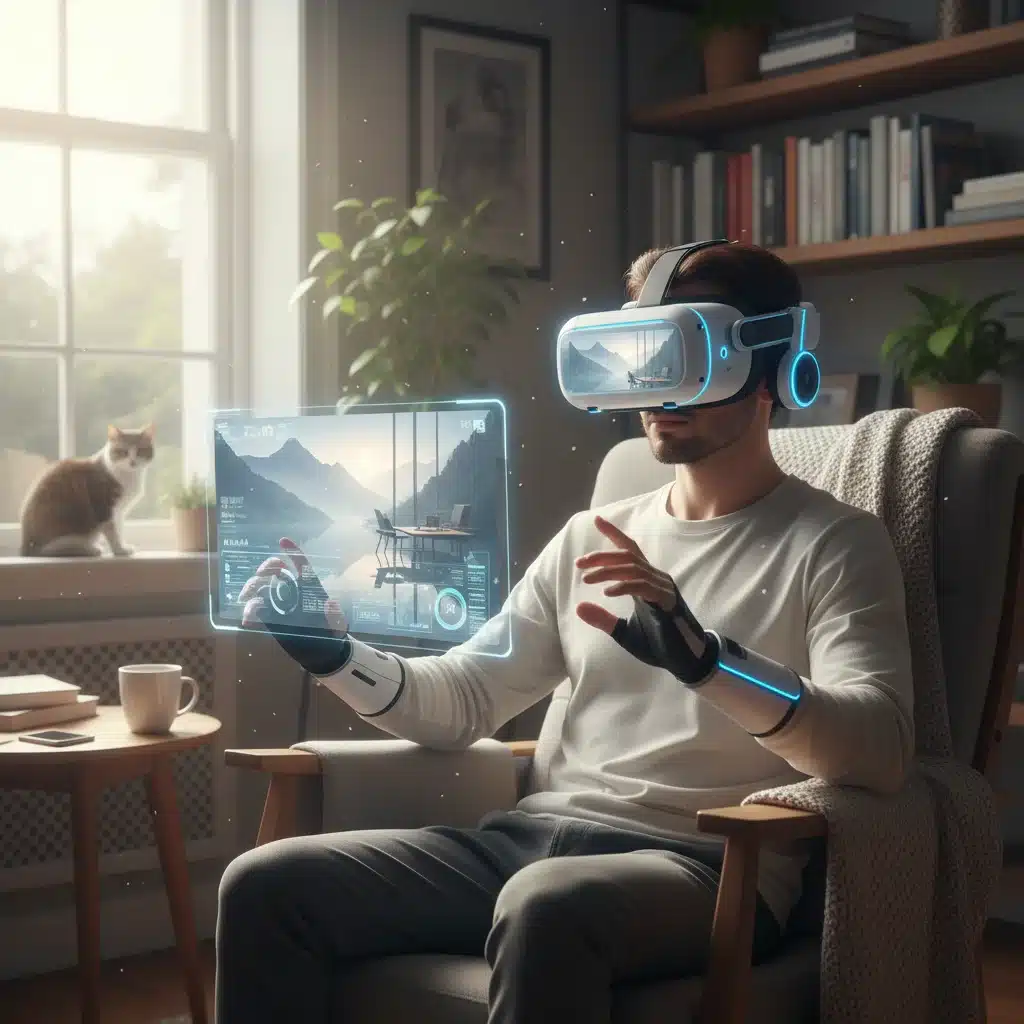
Spatial computing, particularly through VR and AR headsets, offers the most profound leap in creating personalized focus zones. Imagine donning a headset and instantly being transported to a serene, custom-designed virtual office – a moon base, a forest cabin, or a minimalist architectural marvel. These virtual environments can be programmed to:
- Eliminate visual distractions: No more clutter, no more family members walking by.
- Provide limitless screen real estate: Project multiple virtual monitors, dashboards, and whiteboards around you.
- Integrate ambient soundscapes: Perfectly tuned auditory environments that adapt to your focus needs.
- Offer ‘digital twin’ collaboration spaces: Meet colleagues in a shared virtual space that feels more present than a video call, without the physical commute.
Augmented reality takes this a step further by overlaying digital information onto your physical surroundings, allowing you to maintain some awareness of your real-world environment while still benefiting from digital enhancements. This technology is rapidly maturing and will be a cornerstone of advanced remote focus strategies by 2027.
Biometric Feedback Loops and Adaptive Environments
The ultimate focus zone will be dynamically adaptive. Imagine a system where your wearable device monitors your brainwave patterns (e.g., via a simple EEG headband), heart rate, and even eye-tracking. When it detects a dip in concentration or an increase in cognitive load, the environment subtly adjusts: the ambient lighting might shift, the soundscape might change, or a gentle haptic feedback might prompt you to take a micro-break. This real-time, personalized optimization, driven by biometric data, will create a truly responsive and highly effective focus zone. This level of personalized environmental adaptation is the pinnacle of remote focus strategies.
Neurofeedback Training for Enhanced Cognitive Control
Beyond passive monitoring, neurofeedback training will become more accessible and integrated into remote work routines. Through guided exercises, you can learn to consciously regulate your brainwave activity, training yourself to enter and sustain states of deep focus more readily. Combined with immersive VR environments, neurofeedback can offer a powerful, personalized pathway to cognitive mastery, making it an advanced and potent remote focus strategies.
Conclusion: The Future of Remote Focus is Holistic and Personalized
The era of simply slapping on noise-canceling headphones and hoping for the best is drawing to a close. By 2027, mastering remote work productivity will demand a holistic and highly personalized approach to creating focus zones. It’s about consciously designing your mental workspace, meticulously optimizing your physical environment across all sensory inputs, ruthlessly managing your digital ecosystem, and embracing emerging immersive technologies.
These four advanced remote focus strategies – from reimagining the Pomodoro technique and task batching to leveraging dynamic lighting, acoustic design, biometric feedback, and the power of spatial computing – offer a roadmap to unparalleled productivity. By integrating these practices, remote professionals won’t just mitigate distractions; they will cultivate an environment and a mindset where deep work is not just possible, but inevitable. The future of remote work is not about fighting distractions; it’s about engineering focus, and these strategies are your blueprint for doing just that.