
Understanding Freelancer Estimated Taxes 2026: Your Essential Guide to Quarterly Payments
As a freelancer, the freedom and flexibility of being your own boss are undeniable. However, this independence also comes with significant responsibilities, particularly when it comes to taxes. Unlike traditional employees who have taxes withheld from each paycheck, freelancers are generally responsible for paying their taxes directly to the IRS throughout the year. This often takes the form of freelancer estimated taxes, paid in quarterly installments. Missing these payments or underpaying can lead to penalties, which is why understanding and planning for your freelancer estimated taxes is crucial.
The year 2026 will bring its own set of challenges and opportunities for self-employed individuals. Staying ahead of the curve, understanding the rules, and meticulously planning your finances will be key to a stress-free tax season. This comprehensive guide is designed to demystify freelancer estimated taxes for 2026, helping you navigate the complexities of self-employment tax, calculate your obligations, and meet those all-important quarterly deadlines.
Anúncios
What Are Freelancer Estimated Taxes?
For most self-employed individuals, including freelancers, independent contractors, and small business owners, the IRS requires you to pay income tax as you earn it. This system is known as "pay-as-you-go." Since there’s no employer to withhold taxes from your pay, you’re responsible for estimating your annual income and tax liability, then making periodic payments throughout the year. These are your freelancer estimated taxes.
Estimated tax includes not only your income tax but also your self-employment tax. Self-employment tax is essentially your contribution to Social Security and Medicare, which would typically be split between an employer and an employee in a traditional employment setting. As a freelancer, you’re both the employer and the employee, so you pay both portions. This amounts to 15.3% on your net earnings from self-employment: 12.4% for Social Security (up to an annual earnings limit) and 2.9% for Medicare (with no earnings limit).
If you expect to owe at least $1,000 in tax for the year from your self-employment income, you are generally required to pay estimated taxes. This threshold is quite common for freelancers, making estimated tax payments a regular part of their financial life. Failing to make these payments can result in penalties, even if you eventually pay all your taxes when you file your annual return.
Anúncios
Who Needs to Pay Freelancer Estimated Taxes in 2026?
The requirement to pay freelancer estimated taxes applies to a broad range of self-employed individuals. This includes, but is not limited to:
- Independent Contractors: Individuals hired by a business to perform a service, often receiving a Form 1099-NEC.
- Gig Economy Workers: Those earning income through platforms like ride-sharing, food delivery, or freelance marketplaces.
- Small Business Owners: Sole proprietors, partners in a partnership, and S corporation shareholders who expect to owe tax.
- Freelancers and Consultants: Anyone offering their skills and services independently.
Even if you also have a W-2 job, you might need to pay estimated taxes if your freelance income is substantial enough that your employer’s withholdings don’t cover your total tax liability. In such cases, you might be able to adjust your W-4 withholding with your employer to cover the additional tax, but often, quarterly estimated payments are necessary for your freelance earnings.
Key Deadlines for Freelancer Estimated Taxes 2026
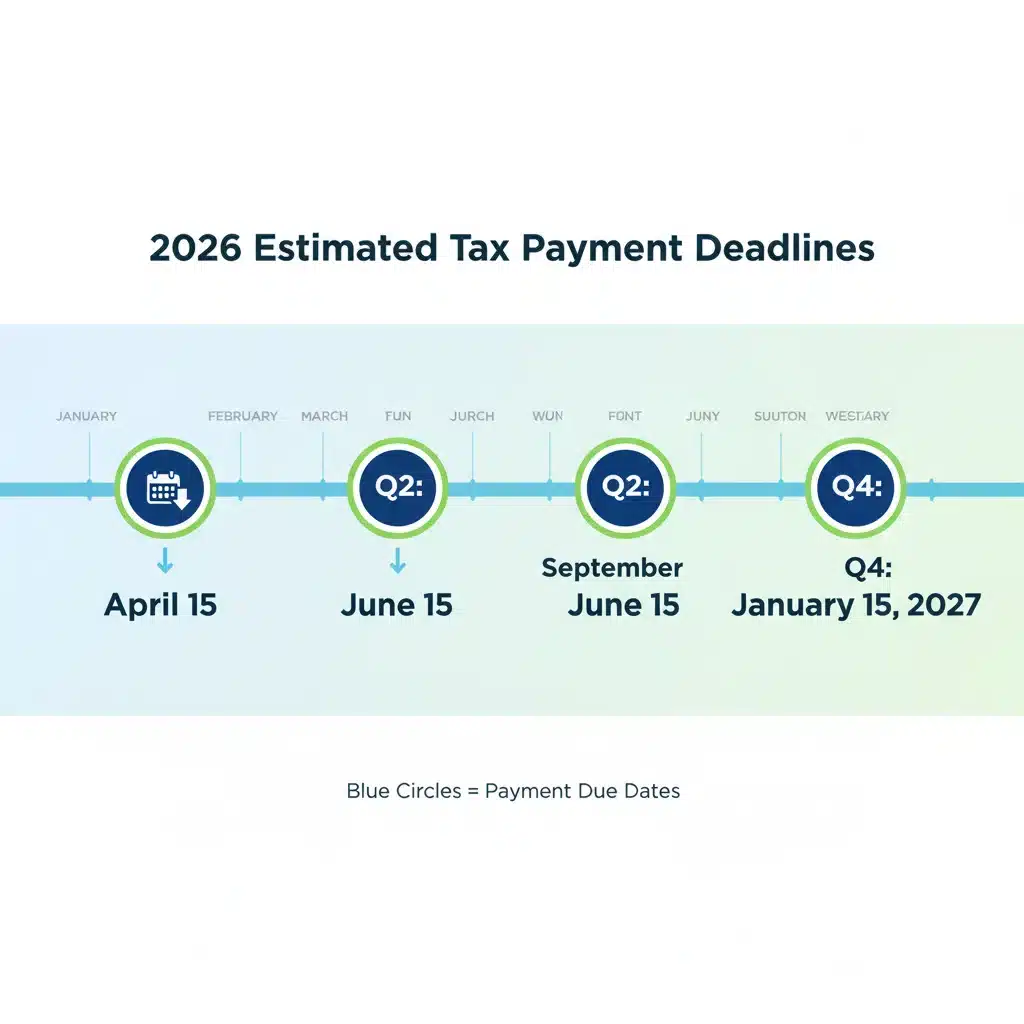
The IRS divides the tax year into four payment periods, each with a specific deadline. These deadlines are crucial for avoiding underpayment penalties. For the 2026 tax year, the approximate due dates for your freelancer estimated taxes are:
- Payment 1 (January 1 to March 31): Due April 15, 2026
- Payment 2 (April 1 to May 31): Due June 15, 2026
- Payment 3 (June 1 to August 31): Due September 15, 2026
- Payment 4 (September 1 to December 31): Due January 15, 2027
It’s important to note that if any of these dates fall on a weekend or holiday, the deadline is typically shifted to the next business day. Always double-check the official IRS calendar for the exact dates as they approach. Missing these deadlines can result in penalties, even if you pay the full amount later.
Calculating Your Freelancer Estimated Taxes
Accurately calculating your freelancer estimated taxes is perhaps the most challenging aspect for many self-employed individuals. The goal is to estimate your total income, deductions, and credits for the entire year and then determine your tax liability. Here’s a step-by-step approach:
- Estimate Your Gross Income: Project all the income you expect to earn from your freelance work for the entire year 2026. This includes all payments from clients, regardless of whether you receive a 1099-NEC or not.
- Estimate Your Business Expenses: Identify and estimate all your deductible business expenses. This could include office supplies, home office deductions, software subscriptions, professional development, mileage, health insurance premiums (if self-employed and not subsidized), and more. Keeping meticulous records throughout the year is vital for this step.
- Calculate Your Net Self-Employment Income: Subtract your estimated business expenses from your estimated gross income. This gives you your net self-employment income.
- Calculate Your Self-Employment Tax: On your net self-employment income, you’ll calculate your self-employment tax. For 2026, the rate is 15.3% on the first $168,600 (this figure is for 2024 and is subject to change for 2026; always use the most current IRS figures) of net earnings for Social Security, and 2.9% for Medicare on all net earnings. You can deduct one-half of your self-employment tax when calculating your adjusted gross income (AGI).
- Estimate Your Adjusted Gross Income (AGI): Factor in any other income (e.g., from a W-2 job, investments) and other deductions (e.g., IRA contributions, student loan interest) to arrive at your estimated AGI.
- Determine Your Income Tax: Use your estimated AGI, standard deduction or itemized deductions, and any tax credits to calculate your estimated income tax liability for 2026. You can use the IRS tax tables or tax software for this.
- Add Self-Employment Tax and Income Tax: Combine your estimated income tax and your estimated self-employment tax to get your total estimated tax liability for the year.
- Divide by Four: Divide your total estimated tax liability by four to determine the amount of each quarterly payment.
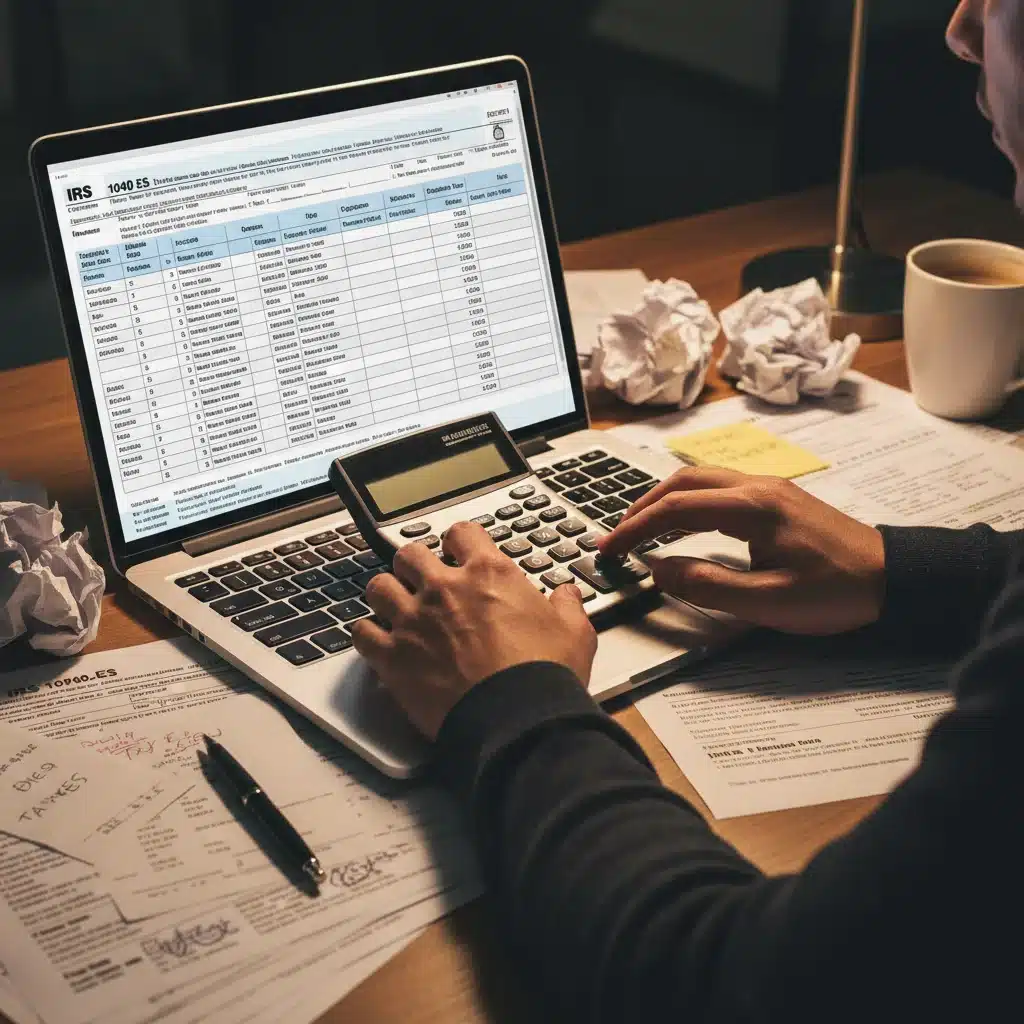
The IRS provides Form 1040-ES, Estimated Tax for Individuals, which includes a worksheet to help you calculate your estimated tax. Many tax software programs also have tools to assist with this calculation. It’s often recommended to slightly overestimate your income to avoid underpayment penalties.
Strategies for Managing Your Freelancer Estimated Taxes
Effective management of your freelancer estimated taxes involves more than just making payments on time. It requires proactive planning and smart financial habits.
1. Set Aside Funds Regularly
One of the best practices is to set aside a portion of every payment you receive into a separate savings account specifically for taxes. A common rule of thumb is to save 25-35% of each payment, but this can vary based on your income level, deductions, and state tax obligations. Having a dedicated "tax fund" ensures you have the money ready when payment deadlines arrive.
2. Track Income and Expenses Meticulously
Good record-keeping is invaluable. Use accounting software, spreadsheets, or even a simple ledger to track all your income and deductible expenses. This makes quarterly calculations much easier and ensures you don’t miss out on any legitimate deductions that can lower your tax bill. Keep receipts for all business-related purchases.
3. Review and Adjust Quarterly
Your income as a freelancer can fluctuate. What you estimated at the beginning of the year might not reflect your actual earnings. It’s crucial to review your income and expenses before each quarterly payment and adjust your estimated tax payments accordingly. If you have a particularly profitable quarter, you might need to increase your next payment. Conversely, if income slows down, you might be able to reduce it.
4. Consider Safe Harbor Rules
To avoid underpayment penalties, the IRS has "safe harbor" rules. You generally won’t owe a penalty if you pay at least 90% of your current year’s tax liability or 100% of your prior year’s tax liability (110% if your AGI in the prior year was over $150,000 for single filers or married filing jointly). Meeting one of these safe harbor thresholds can protect you from penalties, even if your final tax bill is higher than your estimated payments.
5. Pay Electronically
The easiest and most reliable way to pay your freelancer estimated taxes is electronically. The IRS offers several options:
- IRS Direct Pay: A free service that allows you to pay directly from your checking or savings account.
- Electronic Federal Tax Payment System (EFTPS): A free service from the Treasury Department. You need to enroll first.
- Credit or Debit Card: Through approved third-party processors (fees may apply).
Paying electronically ensures your payment is recorded promptly and you have proof of payment.
Common Pitfalls and How to Avoid Them
Freelancers often encounter specific challenges when dealing with estimated taxes. Being aware of these can help you avoid costly mistakes.
1. Underestimating Income
Many freelancers are optimistic about their earnings but then don’t adjust their estimates when income exceeds expectations. This leads to underpayment penalties. It’s better to slightly overestimate or adjust your payments throughout the year.
2. Forgetting About Self-Employment Tax
The self-employment tax (Social Security and Medicare) often catches new freelancers by surprise. It’s a significant portion of your tax liability. Always factor in the 15.3% when calculating your freelancer estimated taxes.
3. Neglecting Deductions
Failing to track and claim all eligible business deductions means you’re paying more tax than you need to. From home office expenses to software, travel, and professional development, every legitimate deduction reduces your taxable income.
4. Missing Deadlines
The quarterly deadlines are non-negotiable. Set reminders, mark your calendar, and automate payments if possible. A missed deadline, even by a day, can trigger penalties.
5. Not Planning for State Taxes
Don’t forget about state estimated taxes! Most states with an income tax have their own estimated tax requirements and deadlines, which may or may not align with federal deadlines. Research your state’s specific rules.
When to Adjust Your Estimated Payments
Life as a freelancer is rarely linear, and your income can fluctuate significantly. Here are scenarios where you should definitely reconsider your initial estimated tax calculations:
- Significant Increase in Income: If you land a large new client, raise your rates, or experience an unexpected surge in projects, your tax liability will increase. Adjust your subsequent quarterly payments upward.
- Significant Decrease in Income: Conversely, if work slows down, you lose a major client, or take an extended break, you might be overpaying. You can reduce your future payments.
- Major Life Changes: Getting married, having a child, buying a home, or experiencing other significant life events can impact your deductions, credits, and filing status, thereby affecting your overall tax bill.
- New Deductions or Credits: If you incur substantial new business expenses, invest in equipment, or become eligible for new tax credits, these can lower your tax burden.
It’s generally recommended to perform a quick review of your income and expenses at least monthly, and a more thorough one before each quarterly deadline. This proactive approach ensures you’re paying the right amount and avoid surprises.
Penalties for Underpayment
The IRS assesses penalties for underpayment of estimated taxes if you don’t pay enough tax throughout the year, either through withholding or estimated payments. The penalty is calculated on the amount of underpayment for the period that it was underpaid. The penalty rate can change, so it’s best to refer to current IRS publications.
You can avoid penalties if:
- You owe less than $1,000 in tax for the year.
- You paid at least 90% of the tax for the current year.
- You paid 100% of the tax shown on your prior year’s return (110% if your AGI was more than $150,000).
There are also special rules for farmers, fishermen, and certain higher-income taxpayers. In some cases, the IRS may waive the penalty if the underpayment was due to a casualty, disaster, or other unusual circumstances, or if you retired or became disabled during the tax year.
Tools and Resources for Freelancers
Navigating freelancer estimated taxes doesn’t have to be a solo journey. A variety of tools and resources can simplify the process:
- Accounting Software: Programs like QuickBooks Self-Employed, FreshBooks, or Wave Accounting can track income and expenses, generate reports, and even help estimate quarterly taxes.
- Tax Software: TurboTax Self-Employed, H&R Block, and TaxAct offer robust solutions for calculating and filing both your annual and estimated taxes.
- IRS Website: The official IRS website (irs.gov) is an invaluable resource for forms (like Form 1040-ES), publications, and up-to-date tax information.
- Professional Tax Advisor: For complex situations or if you simply want peace of mind, a Certified Public Accountant (CPA) or Enrolled Agent (EA) specializing in self-employment taxes can provide expert guidance, calculate your payments, and help with overall tax planning.
Investing in good software or professional advice can save you time, reduce stress, and potentially help you identify additional deductions or credits, ultimately making your freelancer estimated taxes more manageable.
State Estimated Taxes for Freelancers
While federal estimated taxes are a primary concern, don’t overlook your state tax obligations. If your state has an income tax, you’ll likely need to pay state estimated taxes in addition to federal ones. Each state has its own rules regarding filing thresholds, payment schedules, and penalty structures.
It’s crucial to research the specific requirements for your state. Many states follow similar quarterly schedules to the IRS, but some may have different deadlines or require different forms. Failing to pay state estimated taxes can lead to state-level penalties, similar to federal ones.
When calculating your overall tax burden, remember to factor in both federal and state estimated taxes. This holistic approach ensures you’re adequately prepared for all your tax responsibilities as a freelancer.
Year-End Tax Planning for Freelancers
As the year 2026 draws to a close, engaging in year-end tax planning can significantly impact your final tax bill and set you up for success in the following year. Here are some strategies:
- Review Your Income and Expenses: Take a final look at your projected annual income and actual expenses. This is your last chance to identify any missed deductions or adjust your final estimated payment.
- Maximize Deductions: Consider making last-minute deductible purchases for your business, contributing to a self-employment retirement plan (like a SEP IRA or Solo 401(k)), or paying for professional development courses that can be deducted.
- Assess Your "Safe Harbor" Status: Check if you’ve met one of the safe harbor rules to avoid underpayment penalties. If not, you might want to make a larger fourth-quarter payment to catch up.
- Organize Your Records: Get all your financial documents in order for the upcoming tax filing season. This includes bank statements, receipts, invoices, and any 1099-NEC forms you receive.
- Plan for Next Year: Use your 2026 financial data to better estimate your income and expenses for 2027, making the next year’s freelancer estimated taxes calculation even more accurate.
Conclusion: Mastering Your Freelancer Estimated Taxes in 2026
Managing your freelancer estimated taxes might seem daunting, but with a clear understanding of the requirements, diligent record-keeping, and proactive planning, it becomes a manageable part of your freelance business. The key takeaways for 2026 are to:
- Understand your obligation to pay estimated taxes if you expect to owe $1,000 or more.
- Know the crucial quarterly deadlines: April 15, June 15, September 15, and January 15 (of the following year).
- Accurately calculate your estimated income, expenses, self-employment tax, and income tax liability.
- Set aside funds regularly, track everything meticulously, and adjust your payments as your income fluctuates.
- Leverage available tools and consider professional advice to streamline the process.
- Don’t forget about state estimated taxes.
By taking these steps, you can confidently navigate your tax responsibilities, avoid penalties, and focus on what you do best: your freelance work. Staying informed and organized will ensure that 2026 is a financially successful and tax-compliant year for your freelance career.