Freelancer Quarterly Taxes 2026: Avoid 10% Penalties
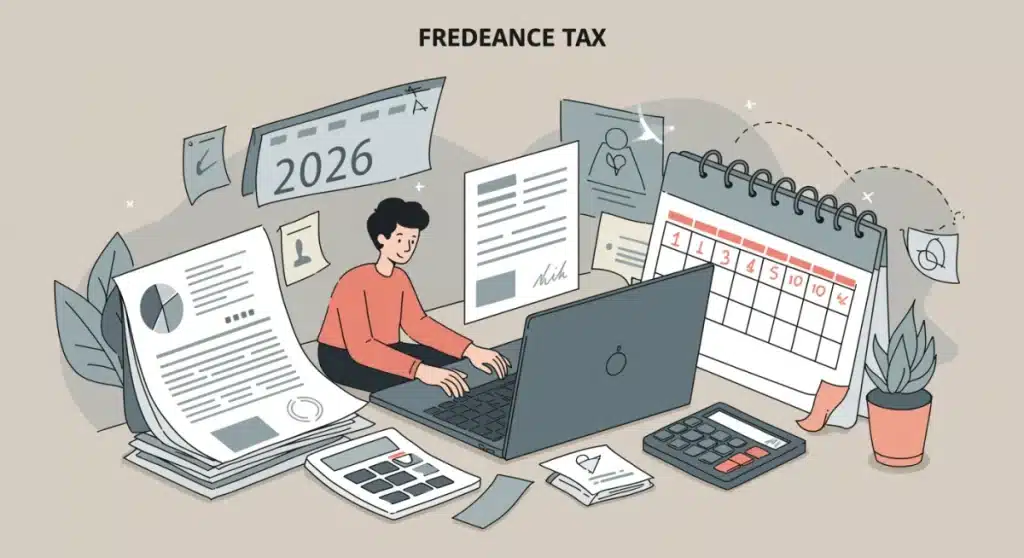
Freelancers in 2026 must adopt advanced strategies for estimating and paying quarterly taxes to avoid the common 10% underpayment penalty, requiring proactive financial planning and a deep understanding of evolving tax regulations.
Navigating the complexities of self-employment can be rewarding, but it comes with unique financial responsibilities. For freelancers, one of the most critical aspects is managing quarterly taxes. In 2026, understanding and implementing advanced strategies for estimating and paying freelancer quarterly taxes is paramount to avoiding the often-dreaded 10% underpayment penalty from the IRS. This guide delves into actionable insights and proactive measures to ensure your financial compliance and peace of mind.
Understanding the 2026 Quarterly Tax Landscape
The tax landscape for freelancers is continuously evolving, and 2026 brings its own set of nuances. It’s no longer sufficient to simply guess your income; precision is key. Quarterly estimated taxes are designed to ensure that taxpayers with income not subject to withholding, such as freelancers and self-employed individuals, pay their income tax and self-employment tax (Social Security and Medicare) throughout the year as they earn it.
Failure to pay enough tax through withholding or estimated tax by the due date of each payment period can result in a penalty. The IRS usually assesses a penalty for underpayment if you paid less than 90% of your current year’s tax liability or 100% of your prior year’s tax liability (110% if your adjusted gross income was over $150,000 in the prior year). Understanding these thresholds is the first step toward effective planning.
Key Changes and Considerations for 2026
- Inflation Adjustments: Tax brackets, standard deductions, and other thresholds are subject to inflation adjustments annually. Keeping an eye on the IRS announcements for 2026 is crucial.
- Gig Economy Regulations: Expect continued scrutiny and potential new reporting requirements for income earned through gig platforms. Digital transaction reporting may become more streamlined and transparent.
- State-Specific Rules: Beyond federal taxes, remember that many states have their own estimated tax requirements. Neglecting these can also lead to penalties.
In essence, staying informed about the latest IRS publications and state tax guidelines for 2026 is non-negotiable. Proactive research and understanding how these changes impact your specific freelance business model will lay a solid foundation for accurate tax estimation and payment, safeguarding you from unexpected penalties.
Accurate Income Estimation Techniques for Freelancers
One of the biggest hurdles for freelancers is the unpredictable nature of their income. Accurately estimating your income is the bedrock of successful quarterly tax planning. Without a reliable estimate, you risk either overpaying (tying up capital) or underpaying (incurring penalties).
A dynamic approach to income estimation is far more effective than a static one. Instead of setting an annual estimate and forgetting it, freelancers should regularly review and adjust their projections. This allows for greater flexibility and responsiveness to market changes, new client acquisitions, or unexpected project delays.
Leveraging Financial Software and Tools
- Accounting Software: Tools like QuickBooks Self-Employed or FreshBooks can track income and expenses in real-time, providing a clearer picture of your profitability. Many offer integrated tax estimation features.
- Spreadsheet Models: For those who prefer a more hands-on approach, a well-designed spreadsheet can be invaluable. This allows for detailed input of projected earnings, deductible expenses, and even scenario planning for different income levels.
- Forecasting Algorithms: Some advanced financial planning apps now incorporate AI-driven forecasting based on historical data and market trends, offering more sophisticated predictions for fluctuating freelance income.
Beyond tools, consider segmenting your income. If you have recurring retainer clients, that income is relatively stable. Project-based work, however, requires more careful forecasting, perhaps based on historical averages or conservative projections for new work. Regularly reconciling actual income against your estimates will enable timely adjustments to your quarterly payments, preventing significant discrepancies.
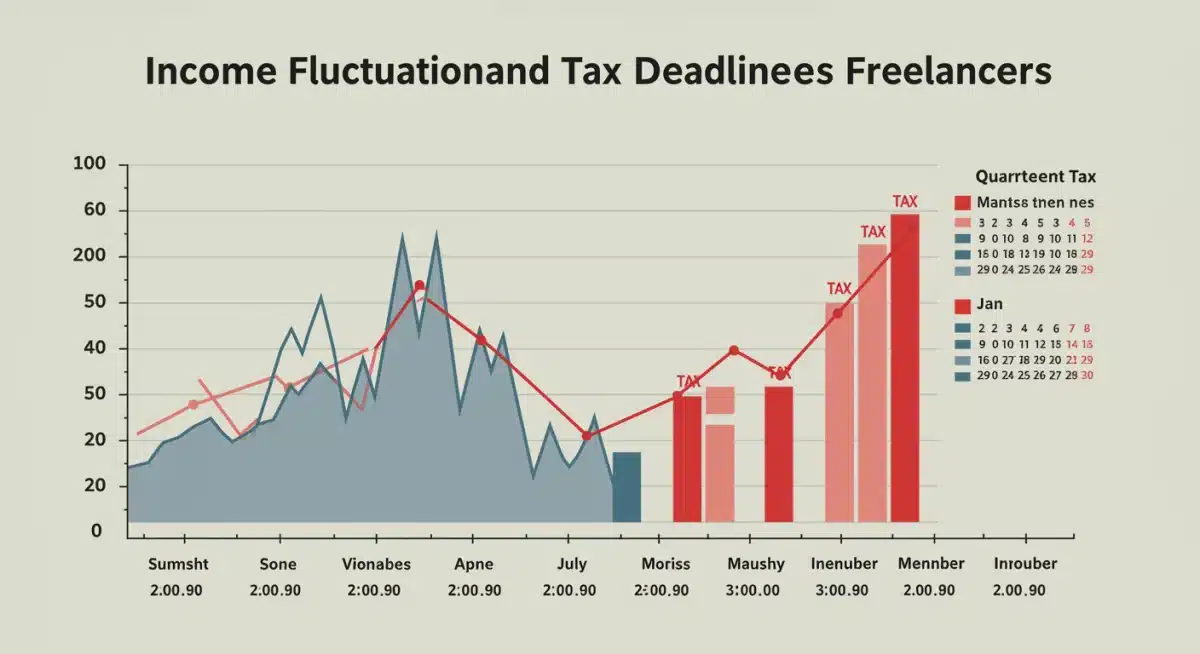
Ultimately, the goal is not perfection, but rather reasonable accuracy. By employing robust tracking methods and regularly reviewing your financial performance, you can significantly improve the reliability of your income estimates, directly impacting your ability to pay appropriate quarterly taxes.
Maximizing Deductions and Credits to Lower Taxable Income
For freelancers, every legitimate deduction and credit is a reduction in taxable income, directly impacting the amount of quarterly tax you owe. Many self-employed individuals overlook valuable write-offs, leading to higher tax bills than necessary. Proactive expense tracking throughout the year is crucial; waiting until tax season can result in missed opportunities.
The IRS allows freelancers to deduct ordinary and necessary business expenses. An ordinary expense is one that is common and accepted in your trade or business. A necessary expense is one that is helpful and appropriate for your trade or business. Understanding this distinction is vital for accurate record-keeping and maximizing your deductions without raising red flags.
Common Freelancer Deductions to Prioritize
- Home Office Deduction: If you use a part of your home exclusively and regularly for your business, you might qualify. There are simplified and regular methods to calculate this.
- Business Expenses: This category is broad, including software subscriptions, professional development courses, website hosting, marketing costs, and client entertainment (subject to specific rules).
- Health Insurance Premiums: If you’re self-employed and not eligible to participate in an employer-sponsored health plan, you might be able to deduct the premiums you pay for medical, dental, and qualified long-term care insurance.
- Retirement Contributions: Contributions to a SEP IRA, Solo 401(k), or SIMPLE IRA can significantly reduce your taxable income. These are powerful tools for both tax savings and long-term financial security.
Beyond deductions, explore tax credits. While deductions reduce your taxable income, credits directly reduce the amount of tax you owe, dollar for dollar. Examples include the Child Tax Credit, Earned Income Tax Credit, and various education credits, depending on your personal circumstances. Keeping meticulous records of all income and expenses year-round is the most effective way to ensure you capture every eligible deduction and credit, thereby optimizing your quarterly tax payments and avoiding overpayment or underpayment scenarios.
Strategic Payment Schedules and Avoiding Penalties
Once you have a solid income estimate and a clear understanding of your deductions, the next step is to strategically plan your quarterly tax payments. The IRS has specific due dates for each quarter, and missing these or underpaying can trigger the 10% penalty. For 2026, these dates will likely follow the traditional pattern: April 15, June 15, September 15, and January 15 of the following year (if any of these dates fall on a weekend or holiday, the deadline shifts to the next business day).
A common pitfall is to pay a flat 25% of your estimated annual tax each quarter, regardless of income fluctuations. This can be problematic if your income is heavily seasonal. The IRS allows you to use the annualized income method if your income varies throughout the year, potentially reducing or eliminating penalties for uneven income streams.
Implementing an Effective Payment Strategy
- Annualized Income Method: If your income fluctuates significantly, this method allows you to figure your tax liability as your income is earned throughout the year. This can prevent underpayment penalties in earlier quarters if you earn most of your income later in the year.
- Safe Harbor Rules: Aim to pay at least 90% of your current year’s tax liability or 100% of your prior year’s tax liability (110% if your AGI was over $150,000) to avoid penalties. Meeting these safe harbor thresholds is a reliable way to ensure compliance.
- Dedicated Savings Account: Set aside a percentage of every payment you receive into a separate, high-yield savings account specifically for taxes. This ensures funds are available when quarterly payments are due. Consider automated transfers to streamline this process.
Furthermore, consider making payments electronically through IRS Direct Pay or the Electronic Federal Tax Payment System (EFTPS). These methods offer immediate confirmation and flexibility. If you realize you’ve underpaid in an earlier quarter, you can often make up for it in a subsequent payment without incurring a penalty, provided you catch it before the next due date. Proactive monitoring and timely adjustments are key to penalty avoidance.
The Role of Technology and Automation in Tax Compliance
In 2026, technology is no longer just a convenience; it’s an essential partner in managing freelance finances and ensuring tax compliance. Manual tracking and calculations are prone to errors and consume valuable time that could be spent on income-generating activities. Automated solutions can streamline everything from income and expense tracking to tax estimation and payment reminders.
The integration of various financial tools creates a cohesive ecosystem for managing your freelance business. From banking apps with categorization features to dedicated tax software, leveraging these technologies reduces the administrative burden and improves accuracy, significantly aiding in the management of freelancer quarterly taxes.
Essential Tech Tools for Freelance Tax Management
- Integrated Accounting Platforms: Software like Wave Apps, Xero, or Zoho Books offer comprehensive solutions for invoicing, expense tracking, and financial reporting, often with direct bank feed integrations.
- Tax Estimation and Payment Software: Many accounting platforms integrate with tax preparation software (e.g., TurboTax Self-Employed, H&R Block Deluxe) that can estimate your quarterly payments and even facilitate direct payments to the IRS.
- Receipt Scanning Apps: Tools like Expensify or Shoeboxed digitize receipts, ensuring you never miss a deductible expense and making record-keeping effortless.
- Calendar Reminders: Set up automated reminders for quarterly tax due dates in your digital calendar to ensure you never miss a payment deadline.
Beyond specific tools, consider automating the process of setting aside funds for taxes. Many banks allow you to set up automatic transfers from your primary business account to a dedicated tax savings account whenever a payment comes in. This ‘pay yourself first’ for taxes approach ensures that the money is always there when you need it, removing the temptation to spend it elsewhere. Embracing automation not only saves time but also significantly reduces the stress associated with quarterly tax obligations.
Future-Proofing Your Freelance Finances for 2026 and Beyond
Effective quarterly tax management isn’t just about meeting immediate deadlines; it’s about building a resilient financial foundation for your freelance career. Looking ahead to 2026 and beyond requires a long-term perspective, incorporating continuous learning, adaptability, and strategic financial planning. The freelance economy is dynamic, and your financial strategies must be equally agile.
One key aspect of future-proofing is to regularly review your business structure. As your income grows, you might consider evolving from a sole proprietorship to an LLC or S-Corp. These structures can offer liability protection and, in some cases, tax advantages that impact how you pay self-employment taxes and potentially reduce your overall tax burden.
Advanced Financial Planning for Long-Term Success
- Retirement Planning: Maximize contributions to self-employed retirement accounts like SEP IRAs or Solo 401(k)s. These not only save on current taxes but also secure your financial future.
- Emergency Fund: Maintain a robust emergency fund covering 3-6 months of living and business expenses. This buffer is crucial for surviving lean periods without dipping into tax savings.
- Professional Guidance: Consider working with a tax professional or financial advisor specializing in self-employment. Their expertise can uncover overlooked deductions, help with complex estimations, and ensure you’re always compliant with the latest regulations.
- Diversify Income Streams: Reduce reliance on a single client or project type. Diversifying your income makes your financial situation more stable and predictable, simplifying tax estimation.
Staying abreast of legislative changes is also vital. Tax laws can shift, and what is deductible or how income is reported today might change tomorrow. Subscribing to IRS updates, reputable financial news sources, and professional tax blogs can keep you informed. By adopting a proactive, informed, and technologically-supported approach, freelancers can effectively manage their quarterly taxes, avoid penalties, and ensure lasting financial stability in a constantly evolving economic landscape.
| Key Point | Brief Description |
|---|---|
| Income Estimation | Implement dynamic tracking and regular adjustments to accurately forecast fluctuating freelance income. |
| Maximize Deductions | Diligently track all eligible business expenses and leverage retirement contributions to lower taxable income. |
| Strategic Payments | Utilize annualized income methods and safe harbor rules to ensure timely and sufficient quarterly tax payments. |
| Tech & Automation | Leverage accounting software and automated transfers to streamline tax management and reduce errors. |
Frequently Asked Questions About Freelancer Quarterly Taxes
For 2026, the estimated quarterly tax deadlines are generally April 15, June 15, September 15, and January 15 of 2027. If any of these dates fall on a weekend or holiday, the deadline shifts to the next business day. It’s crucial to mark these dates to avoid penalties.
To avoid the 10% underpayment penalty, you generally need to pay at least 90% of your current year’s tax liability or 100% of your prior year’s tax liability (110% if your AGI was over $150,000). Accurate income estimation and strategic payments throughout the year are key.
While specific 2026 regulations are still emerging, expect continued focus on gig economy income reporting. Digital payment platforms may have more streamlined reporting requirements, making it easier for the IRS to track income. Always stay updated with IRS announcements.
Many freelancers overlook deductions for home office expenses, self-employed health insurance premiums, and contributions to SEP IRAs or Solo 401(k)s. Business-related education, software, and professional fees are also common deductions that can significantly reduce taxable income.
If your freelance income fluctuates significantly throughout the year, the annualized income method can be highly beneficial. It allows you to pay estimated taxes based on when you earn your income, potentially preventing underpayment penalties in quarters with lower earnings.
Conclusion
Effectively managing freelancer quarterly taxes in 2026 is a cornerstone of financial stability for any self-employed individual. By adopting advanced strategies for accurate income estimation, maximizing all eligible deductions and credits, and implementing a strategic payment schedule, you can confidently navigate the tax landscape. Leveraging technology for automation and staying informed about evolving regulations will not only help you avoid the costly 10% underpayment penalty but also foster long-term financial health and peace of mind in your freelance career. Proactive planning is not just about compliance; it’s about empowering your financial future.