Achieving Flow State: Expert Tips for Remote Productivity in 2026
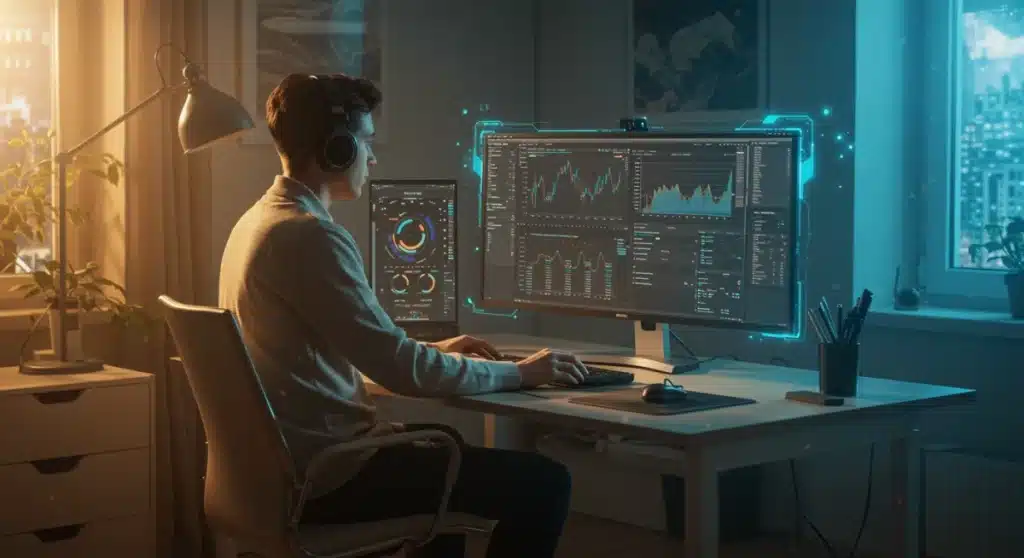
Achieving flow state in 2026 remote setups is crucial for sustained productivity, requiring a combination of environmental mastery, focused task selection, mindful breaks, and continuous skill development to maintain peak performance and engagement.
In the evolving landscape of 2026 remote work, mastering personal productivity is not just an advantage; it’s a necessity. This article explores how to achieve a true remote flow state, offering four expert-backed tips designed to help you tap into sustained high performance and deep work, even from a distance.
Understanding Flow State in a Remote Context
The concept of ‘flow state,’ often described as being ‘in the zone,’ refers to a mental state where an individual is fully immersed in an activity, characterized by energized focus, full involvement, and enjoyment in the process of the activity. In a remote work environment, reaching this state can be particularly challenging due to inherent distractions, lack of structured office cues, and the blurred lines between personal and professional life. However, its benefits—increased efficiency, creativity, and job satisfaction—make it an indispensable goal for remote professionals in 2026.
Achieving flow remotely means consciously engineering your work environment and routines to minimize interruptions and maximize concentration. It’s about more than just productivity; it’s about optimizing your cognitive resources and psychological well-being. Experts in remote psychology emphasize that the absence of physical proximity necessitates a more deliberate approach to cultivating focus and engagement.
The Psychological Underpinnings of Remote Flow
Psychologically, flow arises when there’s a perfect balance between skill level and the challenge of the task. If a task is too easy, boredom sets in; if it’s too difficult, anxiety takes over. For remote workers, this balance is often disrupted by the constant influx of digital notifications, unstructured schedules, and the temptation of home distractions. Understanding these psychological triggers is the first step toward building a robust remote flow practice.
- Clear Goals: Define specific, achievable objectives for each work session to provide a clear path.
- Immediate Feedback: Structure tasks to offer quick insights into progress, maintaining engagement.
- Skill-Challenge Balance: Select tasks that stretch your abilities without overwhelming you, fostering growth.
- Distraction Control: Actively manage your environment to eliminate interruptions, both digital and physical.
Ultimately, understanding flow in a remote context is about recognizing that while the environment changes, the core psychological principles remain. The key is adapting these principles to the unique demands of working outside a traditional office, leveraging tools and strategies that support deep concentration, and consciously creating a conducive mental and physical workspace.
Tip 1: Engineer Your Digital and Physical Environment
In 2026, the remote workspace is no longer just a desk and a laptop; it’s a carefully curated ecosystem designed for peak performance. Engineering your digital and physical environment is paramount for fostering a flow state, especially when working from home or a co-working space. This involves more than just aesthetics; it’s about minimizing cognitive load and maximizing sensory support for concentration.
Start by decluttering both your physical desk and your digital desktop. A cluttered space translates to a cluttered mind, making it harder to initiate and sustain deep work. Think about ergonomics, lighting, and sound. Investing in a comfortable chair, proper lighting, and noise-canceling headphones can drastically reduce physical discomfort and sensory distractions, allowing your mind to fully engage with the task at hand.
Optimizing Your Digital Workspace
The digital realm often presents the most insidious distractions. Notifications, endless tabs, and communication platforms constantly vie for your attention. To combat this, adopt a minimalist approach to your digital tools. Utilize focus modes on your operating system, close unnecessary applications, and schedule specific times for checking emails and messages. Consider using virtual desktops to separate work tasks from personal browsing, creating clear boundaries.
- Notification Management: Turn off all non-essential notifications during deep work blocks.
- Tab Discipline: Limit open browser tabs to only those directly relevant to your current task.
- Dedicated Software: Use project management tools and communication platforms efficiently, segmenting their use.
- Digital Declutter: Regularly organize files and folders to reduce mental friction when searching for resources.
Beyond decluttering, consider the psychological impact of your digital interface. Dark mode settings can reduce eye strain, and custom themes can create a calming or stimulating atmosphere. The goal is to make your digital environment an ally, not an adversary, in your pursuit of flow.
Curating Your Physical Workspace
Your physical environment plays a significant role in signaling to your brain that it’s time to work. Designate a specific area for work, even if it’s a corner of a room. This creates a psychological boundary between work and leisure. Ensure this space is well-lit, preferably with natural light, and at a comfortable temperature. Incorporate elements that inspire you, such as plants or minimalist art, but avoid anything that could become a distraction.
Sound management is also critical. While noise-canceling headphones are excellent, consider ambient sounds or instrumental music that can help mask distractions without being distracting themselves. Some individuals find white noise or nature sounds particularly effective. The key is to experiment and find what helps you concentrate best. By consciously engineering both your digital and physical realms, you lay a strong foundation for consistently entering and sustaining a flow state.
Tip 2: Master Time Blocking and Task Batching for Deep Work
One of the most effective strategies for achieving remote flow state is the deliberate practice of time blocking and task batching. In 2026, with remote work becoming even more sophisticated, these techniques are not just organizational tools but fundamental pillars for cultivating deep, uninterrupted focus. They allow you to proactively schedule periods for concentration, protecting your most valuable resource: your attention.
Time blocking involves allocating specific blocks of time in your calendar for particular tasks or types of work. During these blocks, you commit to focusing solely on the designated activity, eliminating all other distractions. Task batching, on the other hand, means grouping similar tasks together and completing them all at once. This minimizes context switching, a major drain on cognitive energy, and helps you build momentum toward a flow state.
Implementing Effective Time Blocks
To implement time blocking successfully, start by identifying your most cognitively demanding tasks—the ones that truly require deep work. These are the tasks where achieving flow will yield the greatest results. Schedule these blocks during your peak productivity hours, when you naturally feel most alert and focused. Communicate these blocks to your team, if possible, to minimize interruptions and set clear expectations.
- Identify Peak Hours: Determine when you are most productive and schedule deep work accordingly.
- Set Clear Objectives: For each time block, define what you aim to achieve to maintain focus.
- Protect Your Blocks: Treat time blocks as sacred appointments that cannot be easily rescheduled or interrupted.
- Review and Adjust: Regularly assess the effectiveness of your time blocks and make adjustments as needed.
The duration of a time block can vary, but many experts recommend periods of 60 to 90 minutes, followed by a short break. The key is consistency and discipline. Over time, your brain will begin to associate these scheduled blocks with deep work, making it easier to transition into a flow state.
Leveraging Task Batching for Efficiency
Task batching complements time blocking by streamlining your workflow and reducing mental overhead. Instead of responding to emails as they arrive, batch them into a dedicated time slot. Similarly, group administrative tasks, creative work, or research activities. This approach reduces the mental cost of switching gears and allows you to maintain a consistent cognitive mode for longer periods.
For example, dedicate one block in the morning to creative writing, another in the afternoon to client communications, and a third to project planning. By focusing on one type of task per batch, you reduce decision fatigue and conserve mental energy. This structured approach not only enhances your ability to enter a flow state but also significantly boosts overall efficiency in a remote setting. Mastering these techniques is crucial for sustained productivity and for transforming your remote work into a series of focused, high-output sessions.
Tip 3: Integrate Mindful Breaks and Recovery Rituals
While the pursuit of flow state emphasizes deep concentration, it’s equally important to recognize that sustained productivity isn’t about working non-stop. In 2026, remote work experts increasingly highlight the critical role of mindful breaks and recovery rituals in preventing burnout and maintaining optimal cognitive function. These intentional pauses are not disruptions; they are essential components that recharge your mental batteries, making it easier to re-enter a flow state.
Mindful breaks involve intentionally stepping away from your work to engage in activities that genuinely refresh your mind and body. This is distinct from simply switching to another screen or task. Recovery rituals are consistent practices, often performed daily or weekly, that help you fully disengage from work and restore your energy levels. Both are vital for long-term remote productivity and well-being.
The Power of Micro-Breaks
Even short, frequent breaks can have a profound impact. Instead of pushing through fatigue, try incorporating micro-breaks every 25-50 minutes, depending on your preferred work cycle (e.g., Pomodoro Technique). During these brief pauses, avoid checking social media or emails. Instead, try to do something that allows your mind to truly reset:
- Walk Away: Stand up, stretch, or walk around your living space for a few minutes.
- Mindful Breathing: Practice a few deep breaths to calm your nervous system.
- Hydrate: Get a glass of water, signaling a small shift in activity.
- Look Away: Shift your gaze to something distant, especially if you’ve been staring at a screen.
These small acts prevent mental fatigue from accumulating, ensuring that when you return to your task, you can do so with renewed focus. Regular micro-breaks also prevent eye strain and physical stiffness, contributing to overall comfort and sustained concentration.
Establishing Daily Recovery Rituals
Beyond micro-breaks, establishing daily recovery rituals is crucial for detaching from work, particularly in a remote setup where the lines between work and home can blur. These rituals signal to your brain that the workday is over and it’s time to shift gears. They can be simple, yet powerful:
For example, a post-work walk, a short meditation session, reading a non-work-related book, or engaging in a hobby immediately after closing your laptop. The consistency of these rituals helps create a clear psychological boundary, reducing the mental residue of work that can linger into your personal time. By consciously integrating mindful breaks and robust recovery rituals, remote professionals in 2026 can sustain their energy, prevent burnout, and consistently return to their work with the capacity to achieve a deep flow state.
Tip 4: Cultivate Continuous Learning and Skill Mastery
In the rapidly evolving remote work landscape of 2026, the ability to achieve and maintain a flow state is intricately linked to continuous learning and skill mastery. Flow thrives on the balance between skill and challenge; therefore, consistently expanding your capabilities ensures that you can tackle increasingly complex tasks without becoming overwhelmed. Stagnation, conversely, leads to boredom and makes flow elusive.
Cultivating continuous learning means actively seeking out new knowledge, developing new skills, and refining existing ones. This proactive approach not only keeps your work engaging but also provides the necessary mental scaffolding to approach novel challenges with confidence, thereby creating more opportunities for deep, immersive work. For remote professionals, this often involves self-directed learning and leveraging digital resources.
Strategizing Skill Development
To effectively cultivate skill mastery, it’s essential to have a strategic approach. Don’t just learn for the sake of it; identify skills that are directly relevant to your current role, future career aspirations, or areas where you frequently encounter challenges. This targeted learning ensures that your efforts directly contribute to your ability to perform high-value work, which is often the gateway to flow.
- Identify Skill Gaps: Regularly assess your current skill set against industry demands and personal goals.
- Set Learning Goals: Define specific, measurable learning objectives (e.g., ‘master Python for data analysis by Q3’).
- Allocate Dedicated Time: Schedule regular blocks in your calendar for learning, treating it as a priority.
- Apply New Knowledge: Immediately apply newly acquired skills to real-world projects to solidify understanding.
Consider micro-learning modules, online courses, webinars, and industry certifications. The remote environment provides unprecedented access to learning resources, making it easier than ever to upskill. The key is to be consistent and integrate learning into your regular work routine, rather than viewing it as an additional burden.
Embracing Deliberate Practice
Skill mastery isn’t just about accumulating knowledge; it’s about deliberate practice. This involves focused, intentional effort to improve specific aspects of a skill, often pushing beyond your comfort zone. For remote workers, deliberate practice might involve:
Performing mock presentations, coding challenges, writing exercises, or analyzing complex datasets with a critical eye. Seek feedback from peers or mentors to identify areas for improvement and refine your approach. The iterative process of learning, applying, and refining creates a positive feedback loop that deepens your expertise and makes entering a flow state more natural when tackling sophisticated tasks. By committing to continuous learning and deliberate practice, remote professionals in 2026 can ensure their skills remain sharp, their work remains challenging, and their opportunities for achieving flow state are maximized.
The Role of Mindset and Self-Compassion
Beyond environmental and technical strategies, cultivating the right mindset is a foundational element for achieving a sustained remote flow state. In 2026, where remote work often demands higher levels of self-management and emotional intelligence, a resilient and adaptive mindset becomes a crucial asset. This includes developing self-awareness, fostering a growth mindset, and practicing self-compassion, particularly during moments of struggle or distraction.
Self-awareness allows you to recognize when you’re drifting from focus, identify your personal triggers for distraction, and understand your unique productivity rhythms. A growth mindset, the belief that your abilities can be developed through dedication and hard work, is essential for viewing challenges as opportunities for learning rather than insurmountable obstacles. This perspective is vital for maintaining the skill-challenge balance inherent in flow.
Overcoming Remote Work Obstacles with Mindset
Remote work inherently brings unique challenges—isolation, unclear boundaries, and frequent digital interruptions. A strong mindset helps navigate these. Instead of viewing distractions as personal failures, approach them with curiosity and a problem-solving attitude. For example, if you find yourself constantly checking social media, analyze the underlying need (e.g., boredom, need for connection) and address it constructively.
- Practice Mindfulness: Integrate short mindfulness exercises to enhance present-moment awareness and reduce mental clutter.
- Set Intentions: Begin each workday or work block with a clear intention, guiding your focus.
- Positive Self-Talk: Challenge negative self-talk and replace it with encouraging, constructive internal dialogue.
- Embrace Imperfection: Recognize that not every day will be perfect, and some days will be less productive than others.
Developing a robust internal locus of control, where you believe you can influence your outcomes, is also key. This empowers you to actively shape your remote work experience rather than feeling passively subjected to it. Ultimately, a proactive mindset transforms potential hindrances into opportunities for personal and professional growth.
The Importance of Self-Compassion
Self-compassion is often overlooked but is incredibly powerful for sustaining remote productivity. When you inevitably face setbacks, distractions, or simply have an off day, treating yourself with kindness and understanding, rather than harsh self-criticism, allows for quicker recovery and more resilient engagement. Flow state is not a constant, and periods of non-flow are natural.
Recognize that everyone struggles with focus sometimes, especially in a dynamic remote environment. Instead of dwelling on what went wrong, acknowledge the difficulty, learn from it, and gently redirect your efforts. This compassionate approach reduces stress, enhances emotional regulation, and ultimately creates a more supportive internal environment for consistently re-entering a flow state. By integrating a growth-oriented, self-aware, and compassionate mindset, remote professionals can build the mental fortitude required for sustained high performance in 2026.
Leveraging 2026 Tech for Enhanced Flow
As we navigate 2026, technology continues to evolve at a rapid pace, offering unprecedented opportunities to enhance flow state in remote setups. Beyond basic communication tools, a new generation of smart applications and devices is emerging, specifically designed to minimize distractions, optimize cognitive load, and provide data-driven insights into personal productivity patterns. Leveraging these tools effectively can significantly amplify your ability to achieve and maintain deep work.
From AI-powered assistants that manage schedules to biometric feedback systems that monitor focus levels, the technological landscape is ripe with innovations. The key is to be discerning, selecting tools that genuinely support your workflow and reduce friction, rather than adding another layer of digital complexity. Thoughtful integration of these advanced technologies can transform your remote workspace into a personalized flow-inducing environment.
Smart Tools for Focus and Concentration
The market for focus-enhancing technology has matured considerably by 2026. Consider tools that:
- AI-Powered Task Prioritization: Applications that learn your work habits and automatically prioritize tasks, suggesting optimal times for deep work.
- Adaptive Noise Cancellation: Headphones and room systems that dynamically adjust to block specific frequencies of distraction while allowing important alerts.
- Cognitive Training Apps: Gamified platforms designed to improve attention span, working memory, and mental agility.
- Digital Wellbeing Dashboards: Integrated platforms that provide insights into your screen time, app usage, and focus patterns, helping you identify and mitigate digital distractions.
These tools move beyond simple blockers, offering proactive and personalized assistance in maintaining concentration. For instance, some AI assistants can even detect when you’re entering a flow state based on your typing speed and mouse movements, automatically pausing non-critical notifications.
Biometric Feedback and Environmental Control
Emerging in 2026 are more sophisticated biometric devices that can provide real-time feedback on your physiological state, indicating levels of stress or optimal focus. Wearable tech can monitor heart rate variability, skin conductance, or even brainwave patterns, offering gentle nudges or environmental adjustments to help you re-center.
Furthermore, smart home and office systems can be integrated to create optimal flow environments. Imagine a system that automatically adjusts lighting to a warm, concentration-enhancing hue, plays ambient focus music, and sets the room temperature to your preferred level when you initiate a “deep work” command. These integrated solutions minimize conscious effort in environment management, allowing you to dedicate more mental energy to your tasks. By strategically adopting 2026 tech, remote professionals can create highly optimized, responsive environments that actively support the attainment of a sustained flow state, pushing the boundaries of what’s possible in remote productivity.
| Key Flow Strategy | Brief Description |
|---|---|
| Engineer Environment | Optimize physical and digital workspaces to minimize distractions and support concentration. |
| Time Blocking & Task Batching | Schedule dedicated deep work blocks and group similar tasks to reduce context switching. |
| Mindful Breaks & Recovery | Incorporate intentional pauses and rituals to recharge mental energy and prevent burnout. |
| Continuous Learning | Actively develop new skills to maintain challenge, engagement, and expertise. |
Frequently Asked Questions About Remote Flow State
Flow state is a mental condition of complete immersion and focused concentration in an activity, leading to heightened performance and enjoyment. For remote work in 2026, it’s vital because it boosts productivity, fosters creativity, and enhances job satisfaction, counteracting common remote distractions.
To minimize digital distractions, turn off non-essential notifications, use focus modes on your devices, limit open browser tabs, and schedule specific times for checking communications. Consider using virtual desktops to separate work and personal applications, creating clear digital boundaries for deep work.
Yes, mindful breaks are crucial. They prevent mental fatigue, allow for cognitive recovery, and help maintain sustained focus. Short, intentional breaks every 25-50 minutes, focusing on non-screen activities like stretching or walking, can significantly improve your ability to re-enter and sustain flow.
Continuous learning and skill mastery are essential for sustained remote flow. They ensure tasks remain challenging enough to engage your skills without causing boredom or anxiety. By constantly developing new abilities, you create more opportunities for deep work and keep your professional growth trajectory upward.
Advanced 2026 technology, such as AI-powered task prioritization, adaptive noise-canceling headphones, cognitive training apps, and integrated smart office systems, can significantly enhance flow. These tools help manage distractions, optimize cognitive load, and create ideal environmental conditions for deep, focused work.
Conclusion
Achieving a sustained flow state in the dynamic remote work environment of 2026 is a multifaceted endeavor, requiring intentional effort across several domains. By engineering your digital and physical workspaces, mastering time blocking and task batching, integrating mindful breaks and robust recovery rituals, and committing to continuous learning, remote professionals can unlock unparalleled levels of productivity and job satisfaction. Furthermore, cultivating a resilient mindset and strategically leveraging advanced 2026 technologies will provide the ultimate edge. Embracing these expert-backed strategies not only optimizes individual performance but also transforms the remote work experience into one of deep engagement and meaningful output, ensuring you thrive in the evolving professional landscape.