Optimizing Freelance Cash Flow: A 3-Month Plan for 2026

Optimizing freelance cash flow in 2026 is crucial for managing irregular income, requiring a structured 3-month plan that integrates strategic budgeting, consistent invoicing, and dedicated savings to ensure financial stability.
Are you a freelancer grappling with the unpredictable nature of irregular income? The journey to financial stability can feel like navigating a maze, especially as the landscape of remote work evolves in 2026. This article provides a comprehensive guide to optimizing freelance cash flow, offering a practical 3-month plan designed to bring clarity and control to your finances. Let’s delve into strategies that will transform your financial outlook.
Understanding the freelance financial landscape in 2026
The freelance economy in 2026 continues its rapid expansion, offering unprecedented flexibility but also posing unique financial challenges. Without a steady paycheck, managing income and expenses demands a proactive and disciplined approach. Many freelancers find themselves in a feast-or-famine cycle, making long-term planning difficult. However, with the right strategies, this irregularity can be transformed into a predictable and manageable system.
Technological advancements and evolving client expectations mean that freelancers must be more agile than ever, not just in their services but also in their financial management. From new payment platforms to updated tax regulations, staying informed is key. A solid understanding of your financial inflows and outflows is the first step towards gaining control. This foundational knowledge allows you to anticipate lean periods and capitalize on prosperous ones, ensuring your business remains resilient.
The impact of economic shifts on freelancers
Global economic shifts can significantly influence freelance markets. Understanding these broader trends is vital for forecasting potential income fluctuations. For example, specific industries might experience booms or busts, directly affecting demand for freelance services. Staying abreast of these changes allows you to diversify your client base or pivot your offerings proactively.
- Market demand analysis: Regularly assess which skills are in high demand and adjust your service offerings accordingly.
- Diversification strategies: Avoid relying on a single client or income stream to mitigate risk.
- Economic indicators: Pay attention to reports that might signal upcoming changes in various sectors.
Ultimately, a deep dive into the specifics of your freelance niche within the broader economic context of 2026 will empower you to make more informed financial decisions. This proactive approach helps mitigate risks associated with irregular income, setting the stage for effective cash flow optimization.
Month 1: Building your financial foundation
The first month of your 3-month plan is dedicated to establishing a robust financial foundation. This involves a thorough assessment of your current financial situation, setting realistic goals, and implementing essential tracking systems. Without a clear picture of where your money is going and coming from, any subsequent efforts will be less effective. Think of this month as your financial audit and setup phase.
Start by categorizing all your income and expenses over the past six to twelve months. This historical data provides invaluable insights into patterns and trends, revealing peak earning seasons and periods of lower activity. Utilize digital tools or simple spreadsheets to make this process efficient. The goal here is not just to track, but to understand the rhythm of your freelance earnings and expenditures.
Setting up separate business accounts
One of the most critical steps for any freelancer is to separate personal and business finances. This not only simplifies tax preparation but also provides a clearer view of your business’s profitability. Open a dedicated business checking account and, ideally, a business savings account. This separation is fundamental for accurate financial tracking and professional financial management.
- Business checking account: For all income and operational expenses.
- Business savings account: For tax savings and emergency funds.
- Dedicated credit card: For business expenses, to keep track and build business credit.
By establishing these separate accounts, you create a clean financial slate, making it easier to monitor cash flow and adhere to your budget. This clear distinction prevents commingling of funds, which can lead to confusion and potential legal issues down the line.
Month 2: Strategic budgeting and income forecasting
With a solid financial foundation in place, Month 2 shifts focus to strategic budgeting and accurate income forecasting. This is where you move beyond simply tracking to actively planning and anticipating your financial future. The aim is to create a dynamic budget that adapts to the ebb and flow of freelance income, providing stability even during leaner months.
Begin by creating a realistic monthly budget based on the historical data gathered in Month 1. This budget should account for all fixed and variable expenses, including personal living costs, business operational costs, and savings goals. Be honest with yourself about where your money goes; this is not about deprivation, but about intentional allocation. Regularly review and adjust this budget as your income or expenses change.
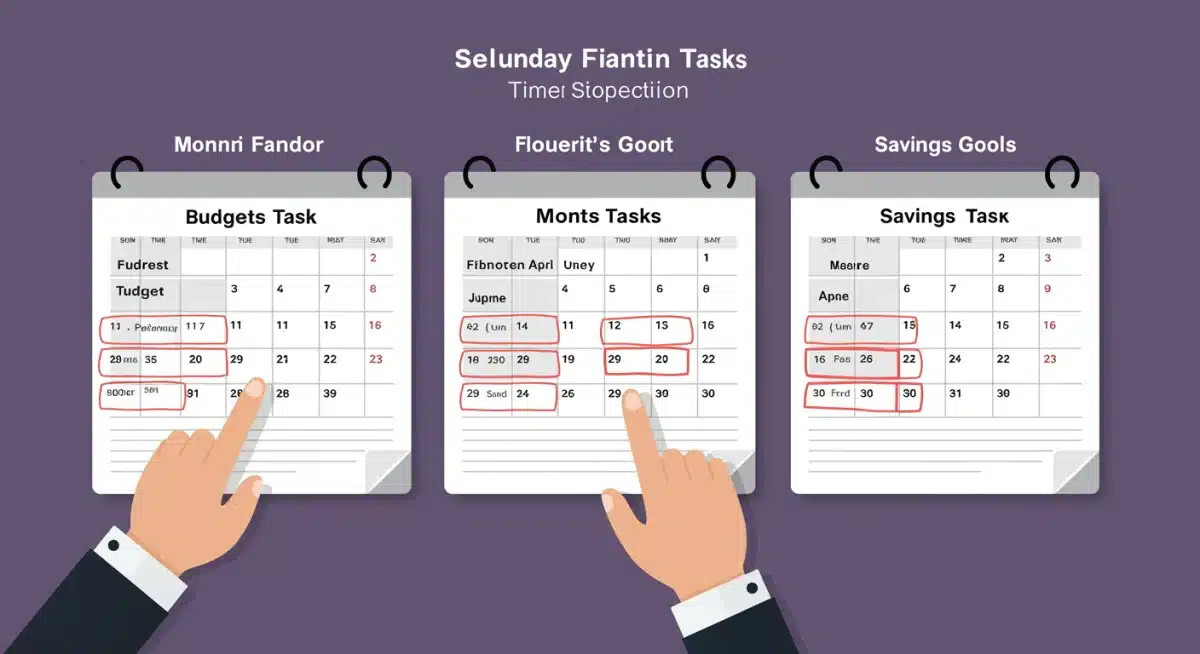
Forecasting your income can be challenging due to its irregular nature. However, by analyzing past earnings, understanding your current project pipeline, and estimating future opportunities, you can create a reasonable projection. Use a conservative estimate for your lowest expected income to ensure you can always cover essential expenses. This approach helps prevent unwelcome surprises and allows for proactive adjustments.
Implementing a ‘profit first’ approach
Consider adopting the ‘Profit First’ methodology, which advocates for allocating a percentage of every payment received to profit, owner’s pay, taxes, and operating expenses, in that order. This system ensures that profit is not an afterthought but a deliberate allocation, fundamentally changing how you manage your cash flow. It trains you to operate within the funds remaining for expenses, fostering financial discipline.
- Allocate percentages: Determine fixed percentages for each category based on your business needs.
- Dedicated accounts: Set up separate bank accounts for each allocation (e.g., income, profit, owner’s pay, taxes, operating expenses).
- Regular transfers: Immediately transfer funds to these accounts upon receiving client payments.
By consistently implementing this strategy, you build a financial buffer, ensure you’re paying yourself, and set aside funds for taxes, all while managing operational costs. This structured approach to income distribution is a game-changer for irregular freelance earnings.
Month 3: Automated savings and tax preparation
The final month of your 3-month plan focuses on solidifying your financial stability through automated savings and proactive tax preparation. Having laid the groundwork in the previous months, you are now ready to implement systems that will ensure long-term financial health and reduce stress during tax season. This stage is about making your financial plan self-sustaining.
Automate your savings as much as possible. Set up recurring transfers from your business checking account to your business savings accounts (e.g., for taxes, emergencies, or future investments) immediately after receiving client payments. Even small, consistent transfers add up significantly over time. Automation removes the need for manual decisions, reducing the likelihood of neglecting your savings goals.
Streamlining tax preparation for freelancers in 2026
Tax preparation can be a significant source of anxiety for freelancers. However, with consistent tracking and dedicated savings, it becomes a much smoother process. In 2026, staying updated on tax laws relevant to freelancers is crucial. Utilize accounting software that integrates with your bank accounts to categorize expenses, track income, and generate reports, making tax time far less daunting.
- Quarterly estimated taxes: Understand and adhere to the schedule for paying estimated taxes to avoid penalties.
- Deductible expenses: Keep meticulous records of all business expenses that can be deducted, such as home office costs, software subscriptions, and professional development.
- Professional advice: Consider consulting with a tax professional specializing in freelance or small business taxes to ensure compliance and maximize deductions.
By proactively managing your taxes throughout the year, rather than scrambling at the last minute, you reduce financial stress and ensure you are meeting your obligations. This careful planning is a cornerstone of effective cash flow management for freelancers.
Leveraging technology for better cash flow management
In 2026, technology offers an array of powerful tools to simplify and enhance freelance cash flow management. From invoicing software to budgeting apps, leveraging these resources can save you time, reduce errors, and provide real-time insights into your financial health. The digital landscape provides solutions for almost every financial challenge a freelancer might face.
Consider using an integrated financial management platform that combines invoicing, expense tracking, and reporting functionalities. Many modern tools offer features specifically designed for freelancers, such as automatic payment reminders, time tracking, and project profitability analysis. Investing in the right software can pay dividends by freeing up your time to focus on client work and strategic growth.
Essential digital tools for freelancers
Choosing the right tools can significantly impact your efficiency and accuracy. Look for platforms that offer intuitive interfaces, robust security features, and excellent customer support. Compatibility with other tools you use (e.g., project management software) can also be a major advantage.
- Invoicing software: Tools like FreshBooks, Wave, or QuickBooks Self-Employed for professional invoicing and payment tracking.
- Budgeting apps: Personal finance apps like YNAB (You Need A Budget) or Mint for managing personal and business budgets.
- Tax preparation software: Specialized software or platforms that assist with estimated tax calculations and filing.
By integrating these technologies into your daily workflow, you create a streamlined and automated financial management system. This not only makes managing irregular income easier but also provides greater visibility and control over your entire financial picture, contributing significantly to optimizing freelance cash flow.
Long-term strategies for sustainable freelance finance
While the 3-month plan provides immediate relief and structure, true financial security for freelancers comes from implementing sustainable long-term strategies. This involves thinking beyond immediate needs and planning for future growth, retirement, and unexpected life events. Building a resilient financial future requires consistent effort and foresight.
One critical long-term strategy is to build a substantial emergency fund. Aim for at least 6-12 months of living expenses saved in an easily accessible, separate savings account. This fund acts as a vital safety net, providing peace of mind during unexpected dry spells, health issues, or economic downturns. It allows you to navigate financial uncertainties without dipping into your business capital or accruing debt.
Investing for your freelance future
Beyond emergency savings, consider long-term investment strategies. For freelancers, this often includes setting up a Solo 401(k) or SEP IRA, which offer significant tax advantages for retirement savings. Diversifying your investments beyond traditional retirement accounts can also be beneficial, exploring options like index funds, ETFs, or even real estate, depending on your risk tolerance and financial goals.
- Retirement planning: Maximize contributions to tax-advantaged retirement accounts specifically for self-employed individuals.
- Diversified investments: Explore various investment vehicles to grow your wealth over time, balancing risk and return.
- Financial advisor: Work with a financial advisor who understands the unique financial landscape of freelancers to create a personalized investment plan.
By consistently investing in your future, you not only build wealth but also create additional income streams that can supplement your freelance earnings, further stabilizing your overall financial security. This forward-thinking approach is essential for sustainable freelance finance in the long run.
| Key Plan Phase | Brief Objective |
|---|---|
| Month 1: Foundation | Assess current finances, set up separate business accounts, and track income/expenses. |
| Month 2: Budget & Forecast | Create a dynamic budget, forecast income, and implement the ‘Profit First’ method. |
| Month 3: Automation & Tax | Automate savings, streamline tax preparation, and explore relevant tech tools. |
| Ongoing: Sustainability | Build emergency funds and invest for long-term financial growth and retirement. |
Frequently asked questions about freelance cash flow
The primary challenge is the irregularity of income. Unlike traditional employment, freelancers often experience unpredictable payment schedules and fluctuating project volumes, making consistent budgeting and financial forecasting difficult without a structured plan. This requires proactive strategies to smooth out income disparities.
A 3-month plan provides a structured framework to assess, plan, and automate financial processes. It helps freelancers gain a clear understanding of their income patterns, set up dedicated accounts, implement budgeting strategies like ‘Profit First,’ and automate savings and tax preparations, thereby stabilizing irregular earnings over time.
In 2026, integrated financial management platforms are highly effective. Tools like FreshBooks, Wave, or QuickBooks Self-Employed offer comprehensive features for invoicing, expense tracking, and reporting. Budgeting apps such as YNAB and Mint also provide valuable insights into personal and business spending, streamlining financial oversight.
Separating personal and business finances is vital for several reasons: it simplifies tax preparation, provides a clear picture of your business’s profitability, and maintains professionalism. It prevents commingling of funds, which can create accounting confusion and potential legal issues during audits or financial reviews.
Freelancers should prioritize building a substantial emergency fund (6-12 months of expenses), contributing to retirement accounts like a Solo 401(k) or SEP IRA, and exploring diversified investment strategies. These steps ensure long-term financial security, provide a safety net, and contribute to wealth accumulation beyond immediate income.
Conclusion
Successfully optimizing freelance cash flow in 2026 is an achievable goal with a disciplined and strategic approach. By following this 3-month plan, freelancers can transform the unpredictability of irregular income into a structured, manageable, and ultimately prosperous financial journey. From laying a solid foundation and implementing smart budgeting to automating savings and planning for taxes, each step builds towards greater financial stability and peace of mind. Embrace these strategies, leverage available technology, and commit to consistent financial habits to secure your freelance future.