Mastering Asynchronous Communication: Reduce Meetings by 40%

Mastering asynchronous communication is a pivotal strategy for modern teams aiming to reclaim valuable time, offering a proven pathway to reduce meeting overhead by up to 40% through structured, intentional, and tool-supported interactions.
In the evolving landscape of remote and hybrid work, the ability to effectively master asynchronous communication strategies has become a non-negotiable skill for teams striving for peak productivity. The promise? A significant reduction in meeting time, potentially up to 40%, freeing up invaluable hours for focused work and strategic thinking. This isn’t merely about avoiding meetings; it’s about fundamentally reshaping how work gets done, driven by intentional communication and robust digital infrastructures.
Understanding the Core of Asynchronous Communication
Asynchronous communication refers to any exchange of information where participants do not need to be present at the same time. Unlike synchronous communication, such as live meetings or instant messaging, asynchronous methods allow individuals to respond at their convenience, fostering deeper thought and more deliberate responses. This approach is rapidly gaining traction as teams seek to overcome the challenges of time zone differences, diverse schedules, and meeting fatigue prevalent in modern work environments.
The essence of async communication lies in its deliberate nature. It encourages individuals to provide comprehensive, well-thought-out contributions rather than rushed, on-the-spot answers. This shift can drastically improve decision-making quality and reduce misunderstandings that often arise from hurried synchronous interactions. Ultimately, it empowers employees to manage their time more effectively, leading to increased job satisfaction and reduced burnout.
The Shift from Synchronous Overload
Historically, workplace culture has heavily favored synchronous communication, particularly through meetings. While some real-time interactions are indispensable, an over-reliance on them can lead to significant productivity drains. Context switching, interruptions, and the pressure to perform on demand contribute to a fragmented workday, leaving little room for deep, focused work.
- Meeting Fatigue: Constant meetings lead to exhaustion and decreased engagement.
- Context Switching Costs: Shifting between tasks and meetings disrupts flow, impacting concentration.
- Time Zone Challenges: Global teams struggle to find suitable meeting times, often resulting in inconvenient hours for some members.
Benefits Beyond Time Saving
While reducing meeting time is a primary driver, the advantages of asynchronous communication extend much further. It promotes a culture of documentation, where decisions and discussions are recorded, creating a searchable institutional knowledge base. This transparency is invaluable for onboarding new team members and ensuring everyone has access to critical information, regardless of when they join a project.
Moreover, asynchronous communication empowers individuals to contribute more thoughtfully. When given time to process information and formulate responses, the quality of contributions typically improves. This can be particularly beneficial for introverted team members who may feel less comfortable participating actively in live discussions but excel when given the opportunity to articulate their ideas in writing.
In conclusion, understanding the fundamental principles of asynchronous communication is the first step toward a more efficient and inclusive work environment. It’s about recognizing that not all communication needs to be immediate and that strategic delays can often lead to superior outcomes and a healthier work-life balance.
Establishing Clear Protocols and Expectations
Successful implementation of asynchronous communication hinges on establishing clear protocols and setting precise expectations. Without a structured framework, teams risk miscommunication, delays, and a breakdown in workflow. Defining how and when to use asynchronous channels, alongside guidelines for response times and message clarity, is paramount to harnessing its full potential.
This involves a cultural shift where teams embrace documentation and intentional communication as core values. It requires leadership to model desired behaviors and actively promote the benefits of async work. When everyone understands the ‘why’ behind these protocols, adoption becomes much smoother, transforming initial resistance into widespread acceptance and efficiency gains.
Defining Communication Channels
Not all information is created equal, and therefore, not all information should be communicated through the same channel. Establishing a clear hierarchy of communication tools for different types of interactions is vital. For instance, urgent matters might still warrant a quick synchronous call, while project updates and detailed feedback are better suited for asynchronous platforms.
- Project Management Tools: For task assignments, progress tracking, and detailed discussions.
- Documentation Platforms: For long-form content, decisions, and knowledge sharing.
- Messaging Apps (Async Use): For non-urgent questions and general updates, with clear expectations for response times.
Setting Response Time Expectations
One of the biggest concerns with asynchronous communication is the perception of delayed responses. To mitigate this, teams must define realistic and transparent response time expectations. This doesn’t mean instant replies but rather a commitment to acknowledge and address messages within a specified timeframe, typically within 24-48 hours, depending on urgency.
Clearly communicating these expectations prevents anxiety and ensures that critical information doesn’t stall workflows. It also empowers team members to prioritize their work without feeling obligated to constantly monitor communication channels. This balance fosters a sense of control and reduces the mental load associated with always being ‘on.’
By articulating clear protocols and setting realistic expectations, teams can effectively navigate the complexities of asynchronous communication. This foundational work ensures that the transition is smooth, productive, and ultimately leads to the desired reduction in meeting time and an increase in overall efficiency.
Leveraging Technology for Seamless Async Workflows
The backbone of effective asynchronous communication is a robust tech stack that supports seamless information exchange, collaboration, and project management. In 2025, the market offers an array of sophisticated tools designed specifically to facilitate async workflows, enabling teams to maintain continuity and clarity without constant real-time interaction. Choosing the right tools and integrating them effectively is crucial for success.
The goal is to create a digital workspace where all necessary information is easily accessible, discussions are threaded and transparent, and tasks are clearly assigned and tracked. This minimizes the need for clarification meetings and ensures that everyone is on the same page, regardless of their working hours or location.
Essential Asynchronous Communication Tools
The landscape of collaboration tools is constantly evolving, but certain categories remain indispensable for asynchronous teams. These tools are designed to streamline various aspects of work, from project planning to feedback loops, all without requiring synchronous presence.
- Project Management Platforms: Tools like Asana, Trello, and Monday.com allow teams to manage tasks, deadlines, and project progress transparently. They serve as central hubs for discussions related to specific tasks, eliminating the need for status update meetings.
- Document Collaboration Software: Google Workspace and Microsoft 365 offer real-time co-editing and commenting features that are incredibly effective for asynchronous document creation and review. Changes are tracked, and feedback can be provided directly within the document, fostering iterative progress.
- Dedicated Async Communication Platforms: Newer tools like Twist and Basecamp are built from the ground up with asynchronous principles in mind. They prioritize threaded discussions, clear topic organization, and thoughtful responses over instant messaging, helping teams avoid the ‘always-on’ pressure of traditional chat apps.
- Video Messaging: Loom and similar tools allow for quick video explanations or feedback, often more effective than lengthy written descriptions, especially for visual concepts or complex instructions. They offer the richness of video without the scheduling constraints of live calls.
Integrating Tools for a Unified Experience
Simply having a collection of tools isn’t enough; their effective integration is key. A unified digital ecosystem prevents information silos and ensures that team members can effortlessly navigate between different aspects of their work. Integrations between project management tools and communication platforms, for example, can automatically update task statuses or trigger notifications, keeping everyone informed without manual effort.
The focus should be on creating a seamless experience where information flows naturally across platforms, reducing the cognitive load on team members and enhancing overall efficiency. Regular audits of the tech stack are also advisable to ensure tools remain relevant and effective as team needs evolve.
By strategically leveraging technology, teams can build a robust foundation for asynchronous work, turning what might seem like a disparate collection of tools into a cohesive and powerful system that significantly reduces reliance on synchronous meetings, thereby boosting productivity and focus.
Designing Effective Asynchronous Workflows
Beyond tools, the true art of reducing meeting time through async communication lies in designing workflows that inherently support this style of interaction. This involves critically evaluating existing processes and reimagining them through an asynchronous lens, identifying opportunities to replace synchronous touchpoints with deliberate, documented async exchanges. The goal is to build systems where information is proactively shared, decisions are transparently recorded, and progress is clear without the need for constant verbal check-ins.
Effective asynchronous workflows prioritize clarity, conciseness, and completeness in every communication. They empower team members to work autonomously, knowing they have access to all necessary context and can contribute meaningfully on their own schedule. This shift requires a mindful approach to how projects are initiated, managed, and concluded.
Pre-empting Meeting Needs
Many meetings are called to disseminate information or gather feedback that could easily be handled asynchronously. By adopting a ‘default to async’ mindset, teams can proactively share updates, proposals, and questions through written documents or video messages before a meeting is even considered. This not only reduces meeting frequency but also ensures that any necessary synchronous discussions are more focused and productive.
- Detailed Project Briefs: Provide comprehensive written briefs at the start of any project, outlining goals, scope, roles, and initial questions.
- Pre-recorded Updates: Use video messages for weekly team updates or project progress reports, allowing team members to consume information on their own time.
- Structured Feedback Loops: Implement dedicated channels or documents for collecting feedback on proposals, designs, or drafts, giving everyone time to review and respond thoughtfully.
Structuring Asynchronous Collaboration
For complex projects, asynchronous collaboration requires careful structuring. Breaking down large tasks into smaller, manageable units with clear ownership and dependencies facilitates async progress. Utilizing shared project management boards where tasks are updated in real-time allows team members to see the overall picture and identify any blockers without a daily stand-up.
Moreover, establishing clear decision-making processes within asynchronous frameworks is crucial. This might involve a designated decision-maker, a voting system within a project management tool, or a documented process for escalating issues that truly require synchronous intervention. The key is to ensure that decisions can be made and communicated effectively without constant live deliberation.
In conclusion, designing effective asynchronous workflows is about intentionality. It’s about building systems and habits that naturally reduce the need for synchronous meetings, allowing teams to achieve their goals with greater autonomy, clarity, and efficiency, ultimately contributing to a more focused and productive work environment.
Fostering a Culture of Documentation and Transparency
At the heart of successful asynchronous communication lies a robust culture of documentation and transparency. Without clear, accessible records of discussions, decisions, and processes, the benefits of async work quickly erode, leading to confusion and the inevitable return of unnecessary meetings. This cultural shift emphasizes writing things down, making information readily available, and ensuring that context is never lost, regardless of who is working or when.
Building this culture requires a collective commitment from every team member to contribute to a shared knowledge base. It means viewing documentation not as an administrative burden but as an essential component of efficient and equitable collaboration, especially in remote or hybrid settings. When information is transparent and well-documented, teams can operate with greater autonomy and less friction.
The Power of Written Communication
In an asynchronous environment, written communication becomes the primary mode of interaction. This necessitates a heightened focus on clarity, conciseness, and comprehensiveness in all written exchanges. Messages, whether in project management tools, shared documents, or dedicated communication platforms, must be self-contained and provide all necessary context for the recipient to understand and act upon them.
- Detailed Explanations: Avoid jargon and assume the reader may not have full context.
- Clear Calls to Action: Specify what action is needed and by whom.
- Structured Formatting: Use headings, bullet points, and bold text to enhance readability.
This emphasis on written communication naturally leads to better-articulated thoughts and more carefully considered responses, contrasting sharply with the often-rushed nature of verbal exchanges in meetings. It also creates a permanent record that can be referenced later, reducing the need to rehash old discussions.
Building a Centralized Knowledge Base
A centralized, easily searchable knowledge base is critical for any asynchronous team. This repository should house all important documents, decisions, project histories, and best practices. Tools like Confluence, Notion, or even well-organized shared drives can serve this purpose, ensuring that new team members can quickly get up to speed and existing members can find answers to their questions independently.
The transparency offered by a comprehensive knowledge base reduces information asymmetry, allowing every team member to access the same level of detail. This fosters a sense of inclusion and empowers individuals to make informed decisions without constant reliance on others for information, thereby minimizing interruptions and promoting focused work.
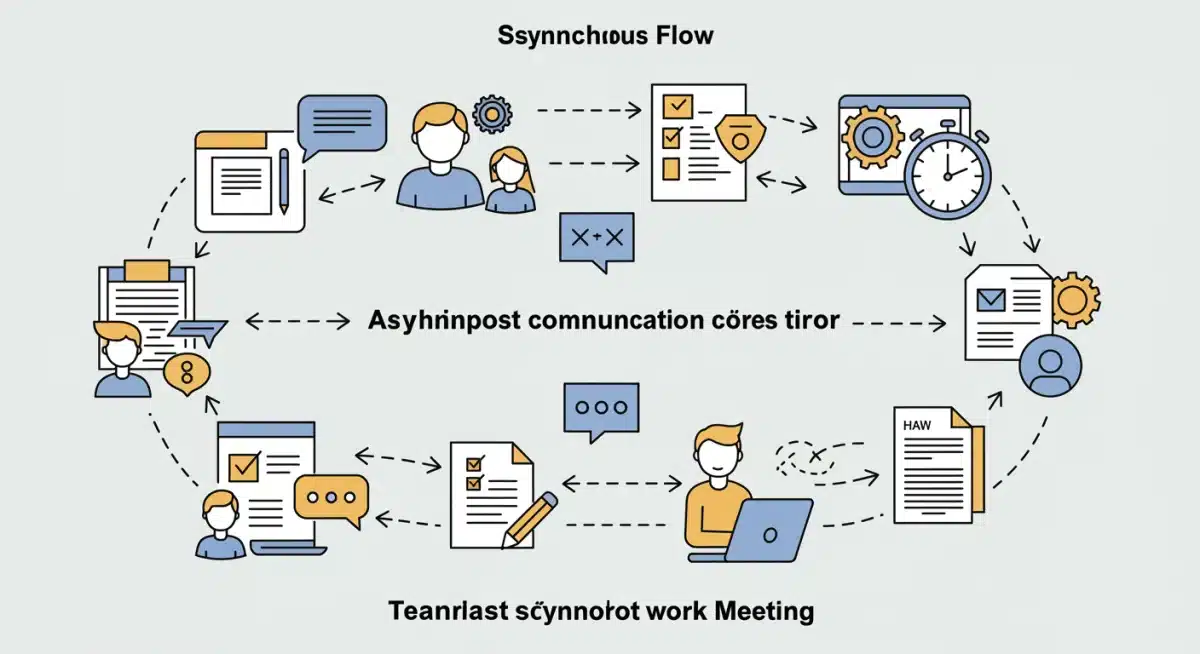
Ultimately, fostering a culture of documentation and transparency is about building trust and efficiency. It ensures that valuable insights are captured, decisions are understood, and everyone has the information they need to contribute effectively, significantly reducing the demand for synchronous meetings and boosting overall team productivity.
Measuring Impact and Continuous Improvement
Implementing asynchronous communication is not a one-time change but an ongoing process of refinement and adaptation. To truly master these strategies and sustain the projected 40% reduction in meeting time, teams must actively measure the impact of their efforts and commit to continuous improvement. This involves tracking key metrics, gathering feedback, and being willing to adjust approaches based on real-world results.
Without a systematic way to assess effectiveness, teams risk reverting to old habits or implementing changes that don’t yield the desired outcomes. A data-driven approach ensures that async strategies are optimized for the specific needs and dynamics of the team, leading to lasting improvements in productivity and well-being.
Key Metrics for Success
To quantify the impact of asynchronous communication, teams should identify and track relevant metrics. Beyond just the number of meetings, consider the quality of interactions, project completion rates, and employee satisfaction. These indicators provide a holistic view of how well the new strategies are working.
- Meeting Frequency and Duration: Directly track the reduction in scheduled meetings and their average length.
- Project Cycle Time: Monitor if projects are being completed faster or more efficiently due to fewer interruptions.
- Communication Platform Engagement: Analyze activity on asynchronous tools to ensure they are being utilized effectively for discussions and decisions.
- Employee Satisfaction: Conduct surveys to gauge team members’ perceptions of communication clarity, workload, and work-life balance.
Gathering Feedback and Iterating
Regularly soliciting feedback from team members is crucial for identifying what’s working well and where adjustments are needed. This can be done through anonymous surveys, dedicated feedback channels, or regular check-ins. It’s important to create a safe space for constructive criticism, as team members are on the front lines of these changes.
Based on this feedback and the tracked metrics, teams should be prepared to iterate on their asynchronous strategies. This might involve refining communication protocols, exploring new tools, or providing additional training. The most successful async teams are those that view their approach as a living system, constantly evolving to meet new challenges and opportunities.
By focusing on measurement and continuous improvement, teams can ensure that their investment in asynchronous communication yields sustainable benefits. This iterative process not only helps in achieving the goal of reduced meeting time but also fosters a culture of adaptability and excellence, critical for success in the dynamic work environment of 2025 and beyond.
Overcoming Common Asynchronous Challenges
While the benefits of asynchronous communication are compelling, its implementation is not without challenges. Teams often encounter hurdles such as the perception of isolation, difficulty conveying tone, and the temptation to revert to synchronous habits. Addressing these proactively is essential for successful adoption and for maintaining team cohesion and productivity.
Recognizing these potential pitfalls allows teams to develop strategies to mitigate them, ensuring that the transition to more async work is smooth and supported. It’s about finding the right balance and providing the necessary resources and training to empower team members to thrive in this new communication paradigm.
Addressing Perceived Isolation
One common concern in highly asynchronous environments is the potential for team members to feel isolated or disconnected. While async work emphasizes independent focus, it doesn’t mean a complete absence of social interaction. Intentional efforts to foster team bonding and informal connections are crucial.
- Virtual Coffee Breaks: Schedule optional, informal synchronous calls for social interaction, not work.
- Dedicated Social Channels: Create chat channels for non-work-related discussions and humor.
- Regular 1:1 Check-ins: Managers should maintain regular, brief synchronous check-ins with individual team members to build rapport and address any personal concerns.
These small but consistent efforts help maintain a sense of community and combat the feeling of being alone, reinforcing that async work is about flexibility and focus, not isolation.
Conveying Tone and Nuance
Written communication can sometimes lack the nuance of verbal exchanges, leading to misinterpretations. Without visual cues or tone of voice, a seemingly innocuous message can be misconstrued. Teams must develop strategies to ensure clarity and empathy in their written interactions.
Encouraging the use of emojis where appropriate, providing context, and asking clarifying questions when unsure of intent can help. For complex or sensitive topics, opting for a brief video message (async) or even a scheduled synchronous call might be more appropriate than a lengthy written exchange that risks misunderstanding.
Battling the Urge for Instant Gratification
Many workplaces have evolved with an expectation of instant responses. Shifting to an asynchronous mindset requires breaking this habit and embracing a more deliberate pace. This is a cultural challenge that requires patience and consistent reinforcement from leadership.
By acknowledging and addressing these common challenges head-on, teams can build a more resilient and effective asynchronous communication framework. It’s about continuous learning and adaptation, ensuring that the benefits of reduced meeting time and increased focus are realized without compromising team well-being or collaboration quality.
| Key Aspect | Brief Description |
|---|---|
| Defined Protocols | Establish clear guidelines for when and how to use async channels and expected response times. |
| Leverage Technology | Utilize integrated project management, documentation, and async communication tools. |
| Culture of Documentation | Prioritize written communication and maintain a centralized, searchable knowledge base. |
| Continuous Improvement | Measure impact with metrics and iterate strategies based on feedback for ongoing optimization. |
Frequently Asked Questions About Asynchronous Communication
The primary benefit is a significant reduction in meeting time, often by 40% or more, which frees up valuable hours for focused, deep work. It also promotes more thoughtful responses, better documentation, and increased flexibility for remote and globally distributed teams.
Effective transition requires clear protocols for communication channels, defined response time expectations, and the strategic use of robust project management and documentation tools. Leadership must also champion the shift and model desired behaviors to foster a culture of intentional async work.
Essential tools include project management platforms (e.g., Asana, Trello), document collaboration software (e.g., Google Workspace), dedicated async communication apps (e.g., Twist, Basecamp), and video messaging tools (e.g., Loom) for rich, on-demand explanations.
To prevent isolation, teams should schedule optional virtual coffee breaks, create social chat channels, and ensure managers conduct regular 1:1 check-ins. These intentional social touchpoints help foster camaraderie and reinforce a sense of belonging without requiring constant synchronous presence.
Yes, by allowing individuals time to process information and formulate well-considered responses, asynchronous communication often leads to higher quality contributions and more deliberate decision-making. Documentation of discussions also provides a clear audit trail for rationale behind choices.
Conclusion
The journey to mastering asynchronous communication is a strategic imperative for any organization aiming to thrive in the modern work landscape. By embracing deliberate communication, leveraging appropriate technologies, and fostering a culture of documentation and transparency, teams can dramatically reduce their reliance on synchronous meetings, ultimately achieving a projected 40% reduction in meeting time. This shift not only boosts individual productivity and focus but also cultivates a more inclusive, flexible, and efficient work environment. As we move further into 2025, the principles of asynchronous work will continue to be a cornerstone of high-performing remote and hybrid teams, enabling them to navigate complexities with greater clarity and achieve their objectives with unparalleled effectiveness.