Automating Freelancer Communication: Save 10 Hours Monthly with CRM in 2026

Anúncios
In the dynamic landscape of 2026, where efficiency and client satisfaction are paramount, US freelancers are constantly seeking innovative ways to optimize their workflows. One of the most significant time-sinks for independent professionals is client communication – from initial outreach and proposal submission to ongoing project updates and follow-ups. Imagine reclaiming a substantial chunk of that time, perhaps even 10 hours every single month, to dedicate to core work, skill development, or even personal pursuits. This isn’t a futuristic fantasy; it’s a tangible reality achievable through strategic freelancer CRM automation.
This comprehensive guide will delve into how US freelancers can leverage Customer Relationship Management (CRM) tools to revolutionize their client interactions, save precious time, and ultimately foster stronger, more profitable relationships. We’ll explore the ‘why’ and ‘how’ of integrating CRM into your freelance business, ensuring you’re not just keeping up, but staying ahead in the competitive freelance market of 2026.
Anúncios
The Freelance Challenge: Why Communication Steals Your Time
As a freelancer, your value is directly tied to your billable hours and the quality of your output. Yet, a significant portion of your day often goes unbilled, swallowed by administrative tasks, chief among them being client communication. Consider the typical communication lifecycle:
- Initial Inquiries: Responding to potential clients, often with repetitive information, scheduling calls, and sending introductory materials.
- Proposal Generation and Follow-up: Crafting tailored proposals, sending them out, and then diligently following up to ensure they’ve been received and considered.
- Onboarding New Clients: Sending welcome packets, setting expectations, collecting necessary information, and establishing communication channels.
- Project Updates: Providing regular progress reports, addressing client queries, and managing feedback loops.
- Invoicing and Payments: Sending invoices, chasing overdue payments, and confirming receipt.
- Post-Project Follow-up: Soliciting testimonials, requesting referrals, and nurturing long-term relationships.
Each of these steps, while crucial, can be incredibly time-consuming when handled manually. The cumulative effect of drafting individual emails, scheduling appointments without an integrated system, and tracking conversations across various platforms can easily amount to dozens of hours each month. For the average US freelancer, this translates directly to lost income potential and increased stress. This is precisely where effective freelancer CRM automation becomes not just a convenience, but a necessity.
Anúncios
Understanding Freelancer CRM Automation: More Than Just a Contact List
At its core, a CRM (Customer Relationship Management) system is a technology for managing all your company’s relationships and interactions with customers and potential customers. The goal is simple: improve business relationships to grow your business. For freelancers, a CRM acts as a centralized hub for all client-related data and activities.
However, the real power lies in automation. Freelancer CRM automation means leveraging the CRM system to perform repetitive communication tasks automatically, based on predefined triggers and workflows. This moves beyond simply storing contact information; it’s about intelligent, proactive management of your client journey.
Key Components of CRM Automation for Freelancers:
- Automated Email Sequences: Sending welcome emails, follow-up reminders, proposal confirmations, and project updates without manual intervention.
- Lead Nurturing Workflows: Guiding potential clients through a series of communications designed to inform, engage, and convert them into paying clients.
- Appointment Scheduling Integration: Allowing clients to book meetings directly into your calendar, eliminating back-and-forth emails.
- Task Automation: Automatically creating tasks for yourself (e.g., “follow up on X project proposal”) based on client interactions or project milestones.
- Personalized Communication: Using dynamic fields to insert client-specific information into automated messages, making them feel tailored and personal.
- Centralized Communication History: Keeping a comprehensive record of all interactions with each client, accessible at a glance.
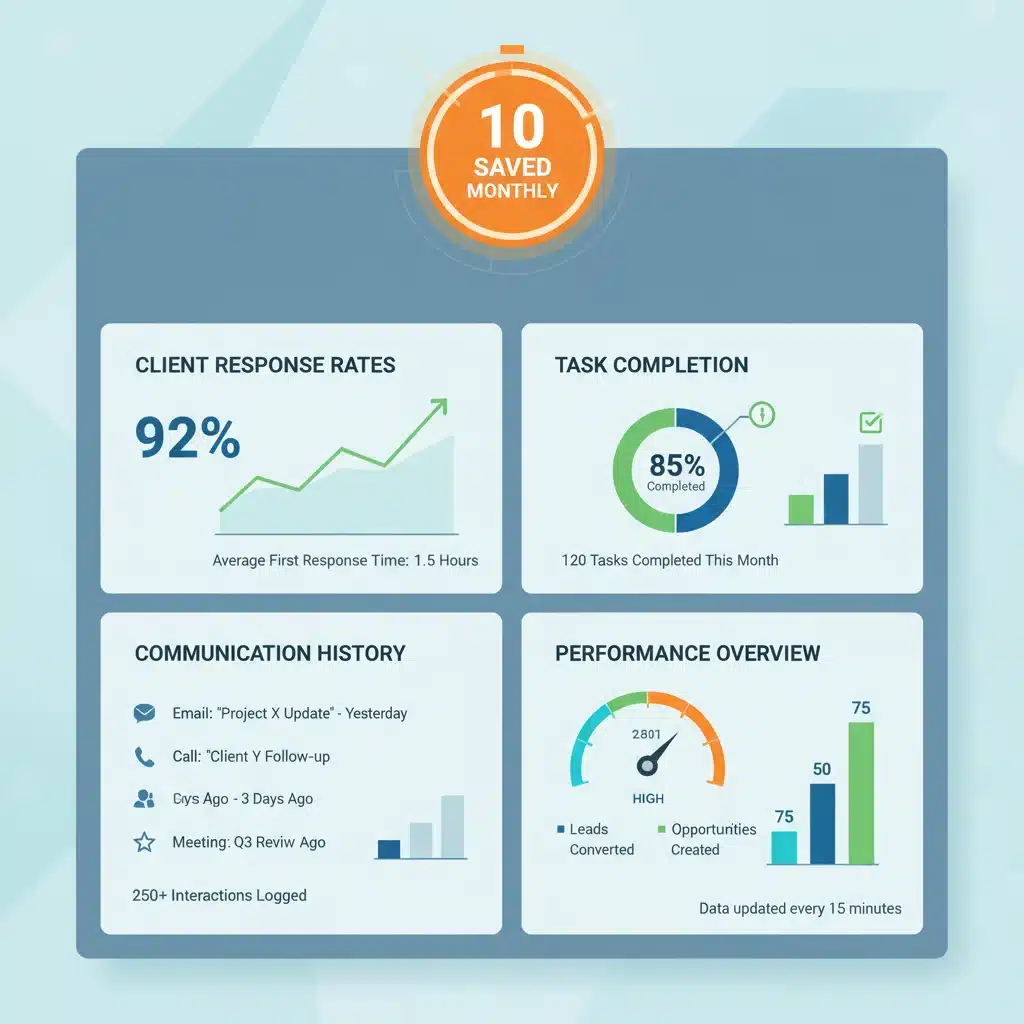
- Reporting and Analytics: Tracking communication effectiveness, response rates, and client engagement to refine your strategies.
By implementing these automated processes, a US freelancer can drastically reduce the time spent on administrative communication, freeing up valuable hours for billable work and strategic business development. This is the essence of how freelancer CRM automation transforms your operational efficiency.
The Tangible Benefits: Saving 10 Hours Monthly and Beyond
The promise of saving 10 hours monthly isn’t an exaggeration; for many US freelancers, it’s a conservative estimate. Let’s break down how this time saving accumulates and the ripple effects it has on your freelance business:
1. Reclaiming Billable Hours:
If you charge $75/hour, saving 10 hours means you have the potential to earn an additional $750 each month. Over a year, that’s $9,000! This direct financial impact is often the most compelling reason to embrace freelancer CRM automation.
2. Enhanced Client Experience:
Automated follow-ups ensure no client query falls through the cracks. Timely responses and consistent communication make clients feel valued and heard, leading to higher satisfaction and stronger loyalty. A positive client experience often translates to repeat business and valuable referrals.
3. Improved Lead Conversion:
Automated lead nurturing sequences keep you top-of-mind with potential clients. By providing valuable information and gentle nudges at the right time, you significantly increase the chances of converting inquiries into paying projects, all without constant manual effort.
4. Reduced Mental Load and Stress:
Constantly remembering who to follow up with, when, and about what, creates significant mental fatigue. CRM automation handles these details, allowing you to focus your mental energy on creative problem-solving and delivering excellent work. This reduction in stress is invaluable for long-term freelance sustainability.
5. Professionalism and Consistency:
Automated systems ensure that your communication is consistently professional, error-free, and on-brand. This projects a highly organized and reliable image to your clients, setting you apart from competitors.
6. Scalability:
As your freelance business grows, manually managing an increasing number of clients becomes unsustainable. CRM automation provides the infrastructure to handle more clients and projects without a proportionate increase in your administrative workload, making growth more manageable and less stressful.
Choosing the Right CRM Tool for US Freelancers in 2026
The market is flooded with CRM tools, ranging from enterprise-level behemoths to streamlined solutions perfect for solo entrepreneurs. For US freelancers, the key is to choose a tool that balances powerful features with ease of use and affordability. Here are factors to consider:
1. Freelancer-Specific Needs:
Look for CRMs designed with independent professionals in mind. These often include features like proposal generation, invoicing, and project management capabilities integrated with communication tools.
2. Automation Capabilities:
This is non-negotiable. Ensure the CRM offers robust email automation, workflow creation, and task triggers. Can it automate follow-ups based on client actions (e.g., opening an email, clicking a link)?
3. Ease of Use and Setup:
As a freelancer, you don’t have an IT department. The CRM should be intuitive to set up and use, with a minimal learning curve. Drag-and-drop workflow builders are a huge plus.
4. Integrations:
Does it integrate with your existing tools? Think email providers (Gmail, Outlook), calendar apps (Google Calendar, Outlook Calendar), project management software (Asana, Trello), and accounting software (QuickBooks, FreshBooks).
5. Cost:
Many CRMs offer free tiers or affordable plans for individual users. Evaluate the features included in these plans against your budget. Remember, the investment should be justified by the time savings and increased revenue.
6. Mobile Accessibility:
As a freelancer, you’re often on the go. A good mobile app ensures you can manage client communications and tasks from anywhere.
Popular CRM Options for Freelancers:
- Dubsado: Highly popular among creative freelancers, offering extensive automation for proposals, contracts, invoicing, and email sequences.
- HoneyBook: Similar to Dubsado, providing an all-in-one platform for managing projects, bookings, and client communications.
- ActiveCampaign: A powerful marketing automation platform that can be tailored for freelance CRM, excelling in email sequences and lead nurturing.
- HubSpot CRM (Free Version): A robust free option that provides essential contact management, deal tracking, and some email scheduling, ideal for getting started.
- Pipedrive: Focuses heavily on sales pipeline management, which can be adapted for tracking client opportunities from lead to conversion.
- Tave: Another strong contender, particularly for photographers and event professionals, offering comprehensive business management.
The best tool for you will depend on your specific niche, budget, and desired level of automation. Take advantage of free trials to test different platforms before committing.
Strategies for Effective Freelancer CRM Automation in 2026
Simply adopting a CRM isn’t enough; strategic implementation is key to unlocking its full potential. Here are actionable strategies for US freelancers to maximize their freelancer CRM automation efforts:
1. Map Out Your Client Journey:
Before automating, understand every touchpoint a client has with your business. From initial discovery to post-project follow-up, identify where communication happens, what information is exchanged, and what actions are typically taken. This map will be your blueprint for automation.
2. Segment Your Clients:
Not all clients are the same. Segment them based on criteria like project type, industry, value, or stage in the sales funnel. This allows for highly personalized and relevant automated communications, avoiding generic messages that feel impersonal.
3. Create Standardized Templates:
Develop a library of professional, on-brand email templates for common scenarios: initial inquiries, proposal delivery, project updates, invoice reminders, testimonial requests, etc. Your CRM can then automatically populate these templates with client-specific details.
4. Implement Trigger-Based Workflows:
Set up rules that trigger automated actions. For example:
- When a new lead fills out your contact form, send an automated welcome email and schedule a follow-up task for yourself.
- Once a proposal is sent, initiate a sequence of follow-up emails at specific intervals (e.g., 3 days, 7 days).
- Upon project completion, automatically send a request for a testimonial and a referral.
5. Integrate Scheduling Tools:
Connect your calendar with your CRM and use scheduling tools (like Calendly or Acuity Scheduling) that integrate seamlessly. This allows clients to book discovery calls or project meetings directly, eliminating the frustrating back-and-forth of finding a mutually agreeable time.
6. Automate Invoicing and Payment Reminders:
Many CRMs integrate with accounting software or have built-in invoicing features. Automate invoice generation and send polite, timely payment reminders to improve your cash flow without manual chasing.
7. Personalize, Don’t Robotize:
While automation saves time, the goal is not to sound like a robot. Use dynamic fields to personalize emails with client names, project details, and other relevant information. Periodically review your automated messages to ensure they maintain a human touch.
8. Regularly Review and Optimize:
Your freelance business evolves, and so should your automation. Regularly review your CRM data: Which email sequences have the best open rates? Which follow-ups lead to conversions? Use these insights to refine your workflows and continuously improve your freelancer CRM automation strategy.
Overcoming Common Challenges in CRM Adoption
While the benefits are clear, implementing a CRM can come with its own set of challenges. Being aware of these and having strategies to overcome them is crucial for success.
1. Initial Setup Time:
Setting up a CRM and configuring all the automation workflows takes an initial investment of time. Treat this as an investment in your business infrastructure. Dedicate specific blocks of time, perhaps a few hours each week, to get it running smoothly. The upfront effort will pay dividends quickly.
2. Learning Curve:
Even user-friendly CRMs have a learning curve. Utilize tutorials, documentation, and customer support. Don’t try to implement everything at once; start with a few key automations and gradually expand your usage.
3. Data Migration:
If you’re moving from disparate spreadsheets and email threads, migrating existing client data can seem daunting. Most CRMs offer import features. Clean up your data before importing to ensure accuracy and avoid clutter.
4. Over-Automation vs. Personal Touch:
There’s a fine line between efficient automation and losing the personal touch that makes freelancers unique. The goal is to automate the repetitive and mundane, freeing you up to provide high-value, personalized interactions when they matter most. Use automation to prompt you for personal outreach, rather than replacing it entirely.
5. Cost Justification:
For some freelancers, the monthly subscription fee for a CRM might seem like an unnecessary expense. However, frame it as an investment that will save you time (which is money) and potentially increase your client base and revenue. Calculate your potential ROI based on the 10 hours saved and increased conversion rates.

The Future of Freelancing: CRM as a Competitive Advantage in 2026
As we look towards 2026, the freelance market continues to mature and become more competitive. Clients expect professionalism, prompt communication, and a seamless experience. Freelancers who master freelancer CRM automation will not only meet these expectations but exceed them, positioning themselves for sustained success.
Imagine a scenario where a potential client reaches out to you. Within minutes, they receive a personalized acknowledgement, a link to your portfolio, and an invitation to schedule a discovery call – all automatically. During the project, they receive proactive updates and reminders, making them feel informed and valued. After completion, a system automatically requests a testimonial and suggests a follow-up project in six months.
This level of efficiency and proactive client management is what sets top-tier freelancers apart. It allows you to:
- Focus on High-Value Work: Spend more time on the creative, strategic, and billable aspects of your projects.
- Expand Your Client Base: Handle more leads and clients without feeling overwhelmed.
- Build Stronger Relationships: Deliver a consistently excellent client experience that fosters trust and loyalty.
- Improve Work-Life Balance: Reclaim personal time that was once spent on administrative tasks.
The 10 hours saved monthly is just the beginning. It’s a gateway to a more organized, profitable, and enjoyable freelance career. By embracing freelancer CRM automation now, US freelancers are not just adopting a tool; they are investing in the future growth and sustainability of their businesses.
Conclusion: Empowering Your Freelance Journey with Automation
The demands on US freelancers are ever-increasing, but so are the tools available to meet those demands. Automating client communication with CRM tools is no longer a luxury but a strategic imperative for any freelancer aiming for efficiency, growth, and a healthier work-life balance in 2026 and beyond. By carefully selecting the right CRM, mapping out your client journey, and implementing smart automation strategies, you can significantly reduce administrative overhead, enhance client satisfaction, and reclaim valuable hours each month.
The journey to saving 10 hours monthly through freelancer CRM automation begins with a single step: recognizing the power of these tools and committing to their integration into your workflow. Take the leap, invest in your business, and watch as your productivity soars, your client relationships deepen, and your freelance career thrives.