Mastering Freelance Contracts: Secure Your 2026 Income with Robust Payment Terms

In the dynamic world of freelancing, securing your financial future hinges significantly on the strength and clarity of your contracts. As we look towards 2026, the importance of robust payment terms in freelance contracts cannot be overstated. This comprehensive guide will delve into the intricacies of crafting, negotiating, and enforcing payment terms that not only protect your income but also foster healthy, long-term client relationships. Understanding and mastering freelance contract payment is not just about getting paid; it’s about valuing your work, setting professional boundaries, and ensuring sustainable growth for your freelance business.
The freelance economy continues to expand, offering unprecedented flexibility and opportunities. However, with this freedom comes the responsibility of self-management, especially concerning financial agreements. Many freelancers, particularly those new to the field, often overlook the critical details of payment terms, leading to potential disputes, delayed payments, or even non-payment. This article aims to equip you with the knowledge and strategies to meticulously navigate your freelance contract payment clauses, ensuring you’re well-prepared for the financial landscape of 2026 and beyond.
The Foundation: Why Strong Payment Terms are Non-Negotiable
At its core, a freelance contract is a legally binding agreement that outlines the scope of work, deliverables, timelines, and, crucially, the compensation for your services. Without clear, comprehensive payment terms, you expose yourself to significant financial risk. Think of your payment terms as the financial backbone of your freelance operation. They dictate when, how, and under what conditions you will be paid. Neglecting this crucial aspect can transform a promising project into a financial headache.
Protecting Your Financial Stability
Your ability to pay your bills, invest in your business, and maintain financial stability directly correlates with your clients’ adherence to agreed-upon payment schedules. Ambiguous terms can lead to clients interpreting clauses in their favor, resulting in late payments or reduced compensation. Strong payment terms act as a protective barrier, safeguarding your cash flow and ensuring you receive fair compensation for your hard work.
Establishing Professional Boundaries
Clear payment terms also establish professional boundaries. They communicate to your clients that you are serious about your business and expect to be treated as a professional. This professionalism can deter potential issues before they arise, fostering a respectful and productive working relationship from the outset. When clients understand their financial obligations upfront, there’s less room for misunderstandings later on.
Legal Recourse and Dispute Resolution
In the unfortunate event of a payment dispute, well-defined payment terms become your most powerful tool. They provide a clear legal framework that can be used to resolve disagreements, whether through negotiation, mediation, or, if necessary, legal action. Without such terms, proving your case becomes significantly more challenging and costly.
Key Components of Effective Freelance Contract Payment Terms
To ensure your freelance contract payment terms are robust, they must include several essential components. Each element plays a vital role in creating a comprehensive and enforceable agreement.
1. Payment Schedule and Milestones
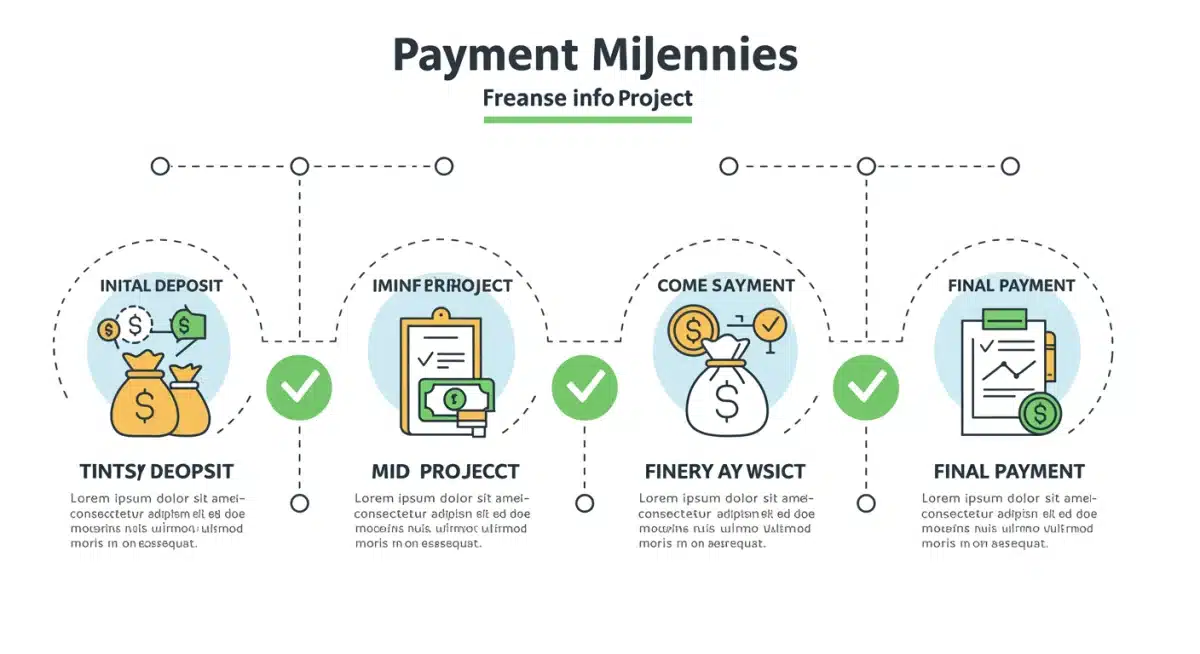
This is arguably the most critical aspect of your payment terms. Clearly define when payments are due. For larger projects, consider breaking the total fee into milestones. For example:
- Upfront Deposit: A percentage (e.g., 25-50%) of the total project cost due before any work commences. This secures your commitment and covers initial expenses.
- Milestone Payments: Payments tied to the completion of specific project phases. This ensures you’re compensated as the project progresses and motivates clients to provide timely feedback.
- Final Payment: The remaining balance due upon project completion and client approval.
For smaller, ongoing projects, you might opt for weekly or monthly invoicing. Whatever your approach, ensure the schedule is explicit.
2. Payment Methods Accepted
Specify the acceptable payment methods. This could include bank transfers, PayPal, Stripe, checks, or other platforms. The clearer you are, the less friction there will be when it’s time to pay. Consider any fees associated with certain payment methods and who will bear them (e.g., PayPal fees).
3. Due Dates and Grace Periods
State the exact due date for each payment. For example, ‘Payment is due within 7 days of invoice receipt.’ Some freelancers include a short grace period (e.g., 3-5 days) before late fees apply, but this should also be clearly stated.
4. Late Payment Penalties
This is a crucial deterrent against delayed payments. Clearly outline the consequences of late payment. Common penalties include:
- Interest Charges: A percentage of the outstanding balance applied daily, weekly, or monthly (e.g., 1.5% per month or the maximum allowed by law).
- Flat Fee: A fixed charge for each late payment.
- Suspension of Work: The right to pause work on the project until payment is received. This is a powerful motivator.
- Collection Costs: The client is responsible for any legal or collection fees incurred due to non-payment.
Ensure these penalties comply with local laws and are reasonable. The goal is to encourage timely payment, not to excessively profit from late fees.
5. Invoicing Procedures
Detail how and when invoices will be sent. Will they be emailed? Through a specific platform? Who should they be addressed to? Providing clear instructions streamlines the payment process for your client and reduces the chances of invoices getting lost or overlooked.
6. Scope of Work and Deliverables
While not strictly a payment term, a clearly defined scope of work directly impacts payment. If the scope expands beyond the initial agreement, your contract should stipulate how additional work will be quoted and paid for. This prevents scope creep and ensures you’re compensated for all your efforts.
7. Refund Policy and Cancellation Terms
What happens if a client cancels a project midway? Or if they are dissatisfied with the work? Your contract should outline your refund policy, including any non-refundable deposits, and how cancellation fees will be handled. This protects you from losing revenue on work already performed.
8. Governing Law and Dispute Resolution
Specify the jurisdiction whose laws will govern the contract. This is particularly important for international clients. Also, outline the preferred method for dispute resolution (e.g., negotiation, mediation, arbitration) before resorting to litigation.

Negotiating Freelance Contract Payment Terms with Confidence
Negotiation is an art, and when it comes to freelance contract payment, confidence and clarity are your best allies. Don’t be afraid to discuss payment terms upfront. This shows professionalism and helps manage client expectations.
Do Your Homework
Before entering negotiations, research the client and their industry. Understand their typical payment practices. This knowledge empowers you to tailor your terms and anticipate potential objections.
Be Transparent and Proactive
Present your payment terms clearly and early in the discussion. Don’t wait until the last minute. Explain the rationale behind your terms, especially for upfront deposits or milestone payments. Frame them as beneficial to both parties – ensuring project continuity and quality.
Offer Flexibility (Within Limits)
While having standard terms is vital, be prepared to offer some flexibility, especially for long-term or high-value clients. Perhaps you can adjust payment schedules slightly, but never compromise on the principle of timely and fair compensation. For instance, if a client can’t do a 50% upfront, perhaps 30% upfront and 30% at the first milestone works, as long as the total payment is secure.
Highlight the Value of Your Work
Connect your payment terms to the value you provide. An upfront deposit isn’t just about cash flow; it signifies commitment and ensures dedicated resources for their project. Timely payments enable you to focus solely on delivering exceptional results, rather than chasing invoices.
Document Everything
All agreed-upon terms, including any negotiated changes, must be documented in writing and signed by both parties. Verbal agreements are notoriously difficult to enforce.
Strategies for Ensuring Timely Payments in 2026
Beyond having solid contract terms, proactive strategies are essential to ensure you get paid on time, every time.
1. Onboarding Process and Communication
Integrate payment terms into your client onboarding process. Review them explicitly with the client before signing. Send welcome emails that reiterate key payment dates and procedures. Clear and consistent communication from the start reduces confusion.
2. Professional Invoicing
Send professional, clear, and detailed invoices. Include:
- Your business name and contact information.
- Client’s business name and contact information.
- Invoice number and date.
- Due date.
- Detailed description of services rendered.
- Breakdown of costs.
- Total amount due.
- Accepted payment methods and instructions.
- Late payment terms.
Utilize invoicing software for efficiency and professionalism. Many tools allow you to automate reminders.
3. Follow-Up System
Implement a systematic follow-up process for overdue invoices. Start with a polite reminder email a few days after the due date. If payment is still not received, escalate with firmer communications, referencing your contract’s late payment clauses. Don’t be shy about following up; it’s your money.
4. Build Strong Client Relationships
Good relationships often lead to good payment practices. Clients who value your work and trust you are more likely to prioritize your invoices. Deliver high-quality work, communicate effectively, and be responsive.
5. Consider Retainers for Ongoing Work
For long-term clients or ongoing services, a retainer agreement can provide predictable income. This involves the client paying a fixed amount monthly for a set number of hours or services. This dramatically simplifies freelance contract payment management.
6. Escrow Services for High-Value Projects
For particularly large or sensitive projects, consider using an escrow service. The client deposits the funds into a secure third-party account, and the funds are released to you upon completion of agreed-upon milestones or the entire project. This provides security for both parties.
Legal Considerations and Best Practices for 2026
While this guide offers practical advice, it’s crucial to be aware of the legal landscape surrounding freelance contracts and payment terms.
Understanding Local Laws
Payment terms, especially late fees, can be subject to local and national laws. Research the regulations in your jurisdiction and that of your client (if applicable) to ensure your contract is legally compliant. For instance, some regions have limits on the maximum interest rate you can charge for late payments.
Written Contracts are Paramount
Never work without a written contract. Verbal agreements are notoriously difficult to prove in court. A signed, written contract is your legal shield.
Use Templates Wisely
While contract templates can be a good starting point, always customize them to fit your specific services, client, and project. Generic templates may not cover all your unique needs for freelance contract payment.
Seek Legal Counsel When Necessary
For complex projects, high-value clients, or if you encounter significant payment disputes, don’t hesitate to consult with a legal professional. An attorney specializing in contract law can review your terms, advise on negotiations, and assist with dispute resolution. The cost of legal advice upfront can save you significant financial and emotional distress down the line.
Regularly Review and Update Your Contracts
The freelance landscape evolves, and so should your contracts. Periodically review your payment terms and overall contract to ensure they remain relevant, protective, and aligned with your business practices and the prevailing market conditions. What worked in 2023 might need adjustments for 2026.
Common Pitfalls to Avoid in Freelance Contract Payment
Even with the best intentions, freelancers can fall into common traps regarding payment terms. Being aware of these can help you steer clear of them.
1. Vague Language
Ambiguity is the enemy of a good contract. Phrases like ‘payment will be made promptly’ or ‘reasonable late fees apply’ are open to interpretation and can lead to disputes. Be specific with dates, percentages, and actions.
2. Not Requiring an Upfront Deposit
Starting work without any payment is a significant risk. An upfront deposit demonstrates the client’s commitment and provides you with initial working capital. It’s a standard professional practice.
3. Failing to Define ‘Completion’
When is a project truly ‘complete’ for the purpose of final payment? Define what constitutes project completion and client approval. Is it upon delivery of final files? Approval of all revisions? Be explicit to avoid endless revision cycles before final payment.
4. Neglecting Late Payment Clauses
Some freelancers fear offending clients by including late payment penalties. However, this is a standard business practice that protects you. Most legitimate clients understand and respect these terms. Those who object might be red flags.
5. Not Tracking Time and Expenses Accurately
If you bill hourly or for expenses, meticulous tracking is essential. Use reliable time-tracking software and keep detailed records of all project-related expenses. This ensures accuracy and provides evidence if queried.
6. Over-reliance on Trust
While trust is vital in any business relationship, it should never replace a solid contract. Even with the best clients, circumstances can change. A contract provides a safety net for all parties.
The Future of Freelance Contract Payment in 2026
As technology advances and the freelance economy matures, we can anticipate further innovations in freelance contract payment. Digital contract platforms with integrated payment systems are becoming more sophisticated, offering automated invoicing, payment reminders, and even escrow services. Blockchain technology may also play a role in creating immutable, transparent payment agreements in the future.
Staying informed about these technological advancements can further streamline your payment processes and enhance your financial security. However, the fundamental principles of clear, comprehensive, and enforceable payment terms will remain timeless.
Conclusion: Empowering Your Freelance Journey in 2026
Navigating freelance contracts, particularly the payment terms, is a critical skill for any successful freelancer. By meticulously crafting detailed payment schedules, defining clear methods and due dates, and implementing robust late payment penalties, you can significantly protect your income and ensure the financial stability of your business in 2026 and beyond.
Remember, your contract is more than just a legal document; it’s a statement of your professionalism and a foundation for mutual respect with your clients. Approach it with confidence, clarity, and a proactive mindset. Don’t shy away from negotiating terms that reflect the true value of your work. By doing so, you empower yourself, foster healthier client relationships, and build a sustainable and prosperous freelance career.
Invest the time now to refine your freelance contract payment strategies. It’s an investment that will pay dividends, literally, for years to come. Your financial security in the evolving freelance landscape of 2026 depends on it.