Global Connectivity: Best SIM & eSIM for US Digital Nomads 2026

Anúncios
In the rapidly evolving landscape of 2026, the life of a US digital nomad is more dynamic and interconnected than ever before. The ability to work from anywhere, whether it’s a bustling cafe in Paris, a serene beach in Bali, or a remote mountain retreat in Patagonia, hinges on one critical factor: reliable internet connectivity. Without a stable connection, the dream of location independence quickly turns into a logistical nightmare. For US digital nomads, understanding the best SIM card and eSIM options is not just a convenience; it’s a fundamental necessity for business operations, client communication, and staying in touch with loved ones.
This comprehensive guide delves deep into the world of digital nomad connectivity in 2026, offering insights, recommendations, and practical advice to ensure you’re always online, no matter where your adventures take you. We’ll explore the pros and cons of traditional physical SIM cards versus the cutting-edge technology of eSIMs, analyze top providers, and arm you with the knowledge to make informed decisions about your global communication strategy. From understanding data roaming charges to deciphering fair usage policies, this article is your ultimate resource for navigating the complexities of international mobile data.
Anúncios
The Evolution of Digital Nomad Connectivity: 2026 Perspective
The journey of a digital nomad is characterized by constant movement, and with that movement comes the challenge of maintaining consistent internet access. Gone are the days when expensive international roaming packages were the only option, or when hunting for local SIM cards in every new country was a time-consuming ritual. The year 2026 brings with it advanced solutions that cater specifically to the needs of the modern remote worker.
Why Connectivity is Paramount for US Digital Nomads
- Business Continuity: Client meetings, project submissions, and team collaborations all rely on a stable internet connection. Downtime means lost productivity and potential financial repercussions.
- Communication: Staying in touch with family and friends, especially across different time zones, requires reliable messaging and video call services.
- Navigation & Logistics: From finding the next co-working space to booking accommodation or navigating public transport, smartphones are indispensable tools, requiring active data.
- Emergency Preparedness: In unfamiliar territories, having a working phone is crucial for emergencies, accessing local services, or translating vital information.
- Entertainment & Lifestyle: After a long day of work, streaming content, listening to music, or staying updated on social media are small comforts that enhance the digital nomad lifestyle.
The landscape of telecommunications has transformed, with eSIM technology emerging as a game-changer. For US digital nomads, this means greater flexibility, easier activation, and often, more cost-effective data plans compared to traditional methods. However, physical SIM cards still hold their ground in specific scenarios, and understanding when to choose which is key to optimal digital nomad connectivity.
Anúncios
Physical SIM Cards: The Traditional Workhorse for Global Travel
Despite the rise of eSIMs, physical SIM cards remain a viable and often preferred option for many US digital nomads, especially in certain regions or for specific travel styles. A physical SIM card is a small, removable chip that you insert into your phone to access a cellular network. In 2026, the process is largely the same, but the availability and variety of international SIM card options have expanded significantly.
Advantages of Physical SIM Cards
- Wider Device Compatibility: Almost all smartphones, even older models, support physical SIM cards. This makes them a universal solution for travelers who might not have the latest eSIM-compatible device.
- Local Expertise: Purchasing a local SIM card upon arrival often provides the best rates for data, calls, and texts within that specific country. Local providers are also more familiar with their network coverage and can offer tailored support.
- Easy to Understand: The concept of a physical SIM is straightforward for most users, requiring minimal technical know-how to activate and use.
- No eSIM Compatibility Issues: If your phone doesn’t support eSIM, a physical SIM is your primary option for local data.
Disadvantages of Physical SIM Cards
- Inconvenience of Swapping: Regularly swapping SIM cards can be cumbersome. There’s also the risk of losing your home SIM card or the local SIM.
- Finding a Vendor: Depending on your arrival time or location, finding a reputable vendor to purchase a SIM card can be challenging.
- Language Barriers: Explaining your needs and understanding data plans in a foreign language can be difficult.
- Lost or Stolen: If your phone is lost or stolen, replacing a physical SIM card can be a lengthy process, potentially leaving you without connectivity for an extended period.
- Multiple SIMs: If you travel frequently between countries, you might end up with a collection of SIM cards, making management difficult.
Top Physical SIM Card Options for US Digital Nomads in 2026
When considering physical SIM cards, US digital nomads often look for options that offer broad international coverage or specialized regional plans. Here are some categories and examples that are prominent in 2026:
- Global SIM Cards: These SIMs are designed for travelers who frequently cross borders. They often come with a single number and offer data plans that work in multiple countries, albeit sometimes at a higher per-GB cost than local SIMs. Providers like TravelSIM or Knowroaming continue to offer such services, with improved data speeds and coverage in 2026.
- Regional SIM Cards (e.g., Europe, Asia): For digital nomads spending extended periods in a specific continent, regional SIMs can be highly cost-effective. For example, a SIM card purchased in one EU country typically works across all EU member states without roaming charges. Similar options exist for Southeast Asia or Latin America, often offered by consortiums of local providers.
- Local SIM Cards: For long-term stays in a single country, a local SIM card remains king. Researching the dominant local providers in your destination (e.g., Vodafone in Europe, AIS in Thailand, Telcel in Mexico) and their tourist or long-stay packages is always recommended for the best value and network performance.
When selecting a physical SIM, always check the network coverage in your specific travel destinations, the data allowances, any fair usage policies, and the ease of topping up your credit. For optimal digital nomad connectivity, having a backup plan, even if it’s just a small data package on your US carrier for emergencies, is a smart move.
eSIM Technology: The Future of Digital Nomad Connectivity
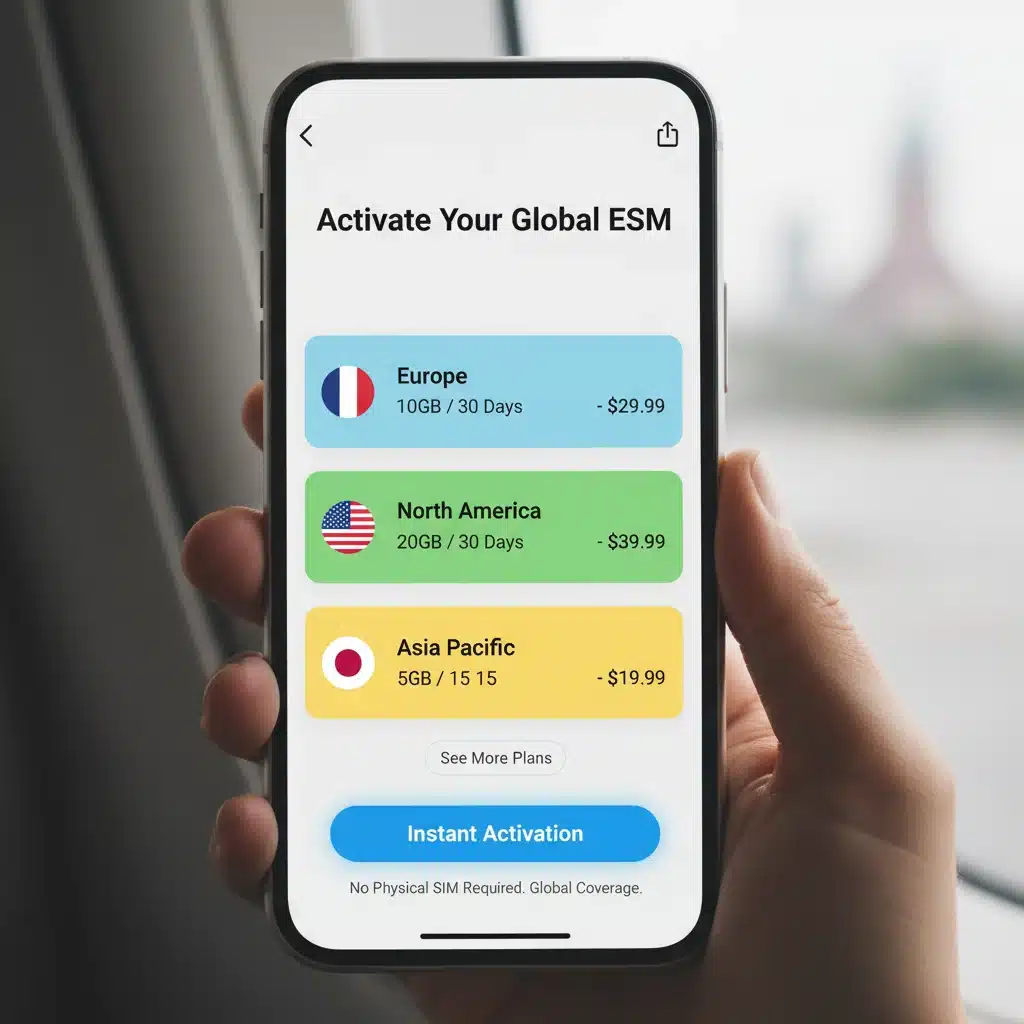
eSIM, or embedded SIM, has revolutionized how US digital nomads stay connected. Instead of a physical chip, an eSIM is a small chip embedded directly into your device, allowing you to download and activate cellular plans digitally. In 2026, eSIM compatibility is widespread across newer smartphones, tablets, and even some laptops, making it an increasingly popular choice for agile travelers.
Advantages of eSIMs
- Instant Activation: Purchase a plan online and activate it within minutes, often before you even land in your destination. No need to hunt for local stores or deal with paper registration.
- Multiple Profiles: Store several eSIM profiles on a single device, allowing you to switch between local data plans or your home plan with ease, without swapping physical cards.
- Dual SIM Functionality: Many eSIM-compatible phones support dual SIM, meaning you can have your home physical SIM active for calls/texts and an eSIM active for data, optimizing cost and convenience.
- Reduced Risk of Loss: No physical card to lose, damage, or misplace.
- Environmental Friendliness: Less plastic waste compared to traditional SIM cards.
- Flexibility and Cost Savings: Easily compare and switch between different providers and data plans to find the most cost-effective option for your current location.
Disadvantages of eSIMs
- Device Compatibility: While growing, not all devices support eSIM. Older phone models might not be compatible, limiting options.
- Troubleshooting: While activation is usually smooth, troubleshooting eSIM issues can sometimes be more complex than with physical SIMs, often requiring customer support.
- Local Number Issues: Some eSIM plans focus solely on data, and obtaining a local phone number for calls/texts might require an additional service or a physical SIM.
- Data-Only Plans: Many international eSIMs are data-only, which can be an issue if you need a local number for reservations, deliveries, or local contacts.
Leading eSIM Providers for US Digital Nomads in 2026
The eSIM market is vibrant and competitive in 2026, with several providers catering specifically to the needs of international travelers and digital nomads. Here are some of the top contenders:
- Airalo: A pioneer in the global eSIM market, Airalo offers plans for over 200 countries and regions. They provide both local, regional, and global data packages, with varying validities and data allowances. Their user-friendly app makes it easy to purchase, activate, and manage your eSIMs. Airalo is lauded for its extensive coverage and competitive pricing, making it a go-to for many US digital nomads seeking consistent digital nomad connectivity.
- Nomad: Similar to Airalo, Nomad offers a wide range of data plans across numerous countries. They often have attractive bundle deals and focus on providing seamless connectivity for travelers. Nomad’s interface is intuitive, and their customer support is generally responsive, an important factor when dealing with connectivity issues abroad.
- Holafly: Holafly specializes in unlimited data eSIMs for many popular travel destinations. While often slightly pricier, the peace of mind that comes with unlimited data is invaluable for heavy users or those who rely heavily on video calls and large file transfers. This is particularly appealing for US digital nomads who cannot afford to run out of data.
- GigSky: GigSky provides global and regional data plans with a focus on high-speed connectivity. They offer flexible plans, including daily, weekly, and monthly options, which can be beneficial for nomads with varying travel durations.
- Truphone: Truphone is another established player offering global eSIM data plans. They boast strong network partnerships and reliable service, making them a solid choice for business-critical digital nomad connectivity.
When choosing an eSIM provider, consider the following:
- Coverage: Does it cover all the countries you plan to visit?
- Data Allowance: How much data do you realistically need?
- Validity Period: Does the plan match your travel duration?
- Cost per GB: Compare prices across providers for similar data packages.
- Customer Support: Is there 24/7 support in case of issues?
- Local Number: Do you need a local phone number, or is data-only sufficient?
Hybrid Approaches: Combining SIM and eSIM for Ultimate Digital Nomad Connectivity
For many US digital nomads in 2026, the optimal solution isn’t an either/or choice between physical SIMs and eSIMs, but rather a strategic combination of both. A hybrid approach leverages the strengths of each technology to create a robust and flexible connectivity strategy.
Strategies for a Hybrid Connectivity Model
- Home SIM + International eSIM: Keep your US physical SIM active for important calls/texts from home (often on a minimal plan to avoid high roaming charges) and use an international eSIM for all your data needs abroad. This ensures you maintain your primary number while benefiting from cost-effective international data.
- Regional Physical SIM + Local eSIM: If you’re spending an extended period in a specific region (e.g., Europe), a regional physical SIM might offer excellent value for local calls and texts across multiple countries. Supplement this with local eSIMs for data in specific countries where better deals are available or for periods when you need extra data.
- Primary eSIM + Backup eSIM: Rely primarily on one international eSIM provider (e.g., Airalo) for most of your data needs. Have a second eSIM profile from a different provider (e.g., Nomad or Holafly) as a backup, ready to activate in case of network issues or if you unexpectedly run out of data.
- Local Physical SIM + Data-Only eSIM: For long-term stays in a single country, a local physical SIM for a local number and primary data can be ideal. Then, use a data-only eSIM for quick trips to neighboring countries or as a backup when the local network is weak.
The beauty of the hybrid approach is its adaptability. Your specific needs for digital nomad connectivity will vary based on your travel itinerary, duration of stay, and professional requirements. By understanding the capabilities of both SIM and eSIM, you can tailor a connectivity strategy that’s perfectly suited to your nomadic lifestyle.
Factors to Consider When Choosing Your Connectivity Solution
Making the right choice for your digital nomad connectivity requires careful consideration of several key factors. What works for one nomad might not work for another, so it’s essential to assess your individual circumstances.
Budget
Cost is almost always a primary concern. Analyze:
- Per-GB Cost: Compare the cost per gigabyte across different plans and providers.
- Validity: Does the plan offer good value for its duration?
- Hidden Fees: Be wary of activation fees, top-up fees, or unexpected roaming charges if you exceed your plan.
- Unlimited vs. Capped Data: Unlimited plans offer peace of mind but are often more expensive. Capped plans can be cheaper if you monitor your usage.
Coverage and Network Quality
A cheap plan is useless if you can’t get a signal.
- Destination-Specific Research: Before you arrive, research the major network providers in your destination country. Check their coverage maps, especially if you plan to visit remote areas.
- Speed: Look for plans that offer 4G LTE or 5G speeds for efficient work.
- Fair Usage Policy: Understand if there are any speed throttling limits after a certain amount of data usage, even on ‘unlimited’ plans.
Data Usage Habits
Your daily data consumption dictates the type of plan you need.
- Light User (5-10 GB/month): Occasional browsing, email, messaging.
- Moderate User (10-30 GB/month): Regular browsing, social media, some video streaming, occasional video calls.
- Heavy User (30+ GB/month): Frequent video calls, large file transfers, extensive streaming, online gaming.
Device Compatibility
Ensure your smartphone or other devices support the chosen technology.
- eSIM Compatibility: Check if your phone model supports eSIM. Most flagship phones from 2018 onwards do, but it’s always good to verify.
- Locked vs. Unlocked Phone: Your phone must be unlocked to use a foreign physical SIM or eSIM. Contact your US carrier if you’re unsure.
Ease of Management and Support
When you’re abroad, quick solutions to connectivity issues are vital.
- App-Based Management: Many eSIM providers offer apps for easy plan purchase, activation, and data monitoring.
- Customer Service: Look for providers with 24/7 multi-language customer support, ideally through chat or email, as phone calls can be expensive internationally.
- Top-Up Options: Can you easily add more data if needed?
Need for a Local Phone Number
Do you need a local number for calls, texts, or verification? Some eSIMs are data-only.
- Local Services: Many local services (delivery, taxi apps, bank accounts) might require a local phone number for registration or verification.
- International Call Apps: Apps like WhatsApp, Google Voice, or Skype can often mitigate the need for a local number if you only need to make occasional calls.
Staying Secure Online While Abroad
Beyond simply getting connected, maintaining digital security is paramount for US digital nomads. Public Wi-Fi networks, while convenient, are often unsecured and can expose your sensitive data. A robust digital nomad connectivity strategy includes security measures.
- Virtual Private Network (VPN): Always use a reputable VPN when connecting to public Wi-Fi. A VPN encrypts your internet traffic, protecting your data from prying eyes. It can also help you access geo-restricted content or services.
- Strong Passwords and Two-Factor Authentication (2FA): Employ strong, unique passwords for all your online accounts and enable 2FA wherever possible. This adds an extra layer of security against unauthorized access.
- Regular Software Updates: Keep your operating system, apps, and antivirus software updated. These updates often include critical security patches.
- Backup Your Data: Regularly back up your important work files and personal data to cloud storage or an external hard drive.
- Beware of Phishing: Be cautious of suspicious emails, messages, or links, especially those asking for personal information.
- Secure Hotspot: If you’re using your phone as a hotspot, ensure it’s password-protected with WPA2 or WPA3 encryption.
Future Trends in Digital Nomad Connectivity (Beyond 2026)
The pace of technological innovation is relentless, and digital nomad connectivity will continue to evolve beyond 2026. Here’s a glimpse into what the future might hold:
- Wider 5G Adoption: Expect 5G networks to become even more ubiquitous globally, offering faster speeds and lower latency, which will be a boon for data-intensive tasks.
- Satellite Internet for Personal Devices: While Starlink is already available for homes and businesses, direct-to-device satellite connectivity (like what Apple is exploring with emergency services) could become more common for personal use, providing internet access in truly remote areas without traditional cellular infrastructure.
- AI-Powered Connectivity Management: AI could play a larger role in automatically switching between the best available networks (eSIM, Wi-Fi, satellite) based on location, cost, and performance, taking the guesswork out of connectivity for nomads.
- More Integrated Travel Platforms: Expect more seamless integration of connectivity solutions into broader travel planning platforms, allowing nomads to manage flights, accommodations, and data plans from a single interface.
- Increased eSIM Functionality: eSIMs might evolve to offer more than just data, potentially integrating local payment options, digital IDs, and other services directly into the embedded chip.
Conclusion: Empowering Your Global Journey with Optimal Connectivity
For US digital nomads, the ability to stay connected is not just a luxury but a fundamental pillar of their lifestyle and livelihood. As we navigate 2026 and look beyond, the options for achieving seamless digital nomad connectivity are more diverse and robust than ever before. Whether you opt for the traditional reliability of physical SIM cards, the modern convenience of eSIMs, or a strategic hybrid approach, the key is to make informed decisions tailored to your unique travel patterns and professional demands.
By understanding the advantages and disadvantages of each option, researching providers thoroughly, and prioritizing factors like coverage, cost, and ease of use, you can ensure that your internet access is never a bottleneck to your global adventures. Embrace the flexibility that modern telecommunications offers, secure your online presence, and empower yourself to work efficiently and explore freely, wherever the world takes you.
The world is your office, and with the right connectivity strategy, it’s an office that’s always open and always online.