US Co-living for Digital Nomads: 2026 Cost-Benefit Analysis

Anúncios
Leveraging US Co-living Spaces for Digital Nomads: A 2026 Cost-Benefit Breakdown (FINANCIAL IMPACT)
The landscape of work has undergone a revolutionary transformation, with remote work and digital nomadism becoming not just viable options, but preferred lifestyles for millions worldwide. As we look towards 2026, the United States continues to be a magnet for digital nomads, offering a vast array of opportunities, diverse cultures, and stunning landscapes. However, navigating the cost of living in the US can be a significant hurdle. This is where the concept of co-living emerges as a compelling solution, particularly for those seeking a balance between affordability, community, and flexibility. Our focus today is on understanding the financial impact and overall value proposition of US co-living costs for digital nomads in 2026.
Co-living, at its core, is a modern form of shared housing designed to foster community and convenience. It typically involves private bedrooms within a larger shared property, along with communal areas like kitchens, living rooms, and often dedicated workspaces. The appeal for digital nomads is multifaceted: reduced financial burden, built-in social networks, and ready-to-use amenities. But is it truly a cost-effective strategy for 2026? Let’s dive deep into a comprehensive cost-benefit analysis.
Anúncios
Understanding the Digital Nomad Landscape in the US (2026)
Before we dissect the US co-living costs, it’s crucial to understand the context of digital nomadism in the United States. The US offers a unique blend of urban innovation, natural beauty, and a robust infrastructure that supports remote work. From the tech hubs of Austin and Seattle to the creative enclaves of Asheville and Miami, cities across the nation are becoming increasingly welcoming to remote workers. However, this appeal comes with a price tag, especially in popular metropolitan areas.
In 2026, we anticipate continued growth in the digital nomad population within the US. This growth is driven by several factors, including the widespread acceptance of remote work policies, the desire for geographical flexibility, and the pursuit of new experiences. As more individuals embrace this lifestyle, the demand for suitable, affordable, and community-oriented housing solutions like co-living will undoubtedly rise. Understanding the evolving needs of this demographic is key to appreciating the value proposition of co-living spaces.
Anúncios
The Evolving Needs of Digital Nomads
Digital nomads aren’t just looking for a place to sleep; they’re seeking an ecosystem that supports their work, social life, and personal growth. This includes reliable high-speed internet, dedicated workspaces, opportunities for networking, and a sense of belonging. Traditional rental markets often fall short in providing this holistic package without significant additional expenses or effort. Co-living, by design, aims to address these specific needs, making it an attractive option for those prioritizing convenience and community alongside managing their US co-living costs effectively.
Furthermore, the transient nature of digital nomadism means flexibility is paramount. Long-term leases can be restrictive, while short-term rentals, though flexible, often come with a premium price. Co-living frequently offers flexible lease terms, ranging from month-to-month to several months, providing the ideal balance for a nomadic lifestyle. This flexibility directly impacts the overall financial strategy and makes budgeting for US co-living costs more manageable.
Breaking Down US Co-living Costs in 2026
One of the primary motivations for considering co-living is the potential for cost savings compared to traditional rental options. Let’s delineate the typical expenses associated with US co-living costs in 2026 and how they stack up against conventional living arrangements.
Monthly Rent/Membership Fees
The core of US co-living costs is the monthly fee, which typically covers much more than just rent. In 2026, these fees can vary significantly based on location, the size of the private room, the amenities offered, and the level of luxury. For example, a co-living space in a prime location like New York City or San Francisco will naturally command higher fees than one in a less expensive city such as Denver or Atlanta. On average, digital nomads can expect to pay anywhere from $800 to $2,000+ per month. While this might seem comparable to or even slightly higher than a room in a shared traditional apartment in some areas, the key is what’s included.
Included Utilities and Services
A major advantage of co-living, and a significant factor in managing US co-living costs, is the inclusion of utilities and services. Most co-living spaces bundle the following into the monthly fee:
- All Utilities: Electricity, gas, water, and trash removal. This eliminates the hassle of setting up accounts and paying separate bills, and often protects against unexpected spikes in utility usage.
- High-Speed Internet: Essential for digital nomads, reliable and fast internet is almost always included, saving individuals the cost of a personal internet plan.
- Furnishings: Private rooms and common areas come fully furnished, eliminating the need to purchase or transport furniture, a significant upfront cost and logistical challenge for nomads.
- Cleaning Services: Many co-living spaces include regular cleaning of common areas, contributing to a more pleasant living environment and reducing personal chores.
- Basic Supplies: Some even include communal supplies like toilet paper, paper towels, and cleaning products.
When you factor in these inclusions, the perceived higher monthly fee often becomes a significant saving compared to paying for each service individually in a traditional rental. The predictability of a single monthly payment for almost all living expenses is a huge financial relief for digital nomads trying to manage their US co-living costs.
Hidden Costs and Considerations
While co-living aims for transparency, there can be a few additional costs to consider:
- Application Fees/Security Deposits: Standard in most rentals, these are usually one-time upfront costs.
- Parking: If you have a car, parking might be an additional fee, especially in urban areas.
- Laundry: While many offer on-site laundry, some might charge per load.
- Personal Groceries/Dining Out: These are, of course, personal expenses, but the availability of shared kitchens often encourages cooking at home, which can be a cost-saving measure.
- Membership Perks/Events: While many events are free, some premium workshops or excursions might have a small fee.
Keeping these potential extras in mind is crucial for a complete understanding of US co-living costs.
The Benefits Beyond the Balance Sheet
While the financial aspect of US co-living costs is a major draw, the non-monetary benefits often prove to be just as, if not more, valuable for digital nomads. These benefits contribute significantly to the overall quality of life and professional success.
Instant Community and Networking
One of the biggest challenges for digital nomads is establishing a social circle in a new city. Co-living solves this immediately. You’re surrounded by like-minded individuals, many of whom are also remote workers, entrepreneurs, or creatives. This fosters an instant community, reducing loneliness and providing opportunities for organic networking, collaboration, and friendship. For a digital nomad, this built-in support system is invaluable.
Ready-to-Use Workspaces and Amenities
Most co-living spaces are designed with the remote worker in mind. This means dedicated co-working areas, reliable internet, and often amenities like printers, meeting rooms, and comfortable seating. This eliminates the need to constantly seek out coffee shops or pay for separate co-working memberships, further impacting US co-living costs positively by reducing external expenses.
Flexibility and Mobility
The ability to move from one city to another without the burden of selling furniture, breaking a lease, or setting up new utilities is a game-changer for digital nomads. Many co-living networks offer transfers between their properties in different cities, making geographical exploration seamless and financially efficient. This flexibility is a core tenet of the digital nomad lifestyle and co-living supports it perfectly.
Personal Growth and Skill Sharing
Living with a diverse group of individuals from various backgrounds and professions naturally leads to opportunities for learning and personal growth. Whether it’s picking up a new skill from a housemate, engaging in stimulating conversations, or participating in organized workshops, co-living environments are fertile ground for self-improvement. This intangible benefit, while not directly impacting US co-living costs, adds immense value to the overall experience.
Reduced Stress and Hassle
The administrative burden of setting up a new home – from finding furniture to managing utility bills – can be overwhelming. Co-living streamlines this process significantly. Everything is handled for you, allowing digital nomads to focus their energy on their work and exploring their new surroundings rather than logistical headaches. This peace of mind is a considerable, albeit unquantifiable, benefit.
2026 Cost-Benefit Analysis: Co-living vs. Traditional Rental
To truly understand the financial impact of US co-living costs, let’s conduct a comparative analysis with a traditional apartment rental scenario for a digital nomad in 2026. We’ll consider a mid-tier US city for this example.
Scenario: Traditional Apartment Rental (Shared)
- Rent (Room in a 2-bed apartment): $900 – $1,300/month (highly variable by city)
- Utilities (Electricity, Gas, Water, Trash): $100 – $200/month (split with roommate)
- Internet: $50 – $80/month (split with roommate)
- Furniture: Upfront cost ($500 – $2,000+ for basics) or monthly rental fees ($50 – $150)
- Cleaning Supplies: $20 – $40/month
- Application Fees/Security Deposit: $50 – $2,000+ (upfront)
- Co-working Membership (Optional but common): $150 – $300/month
- Total Estimated Monthly (Excluding Furniture Upfront/Rental): $1120 – $1920
- Total Estimated Monthly (Including Furniture Rental): $1170 – $2070
This scenario also assumes the digital nomad successfully finds a compatible roommate, navigates lease agreements, sets up utilities, and manages all household logistics. The initial setup costs can be substantial, and the flexibility is often limited by lease terms.
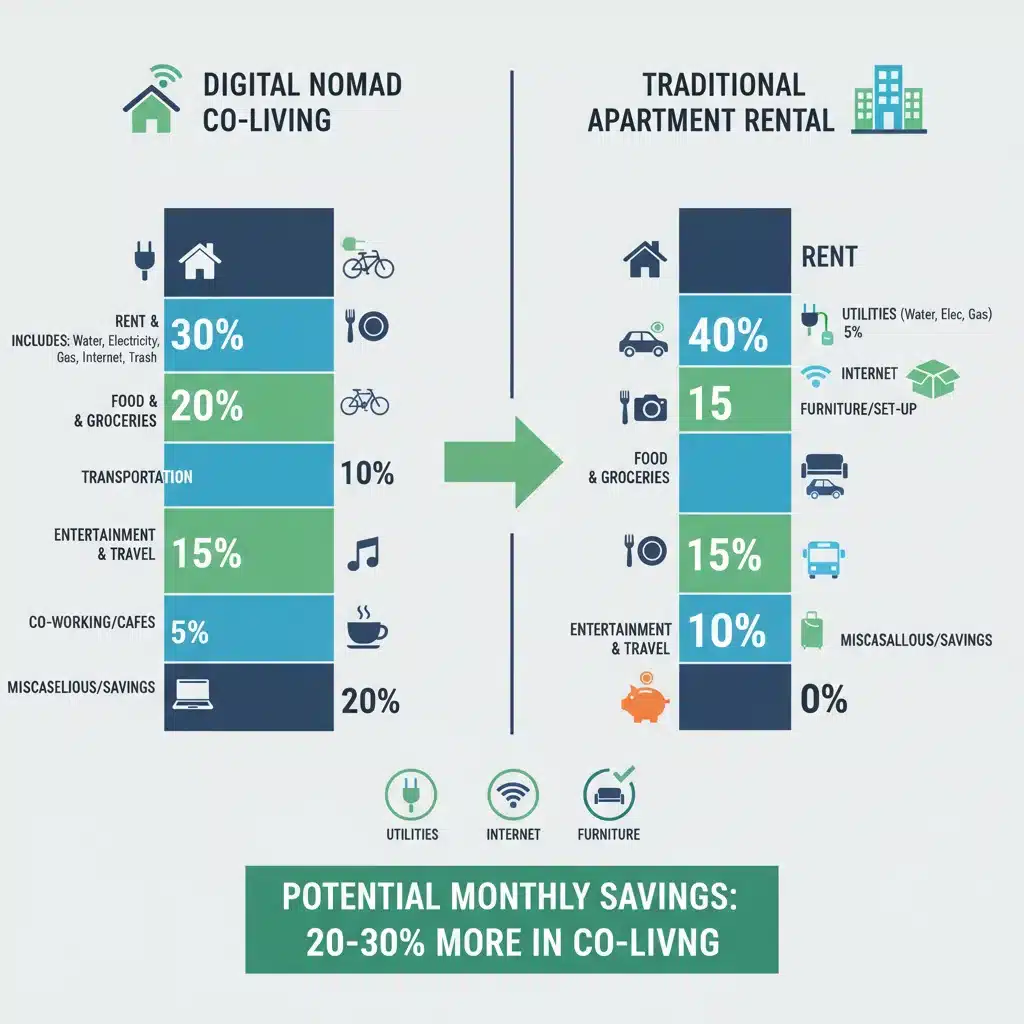
Scenario: US Co-living Space
- Co-living Membership Fee: $1,000 – $1,800/month (includes rent, utilities, internet, furnished room, common area cleaning)
- Application Fees/Security Deposit: $50 – $1,500 (upfront, often lower than traditional rentals)
- Laundry (if not included): $20 – $40/month
- Total Estimated Monthly: $1,020 – $1,840
Comparing these two, the US co-living costs often come out similar or even slightly lower on a purely monthly basis, especially when considering all the included services. The most significant financial advantage of co-living lies in the elimination of substantial upfront costs (furniture, utility deposits) and the predictability of a single, all-inclusive bill. For digital nomads who value flexibility and minimal hassle, this predictability is a huge benefit.
Qualitative Benefits Comparison
- Community: Co-living offers an immediate, curated community. Traditional rentals require proactive effort to build a social circle.
- Work Environment: Co-living often includes dedicated workspaces. Traditional rentals might require separate co-working memberships.
- Flexibility: Co-living typically offers shorter, more flexible lease terms. Traditional rentals often demand 6-12 month commitments.
- Convenience: Co-living handles all setup and maintenance. Traditional rentals place this burden on the tenant.
- Networking: Co-living inherently provides networking opportunities. Traditional rentals offer none by default.
When you weigh the financial figures against these qualitative benefits, the value proposition of co-living for digital nomads in 2026 becomes even stronger. The time saved, stress reduced, and opportunities gained often far outweigh any minor differences in the base monthly US co-living costs.
Choosing the Right Co-living Space in 2026
With the growing popularity of co-living, numerous options are emerging across the US. Selecting the right one involves considering several factors beyond just the US co-living costs.
Location, Location, Location
Just like any real estate, location is paramount. Consider proximity to public transport, amenities, cultural attractions, and areas that align with your lifestyle. Some co-living spaces are centrally located in bustling cities, while others might be in quieter neighborhoods or even more rural, retreat-like settings.
Community Vibe and Focus
Each co-living space often has a distinct culture. Some cater to entrepreneurs, others to artists, and some to a general mix of remote professionals. Research the community events, member demographics, and overall ethos to ensure it aligns with your personal and professional goals. A good fit here can significantly enhance your experience.
Amenities and Services
While basic amenities are standard, some co-living spaces offer additional perks like gyms, rooftop access, meditation rooms, bike storage, or even communal meals. Evaluate which amenities are essential for you and factor them into your overall assessment of value versus US co-living costs.
Lease Terms and Flexibility
If you’re a true digital nomad, flexibility is key. Look for spaces that offer month-to-month options or short-term leases that can be easily extended. Understand the cancellation policies and any fees associated with early departure or transfers.
Reviews and Reputation
Always check reviews from current and past residents. Platforms like Google Reviews, Facebook groups, and dedicated co-living forums can offer invaluable insights into the actual living experience, management responsiveness, and whether the advertised benefits truly materialize.
Maximizing Your Co-living Experience and Financial Savings
Once you’ve chosen a co-living space, there are ways to further maximize your experience and optimize your US co-living costs.
Embrace the Community
The biggest non-financial return on investment in co-living is the community. Actively participate in events, engage with your housemates, and be open to new connections. This enriches your personal life and can lead to unexpected professional opportunities.
Utilize Shared Resources
Make full use of the shared amenities, especially the kitchen. Cooking at home is almost always cheaper than eating out, and shared meals can be a great way to bond with housemates. Leverage the co-working spaces to avoid external expenses.
Be Mindful of Personal Spending
While co-living covers many essentials, personal spending on entertainment, dining out, and travel can still add up. Maintain a budget for these categories to ensure you’re fully realizing the financial benefits of reduced housing costs.
Give Feedback
Good co-living operators are often keen to improve. Provide constructive feedback to management about facilities, events, or any issues. This helps improve the space for everyone and ensures your voice is heard.

Consider Longer Stays for Discounts
If you find a co-living space you love and plan to stay for a few months, inquire about discounts for longer commitments. Many operators offer reduced rates for 3-month, 6-month, or even annual stays, further lowering your average monthly US co-living costs.