Emergency Fund for Freelancers: Build 6 Months of Living Expenses by Mid-2026

Anúncios
Emergency Fund for Freelancers: Build 6 Months of Living Expenses by Mid-2026
As a freelancer, the concept of a steady paycheck can often feel like a distant dream. The feast-or-famine cycle, unpredictable client payments, and the absence of employer-sponsored benefits mean that financial planning isn’t just a good idea; it’s an absolute necessity. One of the most critical components of this financial safety net is a robust freelancer emergency fund. This isn’t just about having a rainy-day fund; it’s about building a fortress around your financial well-being, specifically aiming for six months of living expenses. And we’re setting a clear, ambitious deadline: by mid-2026.
Why mid-2026? Because a specific deadline creates accountability and urgency. It transforms a vague financial goal into a concrete project with milestones. For freelancers, this fund is your ultimate protection against income dips, unexpected health issues, client disappearances, or even the desire to take a much-needed sabbatical. Without it, every setback can feel catastrophic, potentially forcing you back into traditional employment or deep into debt. With it, you gain unparalleled peace of mind, the freedom to say no to undesirable projects, and the resilience to weather any storm. This comprehensive guide will walk you through the essential steps to establish and grow your freelancer emergency fund, ensuring you hit that mid-2026 target.
Anúncios
Understanding the ‘Why’ Behind Your Freelancer Emergency Fund
Before diving into the ‘how,’ it’s crucial to solidify the ‘why.’ For freelancers, an emergency fund isn’t a luxury; it’s a foundational pillar of sustainable self-employment. Unlike traditional employees who might have severance packages, unemployment benefits, or sick leave, freelancers typically have none of these safety nets. This means you are your own HR, finance department, and safety net all rolled into one.
The Volatility of Freelance Income
One of the most significant challenges for freelancers is income volatility. Some months might be booming, while others are lean. Clients can delay payments, projects can be unexpectedly canceled, or you might face a period where new work is scarce. A substantial freelancer emergency fund acts as a buffer, smoothing out these fluctuations and preventing you from panicking when income dips. It allows you to focus on finding quality work rather than taking on any project just to pay the bills.
Anúncios
Unexpected Expenses and Life Events
Life doesn’t stop throwing curveballs just because you’re self-employed. Car repairs, medical emergencies, home maintenance issues, or even a sudden need to travel can arise at any moment. Without a dedicated fund, these unexpected expenses can derail your financial progress, forcing you to use credit cards or deplete your business savings. Your emergency fund is there to absorb these shocks, protecting your long-term financial goals.
The Freedom to Choose and Grow
Perhaps one of the most underrated benefits of a strong freelancer emergency fund is the freedom it affords. When you have six months of living expenses saved, you’re not beholden to demanding clients or low-paying projects. You can afford to turn down work that doesn’t align with your values or skill set, negotiate for better rates, or even take time off to upskill or pursue passion projects. This financial security empowers you to strategically grow your freelance business and your personal life, rather than being constantly in reactive mode.
Step 1: Calculate Your True Monthly Living Expenses
The first and most critical step in building your freelancer emergency fund is to understand exactly how much money you need to survive each month. This isn’t about your ideal lifestyle; it’s about your bare-bones, essential living expenses. To do this effectively, you need to track your spending meticulously for at least 1-3 months, or review past bank statements and credit card bills.
Fixed vs. Variable Expenses
Divide your expenses into two categories:
- Fixed Expenses: These are costs that generally stay the same each month. Examples include rent/mortgage, loan payments (student, car), insurance premiums, subscription services (internet, phone), and minimum debt payments.
- Variable Expenses: These fluctuate month-to-month. Examples include groceries, utilities (which can vary seasonally), transportation, entertainment, dining out, and personal care.
For your emergency fund calculation, focus on the absolute essentials. While dining out might be a regular expense, it’s not essential for survival. Be honest with yourself about what you can cut back on if your income suddenly disappeared. Your goal is to determine the absolute minimum amount you need to cover housing, food, utilities, transportation, and essential medical costs.
Don’t Forget Business Expenses
As a freelancer, some of your business expenses are essential for you to continue earning. This might include software subscriptions crucial for your work, professional association fees, or even a small budget for continued education. Factor these essential business operating costs into your monthly calculation, but differentiate them from personal living expenses. The emergency fund is primarily for personal survival, but a small buffer for essential business continuity can be wise.
The Target Number: Six Months
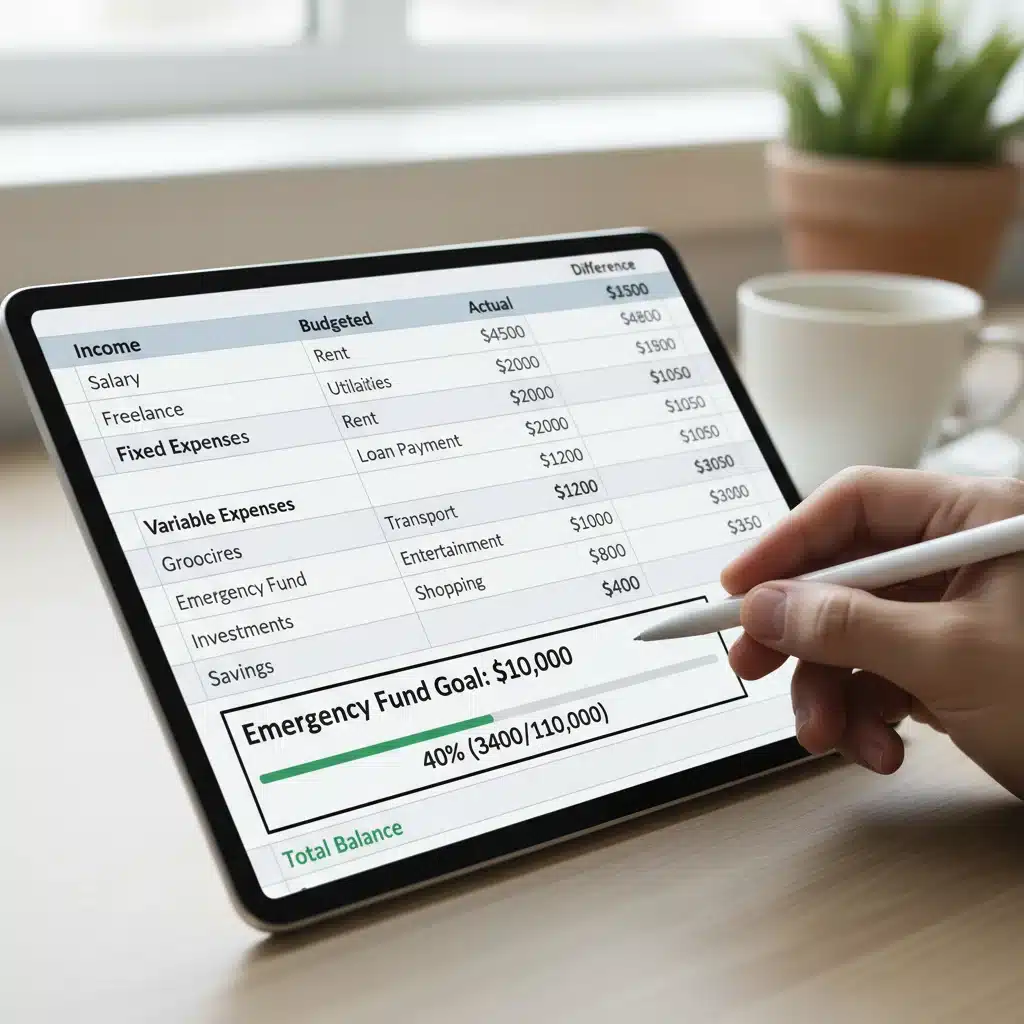
Once you have your essential monthly living expenses calculated, multiply that number by six. This is your ultimate target for your freelancer emergency fund. For example, if your essential monthly expenses are $2,500, your target fund is $15,000. This number might seem daunting at first, but breaking it down into smaller, manageable chunks will make it achievable by mid-2026.
Step 2: Create a Realistic Budget and Identify Savings Opportunities
With your target number in hand, the next step is to create a budget that prioritizes saving for your freelancer emergency fund. This isn’t about deprivation; it’s about intentional spending and finding areas where you can optimize your finances to accelerate your savings.
Track Every Dollar
The foundation of any good budget is tracking. Use a spreadsheet, a budgeting app (like YNAB, Mint, or Personal Capital), or even a pen and paper to record every dollar you earn and spend. This level of awareness is crucial for identifying where your money is actually going versus where you think it’s going.
The 50/30/20 Rule (Adjusted for Freelancers)
A popular budgeting guideline is the 50/30/20 rule: 50% of your income for needs, 30% for wants, and 20% for savings and debt repayment. While this is a good starting point, freelancers often need to adjust it. Given the income volatility, you might aim to save a higher percentage during good months. Consider a ‘pay yourself first’ approach, where a portion of every payment you receive goes directly to your emergency fund before it touches your spending accounts.
Slash Unnecessary Expenses
Go through your variable expenses with a fine-tooth comb. Are there subscription services you no longer use? Can you reduce your dining-out budget by cooking more at home? Could you find cheaper alternatives for certain services? Even small cuts can add up significantly over time. Remember, this is a temporary acceleration phase to build your freelancer emergency fund quickly.
Automate Your Savings
One of the most effective strategies is to automate your savings. Set up an automatic transfer from your checking account to a dedicated high-yield savings account (more on this later) every time you get paid, or on a specific day of the month. Treat this transfer as a non-negotiable bill. If you don’t see the money, you’re less likely to spend it. This consistent, automated approach is key to steadily growing your freelancer emergency fund.
Step 3: Strategically Increase Your Freelance Income
While cutting expenses is important, for many freelancers, the most powerful way to accelerate building an emergency fund is to increase income. You have direct control over your earning potential in a way traditional employees often don’t. Aiming for mid-2026 gives you ample time to implement these strategies.
Negotiate Higher Rates
Are you charging what you’re worth? Many freelancers undervalue their services. Research industry standards, track your value proposition, and don’t be afraid to negotiate higher rates with new and existing clients. Present your value clearly, highlight past successes, and justify your pricing. A small increase across multiple projects can significantly boost your overall income.
Diversify Your Income Streams
Relying on a single client or type of work can be risky. Explore ways to diversify your income:
- New Clients: Actively seek out new clients to broaden your base.
- New Services: Can you offer additional services to existing clients or package your offerings differently?
- Passive Income: Explore creating digital products (eBooks, courses, templates), affiliate marketing, or licensing your work. Even small passive income streams can contribute to your freelancer emergency fund.
- Side Gigs: If your primary freelance work isn’t enough, consider a temporary side gig outside your main freelancing niche to boost cash flow specifically for your emergency fund.
Improve Your Skills and Offerings
Investing in yourself can lead to higher earning potential. Take online courses, attend workshops, or get certifications in areas that enhance your freelance services. When you offer more specialized or in-demand skills, you can command higher rates and attract more lucrative projects. This strategic investment pays dividends not just for your emergency fund but for your long-term career growth.
Optimize Your Workflow and Productivity
Time is money for freelancers. Streamline your processes, use productivity tools, and eliminate time-wasting activities. The more efficiently you work, the more billable hours you can accumulate, or the more projects you can take on without burning out. This increased efficiency directly translates to more income that can be channeled into your freelancer emergency fund.

Step 4: Choose the Right Account for Your Freelancer Emergency Fund
Where you store your emergency fund is almost as important as how much you save. The goal is to keep it safe, accessible, and separate from your day-to-day spending.
High-Yield Savings Accounts (HYSA)
A High-Yield Savings Account is typically the best option for an emergency fund. These accounts offer significantly higher interest rates than traditional savings accounts, meaning your money grows (albeit slowly) while it sits there. Key features to look for:
- High Interest Rate: Compare rates from different online banks.
- No Monthly Fees: Avoid accounts that charge fees that eat into your savings.
- Easy Access: Ensure you can easily transfer funds to your checking account when needed, typically within 1-3 business days.
- FDIC Insurance: Make sure the bank is FDIC insured (up to $250,000 per depositor) to protect your funds in case of bank failure.
Keep it Separate
Do not keep your freelancer emergency fund in the same checking account you use for daily expenses. This makes it too easy to accidentally spend. A separate account creates a psychological barrier, ensuring you only tap into it for true emergencies.
Avoid Risky Investments
While you might be tempted to invest your emergency fund for higher returns, resist the urge. The primary purpose of this fund is safety and accessibility, not growth. The stock market is too volatile for money you might need at a moment’s notice. Stick to liquid, low-risk accounts like HYSAs.
Step 5: Maintain Discipline and Review Progress Towards Mid-2026
Building a six-month freelancer emergency fund by mid-2026 is a marathon, not a sprint. Consistency and regular review are crucial for staying on track.
Regular Check-ins
Schedule monthly or quarterly financial check-ins. Review your budget, track your progress towards your emergency fund goal, and adjust your strategies as needed. Are you hitting your savings targets? Do you need to find more income opportunities? Are there new expenses you need to account for?
Adjust as Life Changes
Your living expenses might change over time. If you move, your rent might increase. If you have a child, your costs will go up. Re-evaluate your essential monthly expenses periodically and adjust your emergency fund target accordingly. The mid-2026 deadline is firm, but your calculation of ‘six months’ might need to be dynamic.
Celebrate Milestones
Building an emergency fund can feel like a long grind. Celebrate small victories along the way. Reaching your first month’s expenses, then your third, and finally your sixth, are all significant achievements. Acknowledging your progress helps maintain motivation and reinforces positive financial habits.
Resist the Urge to Dip In
The hardest part of having an emergency fund is resisting the temptation to use it for non-emergencies. Be strict with your definition of an emergency. A new gadget, a vacation, or a fancy dinner are not emergencies. Remind yourself of the peace of mind and security this fund provides. If you do have to use it for a true emergency, make a plan to replenish it as quickly as possible.
Common Challenges and How to Overcome Them
Building a substantial freelancer emergency fund isn’t without its hurdles. Here’s how to tackle some common challenges:
Inconsistent Income
This is arguably the biggest challenge for freelancers. To combat it, try to build a buffer of 1-2 months’ expenses in your checking account for operational cash flow, separate from your emergency fund. During high-income months, prioritize over-saving for your emergency fund to compensate for leaner periods. Consider invoicing strategies that encourage faster payments or requiring partial upfront payments for larger projects.
Lack of Motivation
When the goal feels far off, motivation can wane. Keep your ‘why’ front and center. Visualize the peace of mind you’ll have by mid-2026. Set up visual trackers for your progress. Share your goal with an accountability partner. Remember, every dollar saved is a step closer to financial freedom.
Unexpected Large Expenses
Sometimes, a major unexpected expense hits before your emergency fund is fully built. In such cases, use the most affordable option available (e.g., a low-interest credit card if you can pay it off quickly, or a personal loan). Immediately after, double down on your savings efforts to replenish any used funds and continue building your emergency fund. This is precisely why you’re building it in the first place.
Beyond the Emergency Fund: What Comes Next?
Once you hit your mid-2026 goal of six months’ living expenses in your freelancer emergency fund, congratulations! This is a monumental achievement. But financial planning doesn’t stop there. Here’s what to consider next:
Retirement Savings (SEP IRA, Solo 401(k))
As a freelancer, you’re responsible for your own retirement. Explore self-employed retirement accounts like a SEP IRA or Solo 401(k), which offer significant tax advantages and allow you to contribute both as an employee and an employer.
Investments for Growth
With your emergency fund secure, you can start investing for long-term wealth growth. Consider a diversified portfolio of stocks, bonds, and mutual funds or ETFs, tailored to your risk tolerance and financial goals.
Saving for Specific Goals
Do you want to buy a house, travel the world, or fund a child’s education? Once your emergency fund is solid, you can start saving for these specific, exciting goals in separate accounts.
Insurance Review
As a freelancer, ensure you have adequate health insurance, disability insurance (critical for protecting your income if you can’t work), and professional liability insurance (if applicable to your field).
Conclusion: Your Path to Freelance Financial Security by Mid-2026
Building a six-month freelancer emergency fund by mid-2026 is an ambitious yet entirely achievable goal. It requires discipline, strategic planning, and a commitment to your financial well-being. By meticulously calculating your expenses, creating a realistic budget, actively increasing your income, choosing the right savings vehicle, and maintaining unwavering discipline, you will not only reach this target but also lay a solid foundation for a resilient and prosperous freelance career.
Imagine the peace of mind you’ll experience knowing that you have a financial safety net that can withstand almost anything. This freedom allows you to take calculated risks, pursue passion projects, and truly enjoy the flexibility that freelancing offers, without the constant worry of financial instability. Start today, stay consistent, and celebrate every step on your journey to financial independence as a freelancer.