US State Regulations for Digital Nomads 2026: Insider Knowledge
Anúncios
Understanding US State-Specific Regulations for Long-Term Digital Nomad Stays in 2026 (INSIDER KNOWLEDGE)
The allure of the digital nomad lifestyle continues to captivate professionals worldwide. The freedom to work from anywhere, explore new cultures, and design a life on your own terms is undeniably appealing. For those eyeing the United States as their long-term base or a series of temporary bases, 2026 presents a landscape of evolving regulations. Navigating the intricate web of US state-specific regulations for long-term digital nomad stays requires more than just a passing glance; it demands insider knowledge and a proactive approach. This comprehensive guide aims to equip you with the essential information to thrive as a digital nomad in the US, focusing on the critical aspects of taxes, residency, healthcare, and business registration across various states.
As the remote work revolution solidifies its place in the global economy, governments are slowly catching up, creating a patchwork of rules that can be both liberating and confounding. For digital nomads, understanding these nuances is not just about compliance; it’s about optimizing your lifestyle, minimizing financial liabilities, and ensuring seamless access to essential services. Our focus on US Digital Nomad Regulations for 2026 is designed to provide clarity in what can often feel like a complex and opaque system.
Anúncios
The Shifting Landscape of US Digital Nomad Regulations
The concept of a ‘digital nomad visa’ is largely absent at the federal level in the US, meaning nomads typically enter on tourist visas (B-1/B-2) or through other existing visa categories, often without explicit provisions for long-term remote work for non-US employers. This initial entry point sets the stage for a complex discussion about state-specific rules. The primary challenge for long-term digital nomads in the US revolves around establishing ‘residency’ for tax purposes and determining where their ‘source’ of income is located. These are not always straightforward answers and can vary significantly from state to state.
In 2026, we anticipate continued scrutiny from state tax authorities regarding the physical presence of individuals earning income within their borders. States are increasingly aware of the remote workforce and are keen to ensure they receive their fair share of tax revenue. This means that even if your employer is based in another state or country, your physical presence in a particular US state for an extended period could trigger tax obligations there. Understanding these US Digital Nomad Regulations is paramount to avoiding unexpected tax bills or legal complications.
Anúncios
Defining ‘Long-Term Stay’ for Digital Nomads
What constitutes a ‘long-term stay’ for a digital nomad? This is where the waters get murky, as there isn’t a universally accepted federal definition that applies to all aspects of nomadic life. For tax purposes, many states have a ‘183-day rule’ or similar, where spending more than half the year in a state can establish tax residency. However, this is a simplification. Some states look at ‘domicile’ – your true, fixed, and permanent home – which can be much harder to change than mere physical presence. Other factors include where you hold your driver’s license, register your vehicles, vote, or maintain bank accounts. The interplay of these factors creates a unique challenge for those seeking to understand US Digital Nomad Regulations.
For healthcare, a long-term stay might mean needing to establish residency to qualify for state-specific insurance programs or to purchase individual plans on state exchanges. Business registration, if you operate as a sole proprietor or LLC, also depends on where you primarily conduct business or where your clients are located. Each of these aspects requires careful consideration and planning to ensure you remain compliant and well-supported during your nomadic journey.
Tax Implications for US Digital Nomads in 2026
Taxation is arguably the most complex and critical aspect of US Digital Nomad Regulations. The US employs a ‘worldwide’ tax system for its citizens and green card holders, meaning they are taxed on income regardless of where it’s earned. For non-US citizens, the rules are different and depend heavily on visa status and physical presence. However, the state-level tax implications are a universal concern for anyone spending significant time in different US states.
State Income Tax: Where You Live vs. Where You Earn
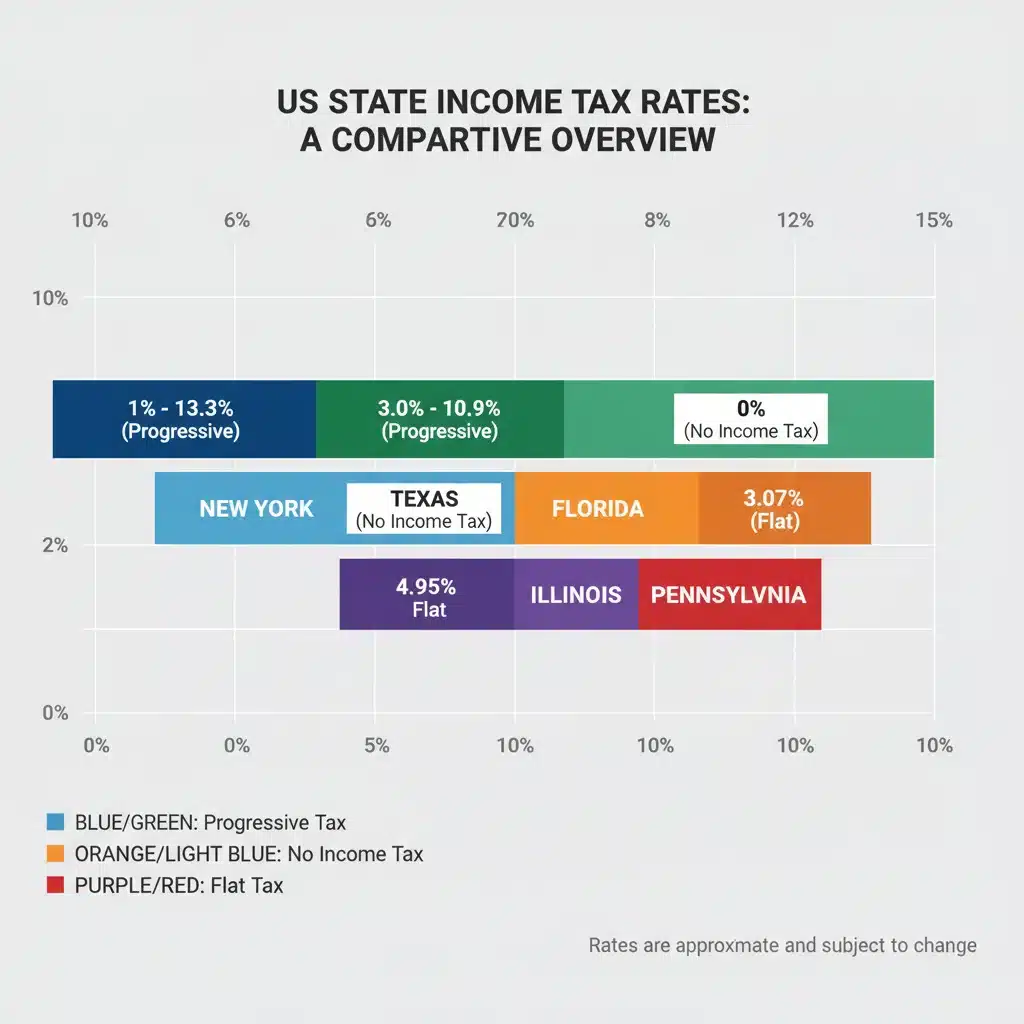
This is the big one. Most states levy an income tax, but a handful do not (Alaska, Florida, Nevada, South Dakota, Tennessee, Texas, Washington, and Wyoming, plus New Hampshire which only taxes interest and dividends). If you spend enough time in an income-taxing state, you could be considered a resident for tax purposes, even if you don’t intend to stay permanently. This means you would owe state income tax on all your income, regardless of its source.
The ‘physical presence’ test is often a key determinant. If you spend more than 183 days in a state, you are generally presumed to be a resident for tax purposes. However, some states have more aggressive rules or look at other factors to establish ‘domicile.’ For instance, California has a notoriously broad definition of residency, often looking at an individual’s ‘closest connections’ to the state. This means even if you spend less than 183 days, but maintain significant ties (e.g., family, property, bank accounts), you could still be considered a resident.
Conversely, if you work remotely for an employer based in a different state, you might still owe taxes to the employer’s state due to ‘convenience of the employer’ rules in some states (e.g., New York, Pennsylvania, Delaware). These rules stipulate that if you work remotely for convenience rather than necessity, your income is still sourced to the employer’s state. This creates a potential double taxation scenario if your physical state of presence also claims you as a resident. Understanding these intricate US Digital Nomad Regulations is crucial for financial planning.
Sales Tax and Other State-Specific Taxes
While income tax is the primary concern, digital nomads should also be aware of sales tax and other state-specific taxes. Sales tax is generally paid at the point of purchase, but if you’re running your own business, you might need to collect and remit sales tax if you sell taxable goods or services and establish ‘nexus’ (a significant presence) in a particular state. This nexus can be triggered by having a physical presence, employees, or even significant sales volume within a state.
Other taxes to consider include property taxes (if you own real estate), vehicle registration fees, and potentially even local city taxes. Each state and even individual municipalities can have their own unique tax structures. Keeping track of these various obligations is a vital part of navigating US Digital Nomad Regulations effectively.
Navigating Multi-State Taxation
For digital nomads who move frequently between states, multi-state taxation becomes a significant headache. You might find yourself filing non-resident tax returns in several states, in addition to your resident state return (if you establish one). States generally offer tax credits for taxes paid to other states to prevent double taxation, but the process of claiming these credits can be complex and time-consuming. Professional tax advice is almost always recommended for digital nomads with multi-state income.
Residency and Domicile: The Core of Digital Nomad Status
Beyond taxes, your residency and domicile status impact everything from voting rights to driver’s licenses, vehicle registration, and even jury duty. For digital nomads, establishing a clear domicile is essential, even if you frequently travel. Your domicile is your legal home, the place you intend to return to, and where you maintain your strongest ties. It’s not necessarily where you spend the most time.
Establishing Domicile as a Digital Nomad
Many digital nomads choose a ‘no income tax’ state (like Florida, Texas, or South Dakota) as their domicile. To successfully establish domicile, you need to demonstrate intent. This involves a combination of actions:
- Driver’s License: Obtain a driver’s license in your chosen domicile state.
- Voter Registration: Register to vote in that state.
- Vehicle Registration: Register your vehicle (if you have one) in that state.
- Bank Accounts: Use a local address for your bank accounts.
- Mail Forwarding: Set up a reliable mail forwarding service in your domicile state.
- Professional Licenses: If applicable, obtain professional licenses in that state.
- Property: While not mandatory, owning property (even a small storage unit) can strengthen your claim.
- Affidavits of Domicile: Some states offer formal declarations of domicile.
The key is consistency. If you claim Florida as your domicile but maintain a California driver’s license, vote in Oregon, and have all your bank accounts linked to a New York address, your claim will likely be challenged. Consistent actions are crucial for navigating US Digital Nomad Regulations related to domicile.
The Importance of a Mail Forwarding Service
A reliable mail forwarding service is a digital nomad’s best friend. It provides a stable physical address for official correspondence, banking, and other necessities, even if you’re constantly on the move. Services like Earth Class Mail or St. Brendan’s Isle offer digital mailboxes, scanning services, and physical mail forwarding, allowing you to manage your mail from anywhere in the world. This is a foundational element for establishing and maintaining your chosen domicile while adhering to US Digital Nomad Regulations.
Healthcare for Nomads: A State-by-State Challenge
Healthcare in the US is notoriously complex, and it becomes even more so for digital nomads. The Affordable Care Act (ACA) provides marketplaces for individual insurance plans, but eligibility and plan options are often tied to state residency. If you’re constantly moving, maintaining consistent coverage can be a significant challenge.
ACA Marketplaces and State Residency
To purchase a plan on a state’s ACA marketplace, you generally need to be a resident of that state. If you establish domicile in a specific state, you can purchase a plan there. However, if you travel extensively, your network coverage might be limited outside your primary state. Some plans offer broader national networks, but they tend to be more expensive. This aspect of US Digital Nomad Regulations requires careful planning.
Travel Insurance vs. Health Insurance
It’s crucial not to confuse travel insurance with comprehensive health insurance. Travel insurance typically covers emergencies, trip cancellations, and medical evacuations but often has limitations on pre-existing conditions and routine care. It’s a good supplement for short-term travel but not a replacement for primary health insurance, especially for long-term stays in the US.
Alternative Healthcare Options
Some digital nomads explore alternative options like health share ministries, which are not insurance but often provide a more affordable way to cover medical costs. However, these also come with their own rules and limitations. Another strategy is to maintain a primary care physician in your domicile state and utilize urgent care clinics or telehealth services for immediate needs while on the road. Carefully researching and selecting your healthcare strategy is a critical component of successful US Digital Nomad Regulations compliance.
Business Registration and Licensing for Self-Employed Nomads
If you’re a self-employed digital nomad, running your own business (e.g., as a freelancer, consultant, or LLC owner), you’ll need to consider where to register your business and whether you need specific state or local licenses. This is another area where US Digital Nomad Regulations can vary significantly.
Where to Register Your Business
Generally, you should register your business (e.g., your LLC or sole proprietorship) in your domicile state. This simplifies tax filing and provides a consistent legal base for your operations. If you form an LLC, you’ll need a registered agent in that state. Many digital nomads use a registered agent service that also offers mail forwarding.
Foreign Qualification and Nexus
If your business operates significantly in a state other than your domicile state, you might need to ‘foreign qualify’ your business in that state. This means registering your existing business entity (like an LLC) to legally operate there. What constitutes ‘operating significantly’ can be vague, but it often involves having a physical presence, employees, or generating substantial revenue within that state. Failing to foreign qualify when required can lead to penalties and legal issues. This is a subtle but important part of US Digital Nomad Regulations.
Professional Licenses and Local Permits
Depending on your profession, you might need specific state-level professional licenses (e.g., for lawyers, doctors, real estate agents). These are almost always tied to state residency and specific qualifications. Additionally, some cities or counties require local business permits, even for home-based businesses. While less common for transient digital nomads, it’s something to be aware of if you plan a longer stay in a particular municipality.
Practical Tips for Navigating US Digital Nomad Regulations
Given the complexity, a strategic approach is essential for any digital nomad planning a long-term stay in the US. Here are some insider tips to help you manage the various US Digital Nomad Regulations:
1. Choose Your Domicile State Wisely
Consider states with no state income tax for your domicile. Florida, Texas, and South Dakota are popular choices due to their favorable tax laws and relatively easy processes for establishing residency. Research each state’s specific requirements for driver’s licenses, vehicle registration, and voter registration to ensure you can meet them.
2. Maintain Impeccable Records
Keep detailed records of your travel dates, addresses, and any official correspondence. This includes flight tickets, hotel receipts, utility bills, and bank statements. In case of an audit or residency challenge, these records will be invaluable in proving your domicile and physical presence in various states. This meticulous record-keeping is a cornerstone of navigating US Digital Nomad Regulations.
3. Consult with Professionals
This cannot be stressed enough. A tax accountant specializing in multi-state taxation or digital nomad finances can save you significant headaches and money. A legal professional can advise on residency and business registration issues. While an upfront cost, professional advice is an investment in your peace of mind and financial stability.
4. Understand the ‘Days Count’
Be acutely aware of the 183-day rule (or similar thresholds) in any state you spend significant time in. Use a travel tracking app or a simple spreadsheet to log your days in each state. This proactive approach helps you avoid inadvertently triggering tax residency in multiple states, a common pitfall in US Digital Nomad Regulations.
5. Secure Reliable Mail Forwarding
As mentioned, a dedicated mail forwarding service in your domicile state is non-negotiable. It provides a stable address for all official communications and helps reinforce your domicile claim.
6. Plan Your Healthcare Strategically
Don’t leave healthcare to chance. Research ACA plans in your domicile state and understand their network limitations. Consider supplemental travel insurance for emergencies. Explore telehealth options for routine care while on the move.
7. Keep Up-to-Date with Legislation
The landscape of remote work and digital nomad regulations is constantly evolving. Subscribe to relevant newsletters, follow legal and tax blogs, and stay informed about any new legislation that could impact your nomadic lifestyle in 2026 and beyond. Being proactive in understanding changes to US Digital Nomad Regulations can save you future complications.
The Future of US Digital Nomad Regulations
As the digital nomad movement gains momentum, it’s plausible that federal and state governments will eventually introduce more standardized or specific regulations for remote workers. We might see the emergence of specific visa categories, clearer tax guidelines, or even interstate agreements to simplify tax filing for highly mobile individuals. However, for 2026, the current patchwork system is likely to persist, making individual diligence and professional guidance indispensable.
States are increasingly recognizing the economic benefits that digital nomads can bring, from increased tourism spending to revitalizing rural areas. Some states and cities are even offering incentives to attract remote workers. While these programs are often focused on attracting new residents, they can also signal a more welcoming environment for digital nomads. Staying informed about these local initiatives can be a valuable part of your strategy for navigating US Digital Nomad Regulations.
Conclusion: Mastering Your Nomadic Journey in the US
The dream of a long-term digital nomad stay in the US is entirely achievable, but it requires meticulous planning and a deep understanding of the regulatory environment. From the complexities of state income tax to establishing a clear domicile and securing adequate healthcare, every aspect demands attention. By leveraging insider knowledge, maintaining diligent records, and seeking professional advice, you can navigate the US Digital Nomad Regulations of 2026 with confidence.
Embrace the freedom that the digital nomad lifestyle offers, but do so with a foundation of legal and financial compliance. Your journey across the diverse landscapes of the United States can be both exhilarating and rewarding, provided you’ve laid the groundwork for a stable and compliant nomadic existence. Happy travels, and may your remote work adventures in the US be filled with success and seamless transitions!