
Mastering Deep Work: 3 Proven Techniques for 4-Hour Focused Sprints in 2026
In an increasingly noisy world, where notifications ping, emails flood in, and social media constantly vies for our attention, the ability to focus deeply has become a superpower. This is where deep work techniques come into play. Coined by Cal Newport, deep work refers to professional activities performed in a state of distraction-free concentration that push your cognitive capabilities to their limit. These efforts create new value, improve your skill, and are hard to replicate.
For many, sustaining this level of focus for extended periods seems like an impossible feat. Yet, the most impactful work often requires precisely this kind of intense, uninterrupted concentration. Imagine what you could achieve if you could consistently dedicate 4-hour sprints to your most challenging tasks, free from interruptions. This article will delve into three proven deep work techniques that can help you achieve exactly that, propelling your productivity and the quality of your output to new heights in 2026 and beyond.
Anúncios
The modern professional landscape demands not just hard work, but smart, focused work. The superficial tasks – answering emails, attending unnecessary meetings, browsing the internet – often consume the majority of our day, leaving little room for the kind of deep, meaningful work that truly moves the needle. By intentionally cultivating and implementing effective deep work techniques, you can reclaim your time, sharpen your skills, and produce extraordinary results. This isn’t just about doing more; it’s about doing better, with greater impact and less stress.
We’ll explore actionable strategies for setting up your environment, managing your energy, and structuring your time to facilitate these powerful 4-hour sprints. Whether you’re a seasoned professional looking to optimize your workflow or someone new to the concept of deep work, these techniques are designed to be adaptable and highly effective. Prepare to transform your approach to work and unlock a new level of professional achievement.
Anúncios
Understanding the ‘Why’ Behind Deep Work
Before diving into the ‘how,’ it’s crucial to understand the fundamental principles that make deep work techniques so powerful. In his seminal book, ‘Deep Work: Rules for Focused Success in a Distracted World,’ Cal Newport argues that the ability to perform deep work is becoming increasingly rare and, consequently, increasingly valuable. In a knowledge economy, the individuals who can produce complex, high-quality output quickly are those who will thrive.
The human brain is not designed for constant task-switching. Every time you shift your attention from one task to another, there’s a ‘switch cost’ – a period during which your brain is still partially thinking about the previous task. These costs accumulate, significantly reducing overall efficiency and the quality of your work. Deep work, by contrast, minimizes these switch costs, allowing your cognitive resources to be fully dedicated to a single, challenging task.
Furthermore, deep work is essential for learning and skill acquisition. When you engage in focused, challenging tasks, you push your brain to create new neural pathways and strengthen existing ones. This is how true mastery is achieved. Superficial work, while sometimes necessary, rarely offers the same cognitive benefits or leads to significant personal or professional growth. Embracing deep work techniques is not just about productivity; it’s about becoming a better, more skilled version of yourself.
The benefits extend beyond individual output. Organizations that foster a culture of deep work often see higher innovation, better problem-solving, and improved employee satisfaction. When employees feel they have the time and space to do their best work, they are more engaged and less prone to burnout. Therefore, understanding and implementing effective deep work techniques is not merely a personal quest for productivity but a strategic imperative for individuals and teams alike in the competitive landscape of 2026.
Consider the nature of truly impactful achievements throughout history. They rarely stemmed from fragmented attention. From scientific breakthroughs to artistic masterpieces, sustained, intense focus has been a common thread. The modern world presents unique challenges to this kind of focus, but it also offers unprecedented tools and understanding to reclaim it. The techniques we are about to explore are built on these foundational principles, designed to help you harness your cognitive power for maximum effect.
Technique 1: The Monastic Approach with Structured Breaks
The first of our deep work techniques is inspired by the ‘Monastic Philosophy’ of deep work, adapted for modern professionals. This approach involves dedicating significant, uninterrupted blocks of time – in our case, 4-hour sprints – to a single, demanding task. The key differentiator here is the intentional integration of structured, restorative breaks to maintain peak performance.
Setting the Stage for Monastic Deep Work
- Eliminate All Distractions: This is non-negotiable. Turn off notifications on all devices. Close unnecessary tabs and applications. Inform colleagues or family members that you are unavailable during your deep work sprint. Consider using a ‘Do Not Disturb’ sign. The goal is to create an environment as free from external interruptions as possible.
- Pre-Plan Your Sprint: Before you begin, clearly define the single, most important task you will tackle during your 4-hour block. Break it down into manageable sub-tasks if necessary. Have all required materials, tools, and information ready. The less decision-making you have to do once you start, the better.
- Choose Your Environment Wisely: Find a quiet space where you are unlikely to be disturbed. This could be a dedicated home office, a library, a co-working space, or even a specific time of day when others are less active (e.g., early morning). Consistency in environment can help train your brain to associate that space with deep focus.
Implementing the 4-Hour Sprint with Restorative Breaks
Once your environment is set and your task defined, the sprint begins. The 4-hour block is not a continuous, grueling session. Instead, it is broken down strategically:
- Focused Work Intervals: Work intensely for 60-90 minutes. During this time, your sole focus is on the task at hand. Resist the urge to check email, glance at your phone, or shift attention. Use a timer to keep track.
- Micro-Breaks (5-10 minutes): After each focused interval, take a short, deliberate break. Do not use this time to check social media or other distracting digital activities. Instead, stand up, stretch, walk around, grab a glass of water, or look out a window. These breaks are for mental disengagement, allowing your brain to recharge.
- Mid-Sprint Restorative Break (20-30 minutes): Approximately halfway through your 4-hour sprint (after 2 focused intervals and 2 micro-breaks), take a longer break. This is an opportunity to grab a healthy snack, engage in light physical activity, or even meditate. The key is to fully detach from the work to prevent decision fatigue and maintain cognitive stamina. Avoid anything that will pull you back into shallow work.
This structured approach to deep work techniques, while monastic in its dedication to a single task, acknowledges the human need for rest and recovery. It prevents burnout and allows for sustained, high-quality output over the entire 4-hour period. By consistently applying this method, you’ll find your capacity for deep focus growing, leading to significantly more impactful work.
The beauty of this technique lies in its simplicity and effectiveness. It forces you to be intentional about your work and your breaks, creating a rhythm that your brain can adapt to. Over time, these 4-hour sprints will feel less like a struggle and more like a natural, powerful flow state, drastically improving your productivity and the quality of your deliverables. This is one of the most effective deep work techniques for tackling complex projects.
Technique 2: Rhythmic Deep Work with the Pomodoro-Plus Method
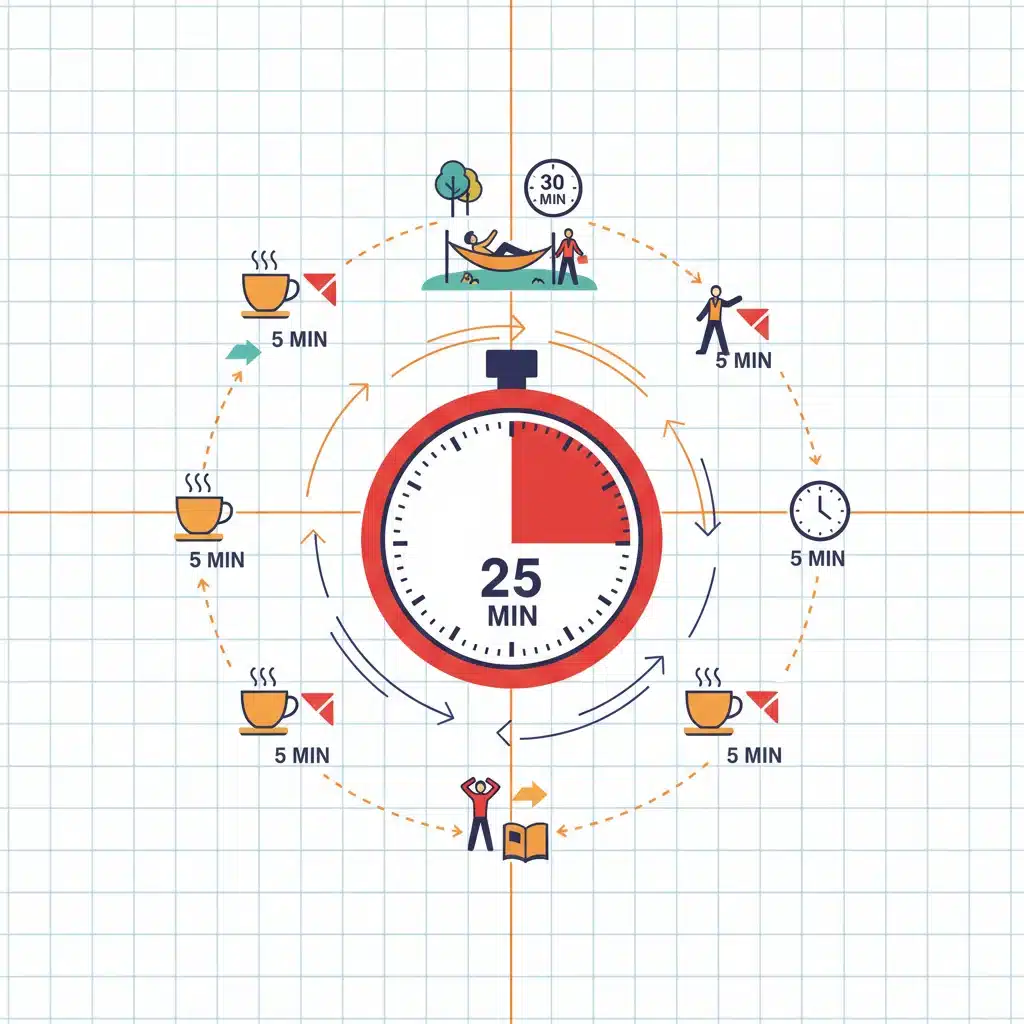
The second of our essential deep work techniques is a sophisticated adaptation of the popular Pomodoro Technique, which we’ll call ‘Pomodoro-Plus.’ While the traditional Pomodoro uses 25-minute work intervals, our ‘Pomodoro-Plus’ method is tailored for extending focus to achieve 4-hour sprints, emphasizing longer, more intense focus periods followed by strategic, rejuvenating breaks.
The Core Principles of Pomodoro-Plus
The fundamental idea remains the same: use a timer to break down work into focused intervals, separated by short breaks. However, for 4-hour deep work sprints, we need to adjust the duration to optimize for sustained concentration rather than just short bursts.
- Extended Focus Bursts (45-55 minutes): Instead of 25 minutes, dedicate 45 to 55 minutes to a single, specific deep work task. This longer period allows you to delve deeper into complex problems before an interruption. During this time, commit fully to the task at hand, eliminating all distractions as described in the Monastic Approach.
- Short, Active Breaks (5-10 minutes): After each extended focus burst, take a short break. Crucially, these breaks should be ‘active’ and restorative, not simply a switch to another shallow task. Get up, walk around, stretch, do a few push-ups, hydrate, or step outside for a breath of fresh air. Avoid checking emails or social media, as this can pull you out of your deep work mindset.
- Longer, Rejuvenating Breaks (20-30 minutes): After every three or four extended focus bursts (approximately 2.5 to 3.5 hours into your sprint), take a longer break of 20-30 minutes. This break is vital for mental reset. Use it for a light meal, a short walk, meditation, or anything that truly detaches you from the work and recharges your mental batteries. This prevents cognitive fatigue and maintains high-quality output for the remainder of your 4-hour sprint.
Benefits of Pomodoro-Plus for Deep Work
- Sustained Flow: The longer focus bursts allow you to enter and maintain a flow state more effectively than shorter intervals, which can sometimes feel disruptive.
- Reduced Procrastination: Knowing you only need to focus intensely for a defined period (45-55 minutes) can make starting a daunting task much easier.
- Improved Time Awareness: The timer keeps you accountable and helps you accurately track how much time you’re truly dedicating to deep work.
- Enhanced Mental Stamina: The structured breaks, particularly the longer ones, are designed to replenish your cognitive resources, enabling you to sustain high-intensity focus over several hours without burning out.
- Adaptability: This method is highly adaptable. If a task requires even longer uninterrupted focus, you can extend a burst to 60 or 75 minutes, ensuring you complete a logical segment of work before your break.
Implementing Pomodoro-Plus as one of your core deep work techniques requires discipline but offers immense rewards. It trains your brain to engage in intense focus for extended periods, knowing that a restorative break is always around the corner. This rhythmic approach helps build your deep work muscle, making those 4-hour sprints feel less daunting and more achievable. Start by experimenting with the exact duration of your focus bursts and breaks to find what works best for your personal cognitive rhythm and the nature of your tasks. Consistency is key to making this technique a powerful habit.
The beauty of this method lies in its structured flexibility. While the framework provides a clear path, you can fine-tune the timings to suit your individual needs and the demands of your specific projects. The goal is always to maximize your time in deep, uninterrupted concentration while proactively preventing mental fatigue. This makes Pomodoro-Plus an indispensable tool in your arsenal of deep work techniques for 2026.
Technique 3: The ‘Journal & Review’ Method for Cognitive Clarity
Our third powerful approach to cultivating deep work techniques for 4-hour sprints is the ‘Journal & Review’ method. This technique focuses on optimizing your mental state before and after deep work sessions, ensuring you enter each sprint with maximum clarity and exit with valuable insights for continuous improvement. It’s about mental preparation and post-analysis, crucial for sustained high-level performance.
Pre-Sprint Journaling: Clearing the Mental Clutter
Before embarking on your 4-hour deep work sprint, dedicate 10-15 minutes to a structured journaling session. This isn’t free-form journaling; it’s a targeted exercise to prime your mind for focus.
- Brain Dump Distractions: Write down everything that might pull your attention away during your sprint. This could include pending emails, urgent tasks unrelated to your deep work, personal errands, anxieties, or even fleeting ideas. The act of writing them down externalizes these thoughts, freeing up your working memory.
- Define Your Sprint Goal: Clearly articulate what you intend to achieve during the upcoming 4 hours. Be specific and measurable. For example, instead of ‘work on project X,’ write ‘complete the first draft of section 2 for project X, focusing on data analysis.’ This creates a strong intention and a clear target.
- Anticipate Challenges: Briefly consider any potential roadblocks or difficulties you might encounter during your deep work. By acknowledging them beforehand, you can mentally prepare strategies or decide to defer them until after your sprint. This proactive problem-solving reduces in-the-moment friction.
- Affirm Your Focus: Conclude by writing a brief affirmation of your commitment to deep work and your ability to maintain focus. This positive reinforcement helps set a determined mindset.
This pre-sprint journaling acts as a mental filter, allowing you to shed cognitive load and approach your deep work with a clear, uncluttered mind. It’s a powerful ritual that signals to your brain that it’s time to engage in intense focus, making it one of the most effective deep work techniques for mental preparation.

Post-Sprint Review: Learning and Optimizing
Immediately after completing your 4-hour deep work sprint (or after your final longer break), dedicate another 10-15 minutes to a review session. This is critical for consolidating learning and optimizing future sprints.
- Assess Your Progress: Compare what you actually achieved against your defined sprint goal. Be honest and objective. Did you meet your goal? Exceed it? Fall short? Why?
- Identify Distractions & Challenges: Reflect on any moments where your focus wavered or you encountered unexpected difficulties. What were the sources of distraction? How did you respond? What could you do differently next time?
- Note Insights & Learnings: What did you learn about the task, your process, or yourself during the sprint? Did you discover a more efficient way to approach a problem? Did you gain new insights into the subject matter? Document these.
- Plan Next Steps: Briefly outline what needs to happen next for the task or project. This smooths the transition out of deep work and prevents procrastination on follow-up actions. It also sets the stage for your next deep work session.
The ‘Journal & Review’ method, when combined with other deep work techniques, creates a powerful feedback loop. The pre-sprint journaling prepares your mind, while the post-sprint review helps you learn and adapt. Over time, this consistent process will significantly enhance your ability to perform and sustain deep work, making your 4-hour sprints incredibly productive and rewarding. It transforms deep work from a sporadic effort into a refined, data-driven practice, ensuring continuous improvement in your focus and output.
This reflective practice not only sharpens your deep work skills but also fosters a deeper understanding of your own cognitive patterns, triggers for distraction, and optimal working conditions. It’s a meta-skill that amplifies the effectiveness of all other deep work techniques, making it indispensable for anyone serious about maximizing their productivity in 2026.
Integrating Deep Work into Your Daily Routine
Mastering these deep work techniques is not just about understanding them; it’s about consistently integrating them into your daily and weekly routines. A single 4-hour deep work sprint can yield more results than days of fragmented, shallow work. However, the true power comes from making it a regular, non-negotiable part of your schedule.
Scheduling Your Deep Work Sprints
Treat your deep work sessions like critical appointments you cannot miss. Block out 4-hour slots in your calendar specifically for deep work. Early mornings often work best for many, as there are fewer distractions and your cognitive energy is typically at its peak. Experiment to find your optimal time. Communicate these blocks to your team and set clear boundaries.
Building a Deep Work Ritual
Just as athletes have pre-game rituals, developing a personal deep work ritual can signal to your brain that it’s time to focus. This might include:
- Preparing your workspace (tidying up, getting water/coffee).
- Reviewing your deep work task for the sprint.
- Performing your ‘Journal & Review’ pre-sprint journaling.
- Putting on noise-canceling headphones.
- Starting a specific deep focus playlist.
Consistency in your ritual will strengthen the association between these actions and deep focus, making it easier to transition into a state of intense concentration.
Managing Shallow Work and Distractions
Deep work doesn’t mean eliminating all shallow work. It means segmenting it. Schedule dedicated blocks for answering emails, attending non-essential meetings, and other administrative tasks. This prevents shallow work from encroaching on your deep work time and allows you to tackle it efficiently when the time comes. Consider batching similar shallow tasks together to minimize context switching.
For digital distractions, leverage technology to your advantage. Use website blockers, ‘Do Not Disturb’ modes, and app limits during your deep work sprints. The goal is to make it as difficult as possible to get distracted and as easy as possible to stay focused.
The consistent application of deep work techniques extends far beyond daily productivity gains. Over time, it fundamentally reshapes your professional capabilities, leading to significant long-term benefits that set you apart in any field.
The Importance of Recovery
Sustaining deep work requires significant mental energy. Just as important as the deep work itself is adequate recovery. Ensure you get enough sleep, engage in hobbies that truly disconnect you from work, and spend time in nature. Rest and play are not luxuries; they are essential components of a sustainable deep work practice. Without proper recovery, your capacity for deep focus will diminish, regardless of how well you apply deep work techniques.
By consciously integrating these strategies, you’re not just adopting a few isolated deep work techniques; you’re building a comprehensive system for maximizing your cognitive output and achieving your most ambitious goals. In 2026, the ability to consistently produce high-quality, impactful work will be a defining characteristic of top performers, and deep work is your pathway to becoming one.
Overcoming Common Deep Work Challenges
While the benefits of deep work techniques are clear, implementing them isn’t always easy. There are common hurdles that many individuals face when trying to cultivate a deep work practice. Recognizing these challenges and having strategies to overcome them is crucial for long-term success.
Challenge 1: The Addiction to Distraction
Modern society has conditioned us to crave constant stimulation and instant gratification. Our brains are literally rewired to seek out notifications, new information, and social validation. Breaking this addiction is perhaps the biggest challenge. The solution lies in a gradual, disciplined approach.
- Digital Detoxes: Start with short periods (e.g., an hour a day) where you intentionally disconnect from all non-essential digital devices. Gradually extend these periods.
- Mindful Consumption: Be intentional about how you consume information and entertainment. Ask yourself if it genuinely adds value or if it’s merely a distraction.
- Replacement Habits: Replace the urge to check your phone with a healthier habit, like taking a short walk, reading a physical book, or meditating during your breaks.
Challenge 2: The Fear of Missing Out (FOMO) & Urgent vs. Important
Many fear that by disconnecting for deep work, they’ll miss an important email or an urgent request. This often stems from a lack of clear communication and boundaries. The Eisenhower Matrix (urgent/important) can be a useful tool here.
- Clear Communication: Inform your team, colleagues, and clients about your deep work blocks. Set expectations about response times. Use automated email replies if necessary.
- Designated Check-in Times: Schedule specific times outside your deep work sprints to check and respond to communications. This ensures you address important matters without letting them derail your focus.
- Prioritization: Learn to distinguish between truly urgent and important tasks versus those that can wait. Most ‘urgent’ matters are not as critical as they seem and can often be handled during your shallow work blocks.
Challenge 3: Lack of Mental Stamina
Initially, sustaining focus for 4 hours, even with breaks, can feel exhausting. This is normal; deep work is a mental muscle that needs to be trained. The deep work techniques outlined earlier are designed to build this stamina.
- Start Small: If 4 hours feels too long, start with 60-90 minute deep work sessions and gradually increase the duration as your focus improves. Consistency is more important than initial intensity.
- Prioritize Sleep and Nutrition: Your brain’s ability to focus is heavily dependent on your physical well-being. Ensure you’re getting adequate sleep, eating nutritious food, and staying hydrated.
- Mindfulness & Meditation: Practices like mindfulness meditation can significantly improve your ability to sustain attention and manage distracting thoughts. Even 5-10 minutes a day can make a difference.
By proactively addressing these common challenges, you can build a more robust and sustainable deep work practice. Remember, mastery of deep work techniques is a journey, not a destination. There will be days when focus is harder to achieve, but with persistence and the right strategies, you can consistently tap into your highest cognitive potential.
The Long-Term Impact of Consistent Deep Work
The consistent application of deep work techniques extends far beyond daily productivity gains. Over time, it fundamentally reshapes your professional capabilities, leading to significant long-term benefits that set you apart in any field.
Accelerated Skill Acquisition
Deep work is the engine of rapid learning. When you immerse yourself in challenging tasks without distraction, your brain forms and strengthens neural connections more efficiently. This means you’ll acquire new skills and deepen existing ones at an accelerated pace, becoming an expert in your domain much faster than your peers who are constantly context-switching. This continuous learning is invaluable in a rapidly evolving job market.
Higher Quality Output and Innovation
When you dedicate uninterrupted blocks of time to complex problems, the quality of your output dramatically improves. Deep work allows for more thorough analysis, creative problem-solving, and the development of innovative solutions. Superficial work often leads to superficial results. By contrast, consistent deep work positions you to produce groundbreaking work that truly makes an impact.
Increased Career Capital and Value
As you consistently produce high-quality, valuable work and acquire rare and valuable skills, you build ‘career capital.’ This capital gives you more leverage in your career – more autonomy, better opportunities, and higher compensation. Employers and clients seek individuals who can deliver exceptional results, and deep work techniques are your direct pathway to becoming such an individual. In 2026 and beyond, this ability will be more prized than ever.
Greater Job Satisfaction and Sense of Purpose
There’s a profound satisfaction that comes from mastering a difficult task and creating something of true value. Deep work fosters this sense of accomplishment and purpose. Instead of feeling perpetually busy but unproductive, you’ll experience the joy of meaningful contribution. This intrinsic motivation can significantly reduce burnout and increase overall job satisfaction, leading to a more fulfilling career.
Reduced Stress and Mental Clutter
Paradoxically, engaging in deep work can lead to less stress. By systematically tackling your most important tasks, you reduce the anxiety of unfinished work and the mental clutter of constant distractions. Your mind becomes clearer, and you gain a greater sense of control over your professional life. The structured approach of deep work techniques, including dedicated recovery, ensures that this intensity is sustainable and even invigorating.
Embracing and consistently applying these deep work techniques for 4-hour focused sprints is not just a productivity hack; it’s a strategic investment in your future. It’s about building a career foundation based on excellence, continuous growth, and profound impact. As the world continues to accelerate, the ability to slow down, focus deeply, and produce truly exceptional work will be your most valuable asset.
Conclusion: Your Path to Unprecedented Productivity in 2026
The journey to mastering deep work techniques and consistently executing 4-hour focused sprints is a transformative one. It requires discipline, intentionality, and a willingness to push back against the constant tide of distraction that characterizes our modern world. However, the rewards – enhanced productivity, accelerated skill acquisition, higher quality output, and a profound sense of professional satisfaction – are immeasurable.
We’ve explored three powerful deep work techniques:
- The Monastic Approach with Structured Breaks: Creating an distraction-free environment for intense focus, punctuated by short, restorative breaks and a longer mid-sprint reset.
- Rhythmic Deep Work with the Pomodoro-Plus Method: Utilizing extended focus bursts (45-55 minutes) and strategic, active breaks to maintain cognitive stamina over several hours.
- The ‘Journal & Review’ Method for Cognitive Clarity: Employing pre-sprint journaling to clear mental clutter and post-sprint review to learn and optimize future sessions.
Each of these techniques, when applied diligently, offers a unique pathway to unlocking your deepest cognitive potential. The key is not to try and implement all of them perfectly at once, but to experiment, adapt, and find what resonates most with your working style and the demands of your tasks. Start small, build your deep work muscle, and consistently refine your approach.
In 2026, as the pace of change continues to accelerate and the demands on knowledge workers intensify, the ability to perform deep work will no longer be a mere advantage – it will be a necessity for anyone aspiring to excel. By committing to these proven deep work techniques, you are not just optimizing your workday; you are investing in your long-term career success, your personal growth, and your capacity to make a truly meaningful impact. Embrace the challenge, cultivate your focus, and prepare to achieve unprecedented levels of productivity and fulfillment.
Your most valuable work awaits your undivided attention. Start your deep work journey today and witness the remarkable transformation in your output and professional life.