5-Minute Rule: Combat Remote Procrastination in 2026
Anúncios
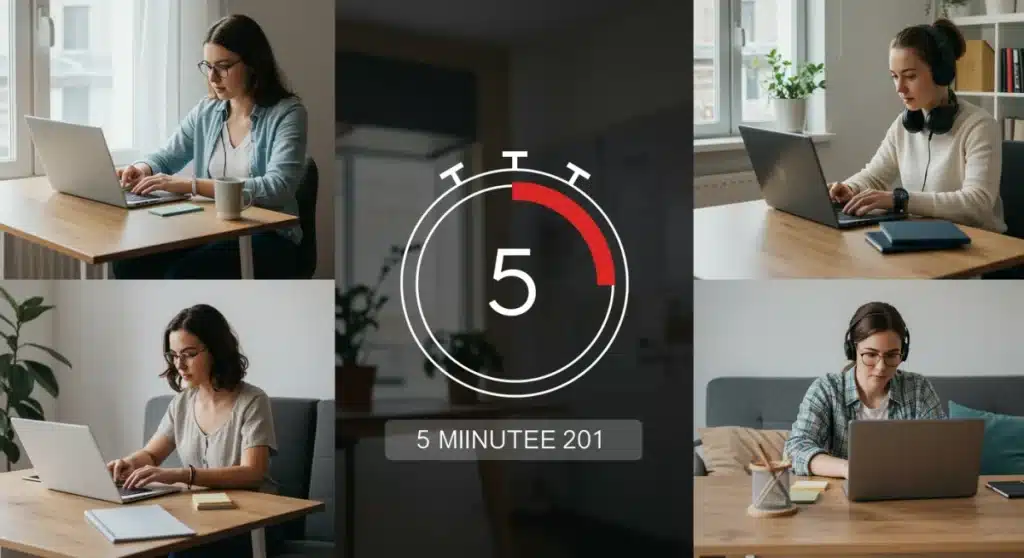
The 5-Minute Rule is a powerful technique for remote teams to overcome procrastination by committing to just five minutes of a task, building momentum and boosting overall productivity in 2026.
Anúncios
Are you and your remote team struggling with the ever-present challenge of getting started on tasks? The concept of The 5-Minute Rule: How to Combat Procrastination Effectively in Remote Teams for 2026 offers a refreshingly simple yet profoundly effective solution to break through inertia and foster a more productive work environment.
Understanding the 5-Minute Rule in a Remote Context
The 5-Minute Rule is a straightforward productivity hack that encourages individuals to commit to working on a daunting task for just five minutes. The premise is that often, the hardest part is simply starting. Once you’ve invested five minutes, the momentum often takes over, making it easier to continue for longer periods. In the unique landscape of remote work in 2026, where distractions can be pervasive and self-discipline is paramount, this rule becomes an invaluable tool for both individual contributors and entire teams.
Anúncios
This approach isn’t about rushing tasks; it’s about initiating them. For remote teams, where visibility into individual progress can be less direct, empowering each member with such a practical strategy can significantly reduce project bottlenecks and improve overall workflow. It shifts the focus from the overwhelming entirety of a task to a manageable, bite-sized commitment, making large projects seem less intimidating.
The psychology behind its effectiveness
Psychologically, the 5-Minute Rule leverages the concept of ‘activation energy.’ Just as a car needs a burst of energy to start moving, our brains often resist initiating difficult or unpleasant tasks. By setting a low bar of just five minutes, we bypass this resistance. This small victory often triggers a positive feedback loop, releasing dopamine and encouraging further engagement with the task.
- Overcoming inertia: The biggest hurdle is often the initial step, not the task itself.
- Building momentum: Once started, it’s easier to continue than to stop and restart.
- Reducing overwhelm: Breaking down tasks into smaller, manageable chunks makes them less intimidating.
- Boosting confidence: Successfully completing five minutes builds self-efficacy.
Ultimately, understanding the psychological underpinnings of the 5-Minute Rule allows remote teams to apply it more strategically. It’s not just a trick; it’s a method grounded in behavioral science, designed to make productivity more accessible and less of a battle against one’s own mind. By adopting this rule, remote workers can transform their approach to challenging tasks, turning potential procrastination into concrete progress.
Identifying Procrastination Triggers in Remote Teams
Before implementing any solution, it’s crucial to understand the root causes of procrastination within remote teams. In 2026, the remote work environment presents unique challenges that can exacerbate these tendencies. Lack of direct supervision, blurred lines between work and personal life, and constant digital distractions are just a few factors that contribute to delays and missed deadlines. Recognizing these triggers is the first step towards effectively applying the 5-Minute Rule.
Some common triggers include task ambiguity, fear of failure, perfectionism, and simply feeling overwhelmed by the sheer volume of work. For remote teams, the absence of spontaneous in-office interactions can also lead to isolation, which in turn can foster a lack of motivation and increased procrastination. It’s a complex interplay of individual psychology and environmental factors.
Common remote work pitfalls
The digital nature of remote work, while offering flexibility, also opens doors to new forms of procrastination. Endless social media feeds, personal errands during work hours, and the temptation to multitask can all derail focus. Moreover, the lack of a clear separation between home and office can make it difficult to ‘switch off’ from personal life and ‘switch on’ to work tasks.
- Digital distractions: Social media, news alerts, and non-work-related browsing.
- Lack of structure: Absence of a fixed routine or office environment.
- Communication overload/underload: Too many messages or insufficient clarity on tasks.
- Isolation: Feeling disconnected from colleagues and the team’s overall mission.
By pinpointing these specific remote work pitfalls, team leaders and individuals can proactively address them. This might involve setting clearer communication protocols, encouraging regular check-ins, or even designating specific ‘deep work’ periods free from digital interruptions. Understanding these triggers provides a solid foundation for the successful application of the 5-Minute Rule.
Implementing the 5-Minute Rule for Individual Remote Workers
For individual remote workers, the 5-Minute Rule is a personal challenge to conquer inertia. The beauty of it lies in its simplicity. When faced with a task you’re dreading or continuously putting off, simply tell yourself you only need to work on it for five minutes. Set a timer, commit to that short burst of effort, and see what happens. More often than not, those five minutes will turn into ten, then twenty, and before you know it, you’ve made significant progress.
This technique is particularly effective for tasks that require a lot of mental energy or seem overwhelming at first glance. Instead of staring at a blank document or an empty spreadsheet, just open it and start typing for five minutes. The goal is not to complete the task, but to initiate it and build momentum. This small act of starting can dramatically reduce the psychological barrier of procrastination.
Practical steps for daily application
Integrating the 5-Minute Rule into your daily remote work routine requires conscious effort and consistency. Start by identifying one or two tasks each day that you tend to procrastinate on. These are your prime candidates for the rule. Make it a non-negotiable habit to dedicate five minutes to them, even if you feel uninspired.
- Identify one daunting task: Choose the task you’re most likely to avoid.
- Set a timer for five minutes: Use a physical timer or a digital one on your device.
- Start immediately: Don’t plan, just begin the task.
- Re-evaluate after five minutes: Decide if you want to continue or take a short break.
The key is not to pressure yourself to continue beyond the five minutes if you truly don’t feel like it. The success of the rule lies in the consistent act of starting. Over time, you’ll find that your resistance to starting tasks diminishes, and your overall productivity as a remote worker will naturally increase. It’s a small change with a powerful ripple effect.
Integrating the 5-Minute Rule Across Remote Teams
While highly effective for individuals, extending the 5-Minute Rule to an entire remote team requires a slightly different approach, focusing on collective adoption and shared understanding. It’s not about mandating five-minute sprints for every team member simultaneously, but rather fostering a culture where this strategy is encouraged, discussed, and celebrated. This can significantly improve team accountability and project velocity, especially in 2026’s dynamic remote work landscape.
Team leaders can introduce the concept during virtual stand-ups or team meetings, explaining its benefits and providing examples of how it can be applied to common team tasks. The goal is to make it a shared tool for overcoming collective procrastination points, such as starting a complex new feature or tackling a backlog of minor bugs. When everyone understands and utilizes the rule, it creates a more proactive and less bottlenecked workflow.
Team-wide implementation strategies
Successful team integration of the 5-Minute Rule involves more than just explaining it. It requires creating an environment where team members feel comfortable using it and sharing their experiences. This can involve structured check-ins or dedicated discussion channels where successes and challenges are openly communicated.
- Educate and train: Conduct a short session explaining the rule and its benefits.
- Encourage sharing: Create a space for team members to share their 5-minute victories.
- Apply to shared tasks: Suggest using the rule for collaborative challenges.
- Lead by example: Team leads should openly use and advocate for the rule.
By actively promoting and integrating the 5-Minute Rule, remote teams can develop a stronger collective work ethic. It helps in breaking down large team projects into manageable starting points, ensuring that progress is continuously made, rather than being stalled by initial hesitation. This collective adoption transforms individual productivity gains into significant team-wide benefits.
Tools and Techniques to Support the 5-Minute Rule
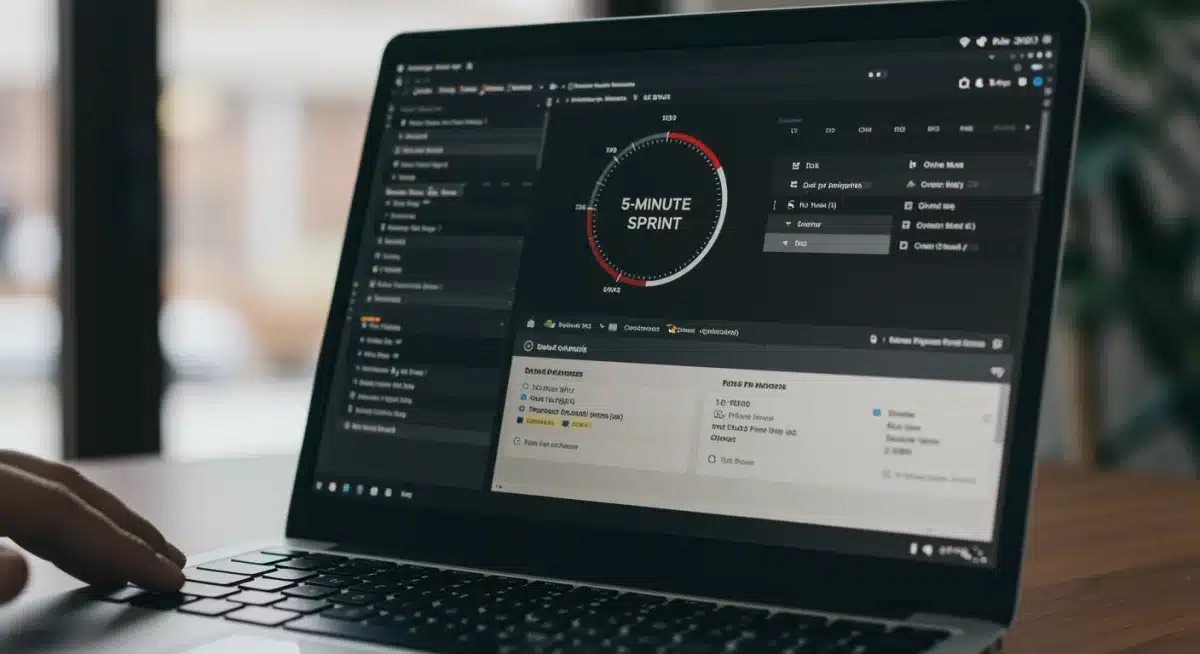
In 2026, the digital toolkit for remote work is more sophisticated than ever, offering numerous applications and techniques that can amplify the effectiveness of the 5-Minute Rule. While the rule itself is simple, leveraging the right tools can help maintain consistency, track progress, and minimize distractions, making the five-minute commitment even easier to uphold. These tools range from simple timers to comprehensive project management platforms.
The key is to choose tools that seamlessly integrate into your existing workflow without adding unnecessary complexity. The best tools are those that act as gentle nudges and facilitators, not as rigid taskmasters. They should support, not dictate, your five-minute sprints, allowing you to focus on the task at hand rather than managing the tool itself.
Essential digital aids for 2026
Consider incorporating specific digital aids that align with the philosophy of the 5-Minute Rule. These can help in setting timers, blocking distractions, and providing a visual representation of progress, which can be highly motivating for remote workers operating independently.
- Simple timer apps: Use dedicated apps or browser extensions for quick, visible countdowns.
- Distraction blockers: Tools that temporarily block access to distracting websites or apps.
- Task management software: Platforms like Asana, Trello, or Monday.com to break down tasks and track progress.
- Focus music/ambient sounds: Background audio designed to enhance concentration during short bursts of work.
By strategically employing these tools, remote teams can create an optimized environment for applying the 5-Minute Rule. They help in setting clear boundaries, minimizing interruptions, and providing the necessary structure to turn those initial five-minute commitments into sustained periods of productive work. This blend of simple technique and smart technology creates a powerful synergy for overcoming procrastination.
Measuring Impact and Sustaining Momentum
Implementing the 5-Minute Rule is only part of the equation; measuring its impact and sustaining momentum are crucial for long-term success in remote teams, particularly as we look towards 2026. It’s important to recognize that productivity isn’t a static state but an ongoing process that requires continuous evaluation and adaptation. Without a clear understanding of the rule’s effectiveness, its adoption might wane over time.
Tracking progress, even in small increments, can provide valuable insights into what’s working and what needs adjustment. This could involve simple personal journaling or more sophisticated team-wide metrics. The goal is to demonstrate tangible improvements in task initiation and completion rates, reinforcing the positive effects of the 5-Minute Rule and encouraging its continued use.
Tracking progress and celebrating small wins
To keep the momentum going, make an effort to observe and acknowledge the positive changes brought about by the 5-Minute Rule. For individuals, this might be a mental note or a quick entry in a personal productivity log. For teams, it could involve sharing successes during team meetings or in a dedicated communication channel.
- Personal reflection: Regularly assess how the rule impacts your ability to start tasks.
- Team check-ins: Discuss perceived improvements in task initiation and project flow.
- Completion rates: Monitor if previously procrastinated tasks are now getting started sooner.
- Qualitative feedback: Collect testimonials from team members on the rule’s effectiveness.
Celebrating these small wins, whether individually or as a team, reinforces the positive behavior and makes the 5-Minute Rule a more ingrained habit. It transforms the act of starting a difficult task from a dreaded chore into a manageable and often rewarding experience. This sustained momentum ensures that the 5-Minute Rule remains a powerful tool for combating procrastination in remote teams well into the future.
| Key Aspect | Brief Description |
|---|---|
| Core Principle | Commit to just five minutes of a task to overcome initial resistance. |
| Remote Application | Addresses unique remote work challenges like distractions and isolation. |
| Team Integration | Fosters a collective proactive culture for shared tasks and projects. |
| Supporting Tools | Leverage timers and blockers to enhance focus during short bursts of work. |
Frequently asked questions about the 5-minute rule for remote teams
The main benefit is overcoming task initiation paralysis. By committing to just five minutes, remote team members can break through procrastination, build momentum, and significantly increase the likelihood of completing larger tasks, leading to improved overall team productivity and project flow.
Leaders can encourage adoption by explaining its psychological benefits, sharing personal success stories, integrating it into team communication (e.g., during stand-ups), and leading by example. Fostering a supportive environment where experimentation with productivity hacks is encouraged is key.
While most effective for daunting or procrastinated tasks, the rule can be adapted. For complex tasks, it might mean five minutes of planning or research. For simpler tasks, it ensures immediate action. Its versatility makes it applicable across a wide range of remote work responsibilities.
That’s perfectly fine. The success of the 5-Minute Rule lies in the act of starting, not necessarily completing. If you genuinely don’t want to continue, take a break. The goal is to reduce the barrier to entry, and consistently starting will build a habit that eventually leads to longer work sessions.
Yes, simple timer apps, browser extensions for distraction blocking, and project management software (like Asana or Trello) can be highly beneficial. These tools help in setting clear time boundaries, minimizing interruptions, and tracking progress, amplifying the rule’s effectiveness in a remote setup.
Conclusion
The 5-Minute Rule stands as a testament to the power of small, consistent actions in overcoming significant challenges like procrastination, especially within the dynamic environment of remote teams in 2026. By demystifying the act of starting a task, it empowers individuals and fosters a more proactive, productive team culture. Its simplicity belies its profound psychological impact, making it an indispensable tool for anyone seeking to enhance their focus and output in a distributed workforce. Embracing this rule isn’t just about getting tasks done; it’s about cultivating a mindset of continuous progress and reducing the mental burden associated with large or undesirable responsibilities. As remote work continues to evolve, the ability to initiate and sustain effort in bite-sized chunks will remain a cornerstone of effective productivity.