3-Month Productivity Sprint: Boost Remote Work 25% in Q1 2025

Anúncios
The 3-month productivity sprint focuses on structured strategies for US remote workers to enhance efficiency and achieve 25% more in Q1 2025, emphasizing planning, execution, and continuous optimization.
Anúncios
Are you a US remote worker looking to significantly boost your output? Mastering the 3-month productivity sprint is your key to achieving 25% more in Q1 2025, transforming your work habits and delivering tangible results.
Understanding the 3-Month Productivity Sprint Philosophy
The concept of a productivity sprint isn’t new, but its application to remote work, particularly for US professionals aiming for substantial gains, requires a tailored approach. This philosophy centers on breaking down ambitious annual goals into manageable, highly focused quarterly objectives. By concentrating efforts over a shorter, intense period, remote workers can avoid burnout while maintaining high levels of motivation and accountability.
Anúncios
For Q1 2025, this means a deliberate, strategic push to identify key areas for improvement, streamline workflows, and leverage tools that enhance rather than hinder progress. It’s about intentional work, not just busy work, ensuring every hour contributes directly to measurable outcomes.
Defining Your Q1 2025 Objectives
Before launching into any sprint, clarity of purpose is paramount. Without well-defined objectives, your efforts risk being scattered and ineffective. For US remote workers, this often involves aligning personal career goals with team or company targets, ensuring a synergistic approach to productivity.
- Specific Goals: Clearly articulate what ‘25% more’ means for your role. Is it more completed projects, higher client satisfaction rates, or increased revenue generation?
- Measurable Outcomes: Establish quantifiable metrics to track progress. This could involve project completion rates, hours saved on administrative tasks, or new skills acquired.
- Achievable Targets: While ambitious, goals should be realistic. Overly aggressive targets can lead to demotivation.
- Relevant to Your Role: Ensure your sprint objectives directly contribute to your professional growth and your organization’s success.
The initial phase of the 3-month productivity sprint is arguably the most critical. It lays the groundwork for sustained effort and ensures that the subsequent execution phases are built on a solid foundation of clarity and strategic intent. Without this foundational understanding, even the most diligent remote worker might find themselves adrift, working hard but not necessarily smart.
Ultimately, a successful productivity sprint begins with a deep dive into what you truly want to achieve and how you will definitively measure that achievement. This intentional planning phase sets the stage for a quarter of unparalleled growth and efficiency, allowing you to maximize your impact from a remote setting.
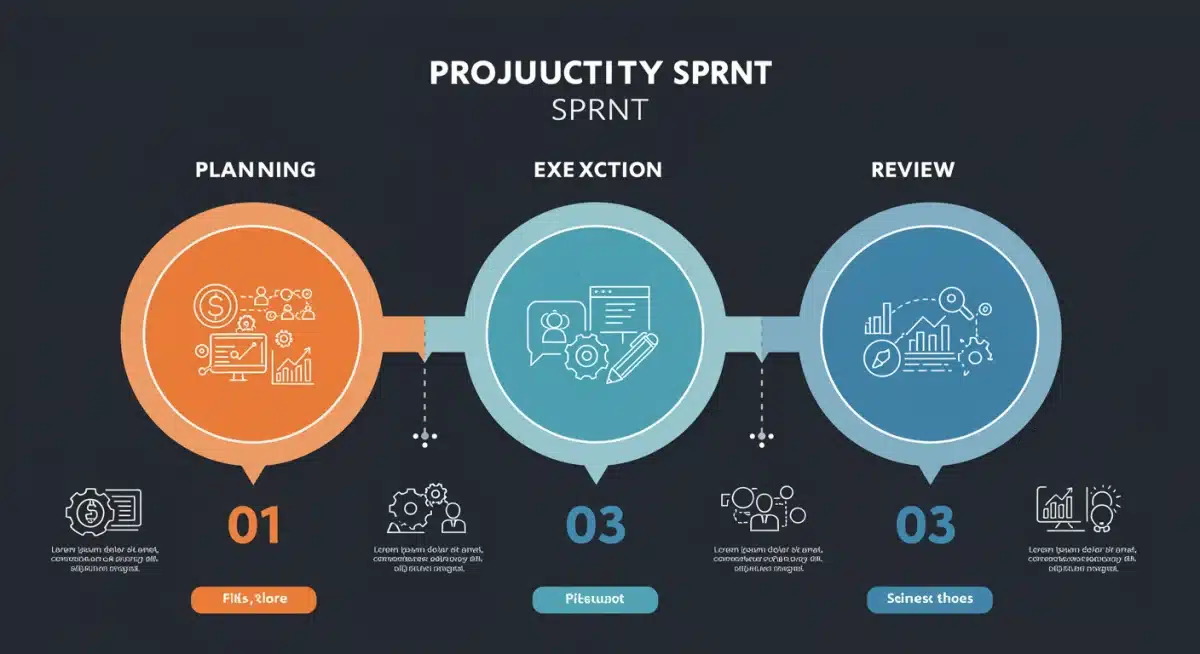
Phase 1: Strategic Planning and Goal Setting (Month 1)
The first month of your 3-month productivity sprint is dedicated to meticulous planning. This isn’t just about listing tasks; it’s about crafting a strategic roadmap that will guide your efforts and maximize your efficiency. For US remote workers, this phase is crucial for establishing a robust framework that accommodates the unique challenges and opportunities of working outside a traditional office.
Effective planning involves a thorough assessment of your current workflow, identifying bottlenecks, and pinpointing areas where a 25% increase in output is most attainable. This diagnostic approach ensures that your efforts are directed where they will yield the greatest return.
Auditing Your Current Workflow and Habits
Before optimizing, you must understand what you’re optimizing. Take a week to meticulously track your time and activities. Document how much time you spend on core tasks, meetings, administrative duties, and even distractions. This data will reveal your true productivity patterns.
- Time Tracking Tools: Utilize apps like Toggle Track or Clockify to get an accurate picture of your time allocation.
- Distraction Analysis: Identify common interruptions and their impact on your focus.
- Energy Curve Mapping: Understand your peak productivity hours and schedule demanding tasks accordingly.
Once you have a clear understanding of your current state, you can begin to identify specific areas for improvement. This might involve re-evaluating meeting schedules, delegating certain tasks, or implementing new tools to automate repetitive processes. The goal is to create a lean, efficient workflow that supports your sprint objectives.
The planning phase also encompasses setting SMART goals – Specific, Measurable, Achievable, Relevant, and Time-bound – for the entire quarter. These goals should be ambitious but realistic, pushing you to grow without leading to burnout. By the end of Month 1, you should have a clear, actionable plan that outlines your daily and weekly objectives, aligned with your overarching Q1 2025 target. This foundational work ensures that the subsequent months are spent executing with purpose and precision, rather than reacting to daily demands.
Phase 2: Execution and Optimization (Month 2)
With a solid plan in place, Month 2 of your 3-month productivity sprint shifts focus to rigorous execution and continuous optimization. This is where the rubber meets the road, and your strategic planning translates into tangible output. For US remote workers, maintaining momentum and adapting to unforeseen challenges are critical during this phase.
Consistent effort, paired with proactive problem-solving, will be the hallmarks of your success. This month is about iterating on your initial plan, refining your techniques, and ensuring that you are consistently moving towards your 25% productivity increase.
Implementing New Tools and Techniques
During Month 2, you’ll put your identified tools and techniques into practice. This might include project management software, communication platforms, or advanced time management strategies. The key is to integrate these seamlessly into your daily routine, ensuring they enhance productivity rather than add complexity.
- Project Management Software: Tools like Asana, Trello, or Monday.com can help organize tasks, set deadlines, and track progress collaboratively.
- Communication Platforms: Optimize your use of Slack or Microsoft Teams for efficient, focused discussions, minimizing email clutter.
- Focus Techniques: Experiment with the Pomodoro Technique or time blocking to improve concentration and reduce distractions.
Beyond tools, this phase involves actively refining your work habits. Regularly review your daily schedule, identifying areas where you can be more efficient. Are there tasks that can be automated? Can certain meetings be shortened or replaced with asynchronous communication? Continuous questioning and adjustment are vital.
The goal is to build a rhythm of high-efficiency work that feels sustainable. This doesn’t mean working longer hours, but rather working smarter and more effectively within your existing timeframe. By the end of Month 2, you should feel a noticeable shift in your ability to complete tasks, manage your time, and contribute more significantly to your projects. This execution phase solidifies the gains made in planning and prepares you for the final push towards your Q1 target.
Leveraging Technology for Remote Productivity Boost
In the modern remote work landscape, technology is not just a facilitator; it’s a critical enabler of productivity. For US remote workers aiming to achieve a 25% increase in Q1 2025, strategically leveraging the right tools can make all the difference. This involves not only adopting new software but also optimizing your existing digital environment to support maximum efficiency.
The right tech stack can automate repetitive tasks, improve communication, enhance collaboration, and provide crucial insights into your workflow, allowing you to focus on high-value activities.
Essential Tools for Remote Work Efficiency
From project management to communication, a well-curated suite of digital tools can drastically improve your output. The selection should be tailored to your specific role and team needs, but some categories are universally beneficial for remote professionals.
- Communication & Collaboration: Slack, Microsoft Teams, Zoom, Google Meet. These platforms streamline real-time discussions and virtual meetings, reducing email dependencies.
- Project & Task Management: Asana, Trello, Jira, Monday.com. Essential for organizing tasks, tracking progress, and ensuring accountability within remote teams.
- Note-Taking & Documentation: Notion, Evernote, OneNote. Critical for capturing ideas, organizing information, and maintaining a centralized knowledge base.
- Time Management & Focus: Toggl Track, Forest, RescueTime. These tools help monitor time usage, block distractions, and encourage focused work sessions.
Beyond specific applications, consider how your overall digital workspace is configured. This includes optimizing your internet connection, ensuring ergonomic home office setup, and utilizing cloud storage solutions for seamless access to files. The synergy between hardware and software is paramount for sustained remote productivity.
Furthermore, regularly evaluating the effectiveness of your tools is crucial. What works well in Month 1 might need adjustment by Month 3. Staying abreast of new technologies and being open to adapting your tech stack ensures that you are always operating at peak efficiency. By intelligently integrating and utilizing technology, US remote workers can significantly enhance their capability to achieve and even surpass their Q1 2025 productivity goals, making the most of their virtual environment.
Overcoming Remote Work Challenges: Focus and Well-being
While the 3-month productivity sprint offers a clear path to increased output, remote work inherently presents unique challenges that can derail even the most well-intentioned plans. For US remote workers, maintaining focus amidst distractions and prioritizing well-being are paramount to sustaining high levels of productivity throughout Q1 2025.
Ignoring these aspects can lead to burnout, decreased motivation, and ultimately, a failure to meet your sprint objectives. A holistic approach that addresses both work habits and personal health is essential for long-term success.
Strategies for Maintaining Focus and Minimizing Distractions
The home environment, while comfortable, can be rife with distractions. Developing strategies to create a dedicated work zone and minimize interruptions is critical for deep work.
- Dedicated Workspace: Designate a specific area for work, even if it’s a corner of a room, to mentally separate work from personal life.
- Scheduled Deep Work: Block out specific times in your calendar for focused, uninterrupted work on high-priority tasks.
- Digital Detox: Implement periods where notifications are turned off, and non-work-related tabs are closed.
- Communication Boundaries: Set clear expectations with family or housemates about your work hours and need for concentration.
Beyond external distractions, internal ones like procrastination or task switching can also hinder progress. Practicing mindfulness and regularly reviewing your task list can help keep your mind aligned with your sprint goals.
Equally important is prioritizing your physical and mental well-being. Long hours in front of a screen without breaks can lead to fatigue, eye strain, and decreased cognitive function. Incorporating regular physical activity, ensuring adequate sleep, and taking mental breaks are non-negotiable for sustained high performance.
This includes scheduling short walks, stretching exercises, or simply stepping away from your desk for a few minutes each hour. Creating a balanced routine that integrates work and self-care is not a luxury but a necessity for any remote worker aiming for a significant productivity boost. By proactively addressing these challenges, US remote workers can build resilience and ensure their 3-month productivity sprint is both effective and sustainable.
Phase 3: Review, Refine, and Sustain (Month 3)
As your 3-month productivity sprint approaches its conclusion in Month 3, the focus shifts from execution to critical evaluation, refinement, and establishing practices for sustained high performance. This final phase is essential for consolidating your gains, learning from your experiences, and ensuring that the productivity improvements achieved in Q1 2025 become ingrained habits rather than temporary boosts.
For US remote workers, this means a thorough analysis of what worked, what didn’t, and how to carry forward the momentum into subsequent quarters. It’s about building a cycle of continuous improvement.
Analyzing Performance and Celebrating Achievements
The first step in Month 3 is to objectively assess your progress against the SMART goals you set in Month 1. This involves reviewing your metrics and identifying where you achieved, exceeded, or fell short of your 25% productivity increase target.
- Data Review: Compile all your tracked data on task completion, time spent, and project outcomes.
- Goal Comparison: Compare actual results against your initial objectives to quantify your success.
- Self-Reflection: Reflect on your personal growth, new skills acquired, and challenges overcome.
- Celebrate Milestones: Acknowledge your hard work and celebrate the achievements, no matter how small, to maintain motivation.
This analysis should not only focus on numerical results but also on the qualitative aspects of your work. Did you feel more organized? Was your communication more effective? Did you manage stress better? These insights are invaluable for future sprints.
Based on your performance review, the next step is to refine your processes. What adjustments need to be made to your workflow? Are there tools that could be better utilized or new ones to explore? This iterative process ensures that your productivity system is always optimized for your current needs and challenges. The aim is to create a sustainable framework that allows you to maintain peak performance without constant, exhaustive effort.
By the end of Month 3, you should have a clear understanding of your productivity strengths and weaknesses, a refined set of strategies, and a plan for how to carry forward your enhanced efficiency into the next quarter. This comprehensive review and refinement process is what truly differentiates a temporary burst of activity from a lasting transformation in your remote work habits.
Integrating Productivity Habits into Your Remote Lifestyle
Achieving a 25% increase in productivity during a 3-month sprint is a significant accomplishment, but the true measure of success lies in the ability to integrate these newfound habits into your long-term remote lifestyle. For US remote workers, this means moving beyond the intensity of the sprint to establish sustainable practices that foster consistent high performance and well-being.
The goal is to create a routine where efficiency and effectiveness are second nature, allowing you to maintain your elevated output without feeling perpetually in ‘sprint’ mode. This requires conscious effort to embed the most successful strategies into your daily and weekly rhythms.
Building Sustainable Routines for Long-Term Success
The habits cultivated during your productivity sprint should serve as the foundation for your ongoing remote work. Identify the most impactful practices and consciously weave them into your regular schedule.
- Daily Planning Rituals: Start each day with a brief planning session to prioritize tasks and set intentions.
- Scheduled Breaks: Integrate regular, short breaks throughout your workday to prevent fatigue and maintain focus.
- Weekly Reviews: Conduct weekly reviews to assess progress, adjust priorities, and plan for the upcoming week.
- Continuous Learning: Stay updated on new productivity tools and techniques, embracing a mindset of continuous improvement.
Beyond individual habits, consider the broader context of your remote work environment. This includes fostering strong communication with your team, setting clear boundaries between work and personal life, and actively seeking feedback on your performance. A supportive environment, both personal and professional, is crucial for sustaining high productivity.
Moreover, it’s important to recognize that productivity is not a static state; it ebbs and flows. There will be days or weeks when your output might naturally dip. The key is to have the tools and habits in place to recover quickly and get back on track without succumbing to discouragement. By intentionally integrating the lessons and successes of your 3-month productivity sprint into your daily remote lifestyle, US workers can ensure that their Q1 2025 gains are not just temporary but contribute to a lasting framework of professional excellence and personal well-being.
| Key Point | Brief Description |
|---|---|
| Strategic Planning | Defining clear, measurable goals and auditing current workflows in Month 1. |
| Execution & Optimization | Implementing new tools and techniques, and refining habits in Month 2. |
| Leveraging Technology | Utilizing essential digital tools for communication, project, and time management. |
| Review & Sustain | Analyzing performance, refining processes, and integrating habits for long-term success in Month 3. |
Frequently Asked Questions About Productivity Sprints
A 3-month productivity sprint is a structured, intensive period where remote workers set ambitious goals, implement new strategies, and rigorously track progress to achieve significant improvements in their output, often aiming for a specific percentage increase like 25% within a quarter.
Measuring a 25% increase involves defining quantifiable metrics relevant to their role, such as project completion rates, client satisfaction scores, reduction in task completion time, or increased revenue generated. Baseline data from the previous quarter is crucial for accurate comparison.
Common challenges include maintaining focus amidst home distractions, avoiding burnout from intense effort, managing communication effectively across time zones, and consistently adapting to new tools or workflows. Prioritizing well-being is key to overcoming these hurdles.
Highly recommended tools often include project management software (e.g., Asana, Trello), communication platforms (e.g., Slack, Zoom), time trackers (e.g., Toggl Track), and note-taking apps (e.g., Notion). The best tools depend on individual and team needs.
Sustaining gains involves integrating successful strategies into daily routines, conducting regular reviews, fostering strong communication, setting clear boundaries, and continuously seeking improvement. The goal is to make efficient habits a permanent part of your remote work lifestyle.
Conclusion
Embarking on a 3-month productivity sprint is a transformative journey for US remote workers aiming to elevate their output and achieve significant professional growth. By meticulously planning, executing with intent, leveraging technology, and prioritizing well-being, the goal of a 25% increase in Q1 2025 becomes not just achievable but a foundational step towards sustained excellence. The strategies outlined provide a robust framework, ensuring that the momentum gained translates into lasting, positive changes in your remote work habits and overall career trajectory.